Mortgage borrowing costs in Germany have climbed to their highest level since the 2009 financial crisis as the Iran war pushes up inflation worries and threatens to keep European interest rates elevated.
Germany Mortgage Rates Hit 2009 High on Inflation Worries
The average rate on 10-year home loans has risen to about 4.5%, according to Munich-based broker Interhyp, topping the previous peak reached at the end of 2023 and up from 3.9% as recently as May. Interhyp said the jump in borrowing costs comes as markets price in the risk that a wider Middle East conflict could keep inflation hotter for longer, limiting room for the European Central Bank to ease policy.
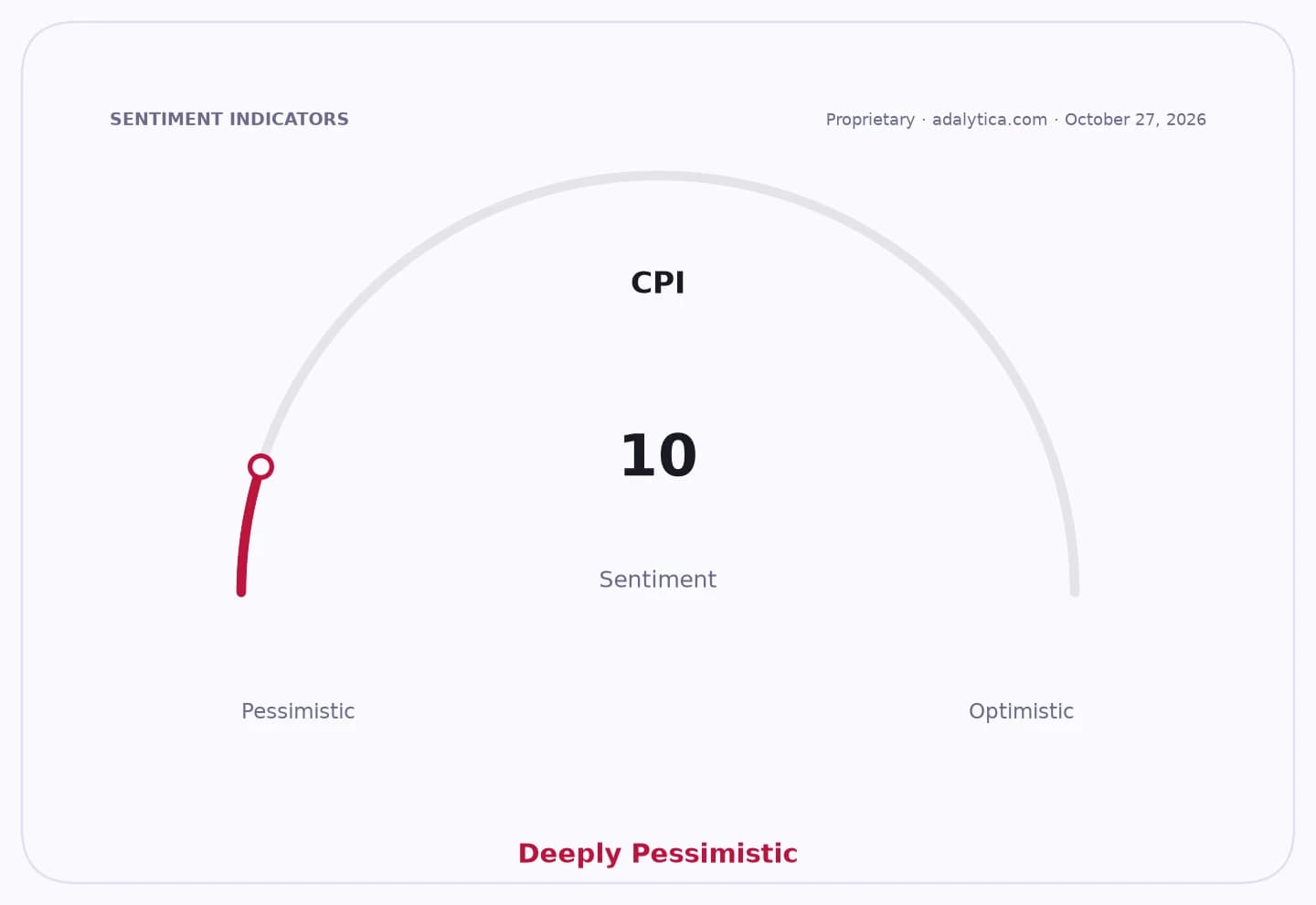
Sentiment Indicators
The move matters because German mortgages are a key transmission channel for ECB policy into the real economy. Higher rates add roughly 200 euros a month to the cost of an average mortgage, according to Interhyp Chief Executive Jorg Utecht, squeezing household budgets at a time when demand for housing is already soft and credit growth is slowing.
The data underline how quickly financing conditions have tightened. ECB figures show the average German mortgage rate rose from 1.48% at the start of 2022 to 4.15% at the end of 2023, then eased to 3.57% early this year before the latest surge. The Bundesbank and Interhyp both point to borrowing costs not seen since the financial crisis.
Banks expect the near-term picture to stay sticky. In Interhyp’s latest survey, most lenders said rates are likely to remain steady over the next two months, while 60% expect declines over a six- to 12-month horizon and 40% see another increase. That split leaves the market highly dependent on whether geopolitical risks fade and the ECB signals more room to cut.
For investors, the development is a warning sign for Germany’s housing recovery and for lenders exposed to mortgage origination and property finance. ING said home prices are still edging higher because chronic supply shortages are preventing a sharper correction, but new mortgage lending in Germany fell more than 1.5% in the January-to-July period, showing how higher rates are already curbing transactions.
The next catalyst is the ECB’s Oct. 29 policy decision. If policymakers keep rates restrictive to contain inflation, Germany’s mortgage market could stay under pressure well into 2026, even if house prices remain supported by tight supply.
| Entity | Gains | Losses |
|---|---|---|
| ECB hawks | ▲Higher anti-inflation credibility | ▼Faster mortgage relief |
| German savers | ▲Better deposit returns | ▼Homebuyers and borrowers |
| Mortgage lenders | ▲Wider lending spreads | ▼Loan demand and volume |
| German homebuyers | ▲None | ▼Higher monthly payments |