Ferrari has patented a V12-shaped hybrid powertrain that could let the company keep its 12-cylinder badge while rethinking the engine at the core of its future supercars.
Ferrari patents V12-shaped hybrid powertrain
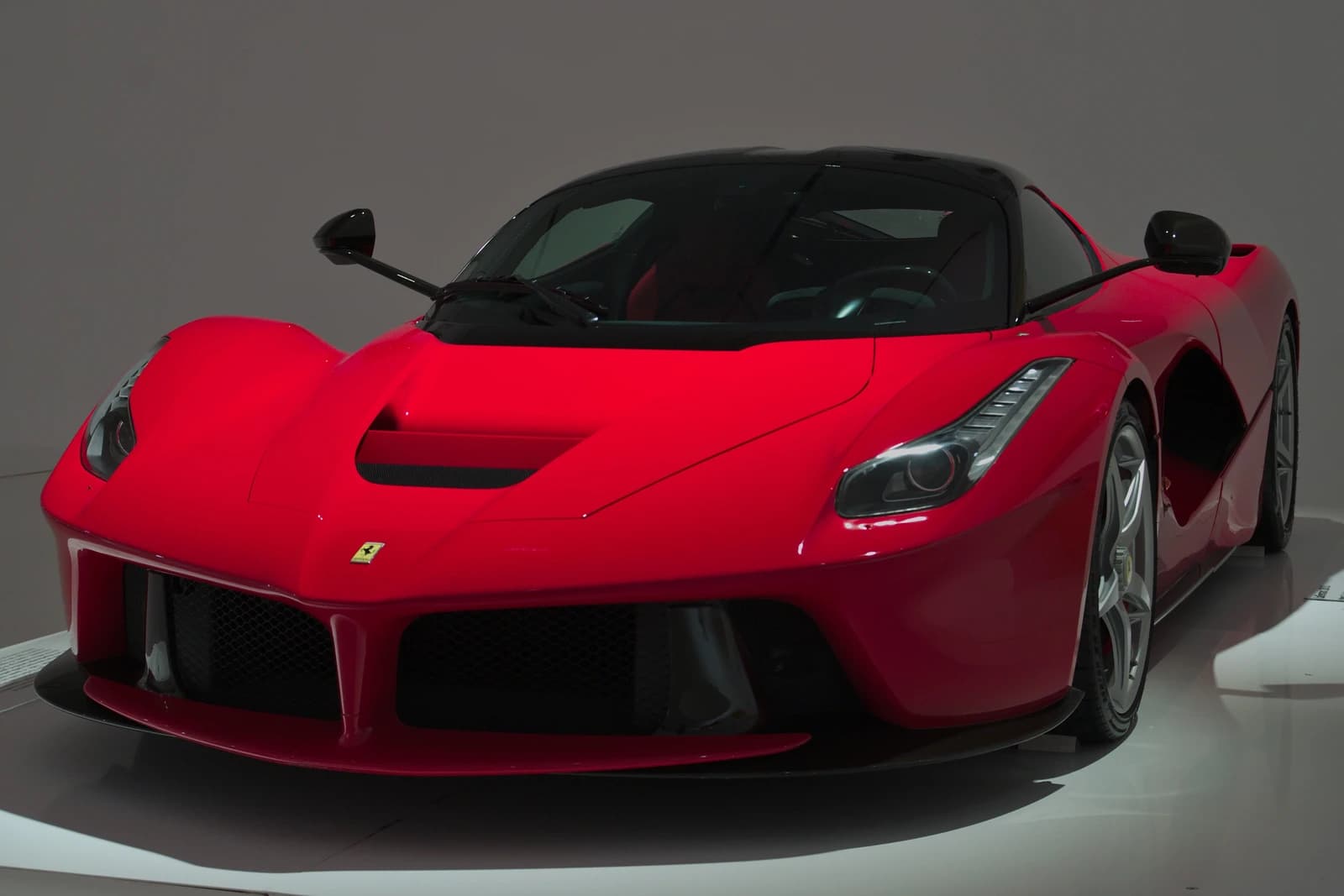
That matters because the Italian marque is confronting the same force reshaping the wider auto industry: tougher emissions rules. Rather than abandon large-displacement performance engines outright, Ferrari appears to be engineering a workaround that preserves the emotional pull of a V12 while meeting a far stricter regulatory future, especially in Europe. If it reaches production, the concept could become a template for how luxury automakers protect flagship engines without sacrificing compliance.
Sentiment IndicatorsⓘProprietary · adalytica.com · September 21, 2026
This is a snapshot — live sentiment, awareness and momentum for 130+ markets update continuously in the dashboard.Open AlphaPulse
The patent, published in the World Intellectual Property Organization database, describes a serial hybrid system in which the combustion engine would no longer drive the wheels directly. Instead, the thermal unit would act only as a generator, sending electricity to a battery and electric motors. In other words, Ferrari would eliminate the gearbox from the propulsion path and use the internal-combustion engine as a range-extending power source.
The clever part is packaging. Ferrari’s filing does not describe a conventional one-piece V12. It lays out two inline-six units arranged in a V from above, each with its own crankshaft and generator, tied together by shared lubrication, exhaust and electronic control systems. That configuration solves a major problem for a serial hybrid supercar: a traditional V12 is simply too long to fit neatly in a mid-engine layout.
For investors, the signal is bigger than one patent. Ferrari is trying to defend its pricing power at the exact point where regulators, electrification and customer expectations are converging. The market has rewarded Ferrari for scarcity, heritage and margin discipline, and the company’s shares have remained one of the most closely watched luxury auto names even as the stock has traded well below its recent highs. On the latest tape, Ferrari was around $406, with its 50-day moving average near $402 and its 200-day moving average near $364, suggesting the market is still treating the name as a premium franchise rather than a cyclical carmaker.
The patent also highlights a second-order winner: suppliers tied to electrified performance systems. BorgWarner, which helps build the hardware that makes these architectures possible, remains a clear beneficiary if Ferrari and other premium OEMs push deeper into hybridization. BorgWarner shares have recovered sharply from earlier weakness and recently traded near $63, above their 200-day moving average around $58, reflecting the market’s growing comfort with electrified driveline exposure.
Apple’s latest share performance offers a useful comparison for the broader industrial and technology capex cycle: investors are increasingly willing to pay for brands that own the interface between hardware, software and premium user experience. Ferrari is trying to do the same in cars. The difference is that in Maranello, the interface is now likely to be sound, emotion and emissions compliance all at once.
The strategic takeaway is simple: the market should not view this as a quirky patent filing. It is Ferrari telegraphing how it intends to keep selling internal-combustion theatre in an electrified world. If the company turns the concept into a road car, it could widen Ferrari’s moat rather than dilute it — and create another reason for investors to keep paying up for the stock.
| Entity | Gains | Losses |
|---|---|---|
| Ferrari (RACE) | ▲Preserves V12 brand power | ▼Must execute new architecture |
| BorgWarner (BWA) | ▲More hybrid driveline demand | ▼Pure ICE suppliers |
| Emissions regulators | ▲Lower tailpipe emissions | ▼Traditional performance purists |
| Luxury EV rivals | ▲Faster validation of hybrid transition | ▼Less differentiation in powertrain storytelling |