Global food prices have climbed to their highest level since November 2022, a warning sign for inflation, import bills and consumer spending just as climate shocks and Black Sea disruptions tighten agricultural supply.
FAO Food Prices Hit Highest Since November 2022
The FAO food price index rose 1.9% in August from July and 2.5% from a year earlier, with every major commodity group the agency tracks posting gains. The move matters because food is one of the fastest channels through which weather, geopolitics and logistics feed into household inflation — and because the latest jump is broadening beyond one crop into a full-spectrum squeeze across staples.
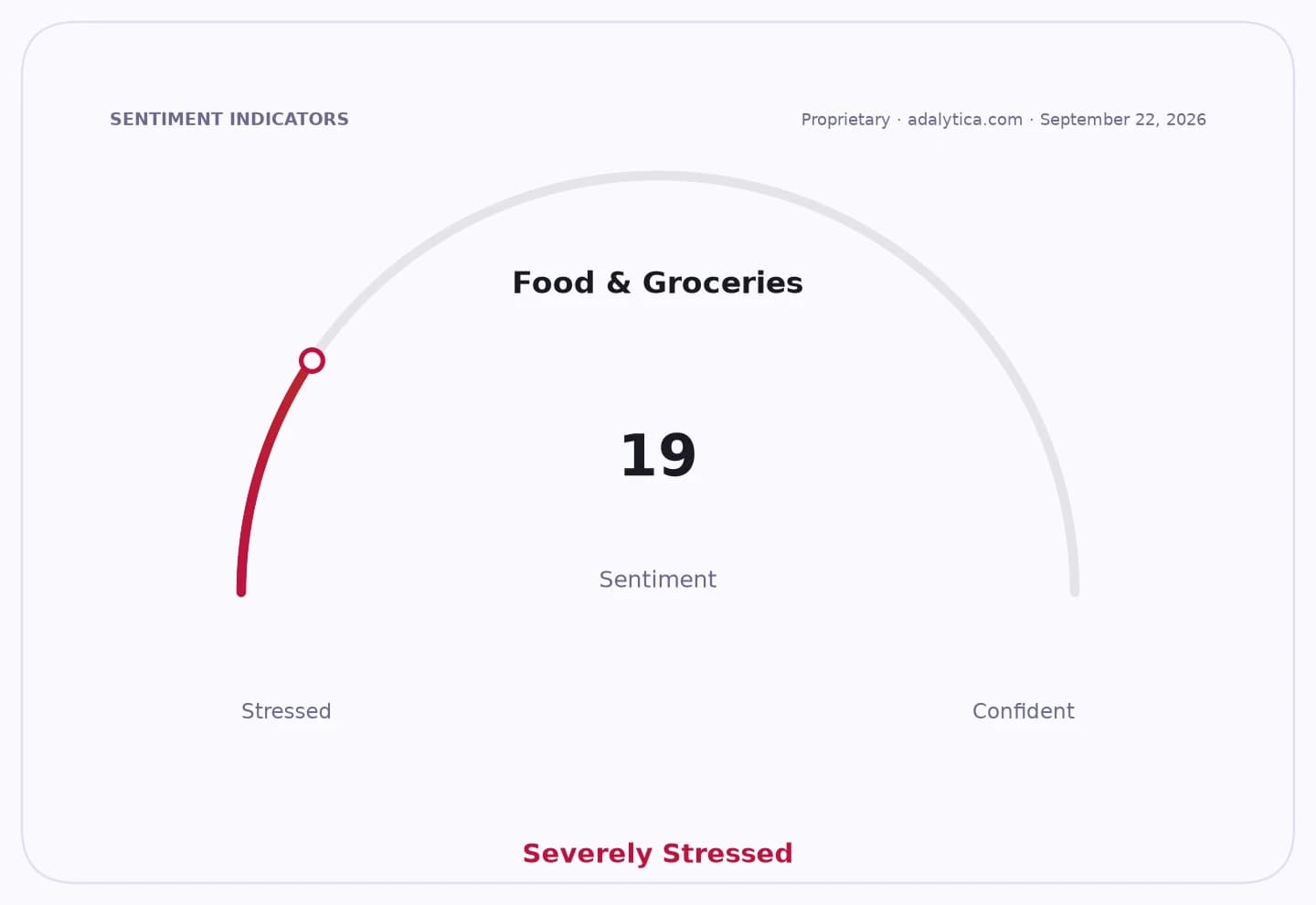
Sentiment IndicatorsⓘProprietary · adalytica.com · September 22, 2026
This is a snapshot — live sentiment, awareness and momentum for 130+ markets update continuously in the dashboard.Open AlphaPulse
Wheat is the clearest pressure point. World wheat prices rose 2.6% in the month and are now 15% higher than a year ago, as export logistics in the Black Sea remain disrupted and hot, dry conditions damage harvest prospects in parts of Europe. Corn climbed 2.5% on worries about U.S. and European yields, while sugar surged 11.9% in the month to its highest since June 2025 as heat and drought hit crops in Europe and Asia and Brazil’s output outlook weakened. Vegetable oils, meat and dairy also advanced.
For investors, this is not just an agricultural story — it is an inflation and margins story. Higher food prices tend to filter quickly into consumer price indices, especially in emerging markets and food-importing economies, while also squeezing food manufacturers, restaurant operators and retailers that cannot pass through costs fast enough. The latest readings come as broader commodity inflation remains sticky, with global energy prices still elevated enough to keep freight, fertilizer and processing costs under pressure.
The setup favors owners of hard assets and agricultural infrastructure over downstream buyers. Grain traders, fertilizer producers, farm equipment names and crop-insurance-linked businesses can benefit when volatility rises and farmers chase higher prices. By contrast, packaged food makers, import-dependent countries and consumers face tighter budgets and weaker real spending power. The market underestimates how quickly a food shock becomes a margin shock.
That is why the next catalyst matters: if adverse weather persists or Black Sea shipping remains constrained, food inflation can stay elevated into the next quarter even without a broader commodity boom. For now, the message from the FAO is clear — the world is moving back into a risk-premium regime for food, and investors should position accordingly.
| Entity | Gains | Losses |
|---|---|---|
| Grain traders and agri-merchandisers | ▲Higher volatility and spreads | ▼More inventory risk |
| Fertilizer and farm inputs | ▲Pricing power from tight supply | ▼Demand pressure if farmers cut spending |
| Packaged food and importers | ▲None | ▼Margin compression |
| Consumers and food-importing countries | ▲None | ▼Higher grocery bills |