The Federal Aviation Administration has begun deploying its first AI tool for air traffic controllers, a move that could ease a chronic staffing crunch and reshape how the busiest parts of U.S. airspace are managed.
FAA Deploys First AI Tool for Air Traffic Control
The limited launch of SMART around Washington is economically important because the aviation system has been operating with too little human capacity for too long. The FAA has been coping with a 6% drop in controller staffing over the past decade, repeated hiring disruptions, a 43-day government shutdown and the loss of hundreds of trainees. After the January Black Hawk-American Airlines collision near Reagan National that killed 67 people, the pressure to find a safer, more scalable operating model intensified. An AI assistant that can flag potential traffic conflicts and suggest alternative routes does not replace controllers, but it can act as a force multiplier in a system where labor shortages have become a bottleneck on growth.
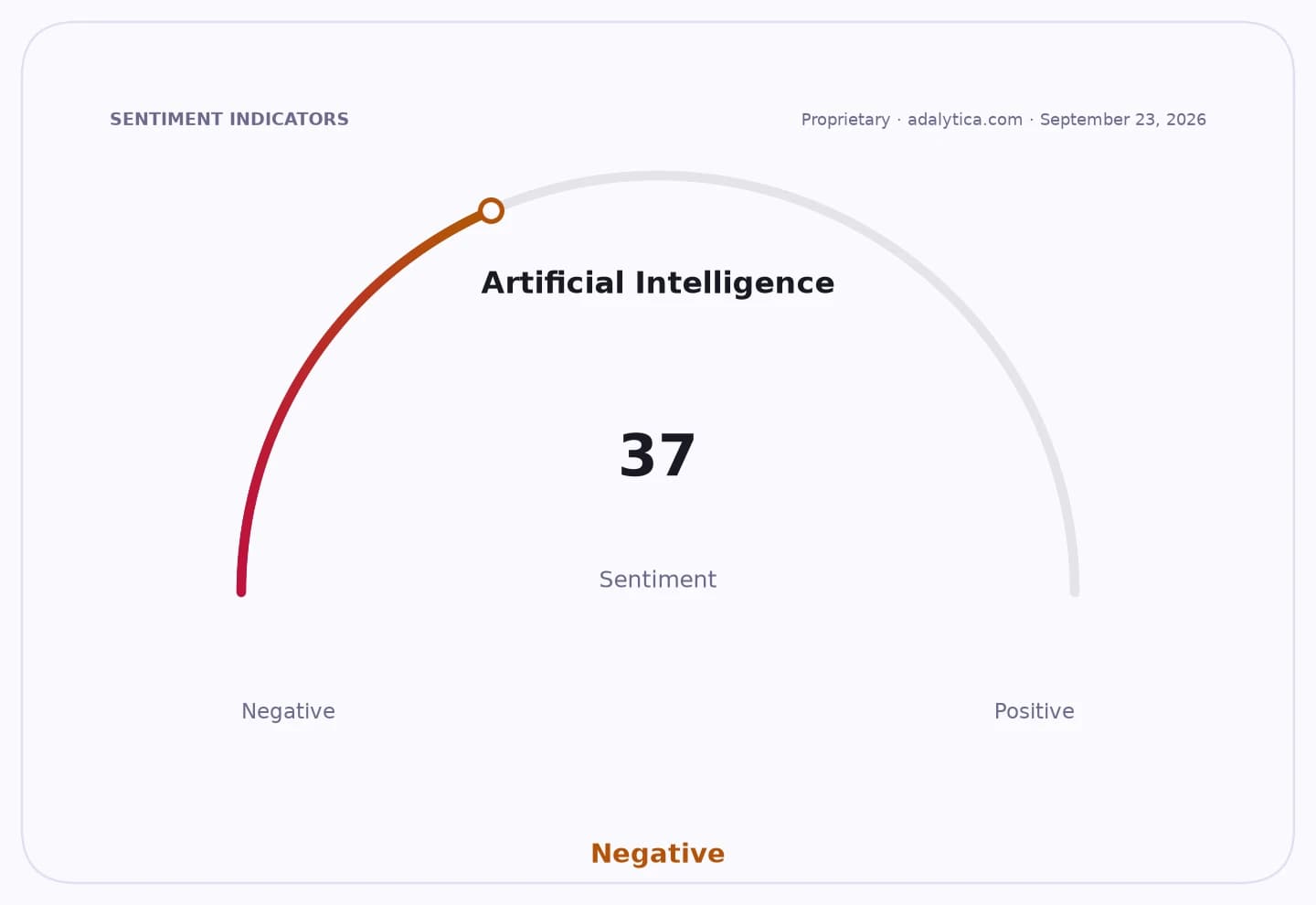
Sentiment IndicatorsⓘProprietary · adalytica.com · September 23, 2026
This is a snapshot — live sentiment, awareness and momentum for 130+ markets update continuously in the dashboard.Open AlphaPulse
That is why the market should care. In aviation, delay minutes are not just an inconvenience; they are a cost, a capacity constraint and a drag on ticket pricing power. Any tool that helps move more flights through constrained airspace with fewer disruptions has second-order effects across airlines, airports, aircraft utilization and maintenance scheduling. For investors, the real story is not just a government software rollout. It is a sign that AI adoption is moving from white-collar productivity into mission-critical infrastructure, where the winners are the companies providing the underlying systems, data pipes and operational intelligence.
The first beneficiary is Air Space Intelligence, the Boston company behind SMART, which in June won a 12-year, $875 million contract that also covers a new flow-management data system for the FAA. That is the kind of long-duration public-sector contract that can anchor a whole category of AI infrastructure spending. The FAA has said the tool will not change controller procedures or airline operations, only provide information on possible alternate routes through existing systems. That matters because it lowers the political and safety risk of deployment while still creating a pathway to broader use if the Washington trial works.
The broader narrative is bigger than one agency or one airport cluster. Washington is the proving ground for a national airspace modernization program, and if the FAA can show that AI improves throughput without adding operational risk, the same logic can extend to other congested U.S. hubs. That would reinforce a secular investment theme: governments and critical industries are increasingly buying AI not for chatbots, but for resilience, automation and capacity expansion. In a market still chasing consumer-facing AI, the more durable opportunity may be in the tools that keep the economy moving.
Airlines stand to gain if the system reduces delays and cancellations, but the upside will be uneven. Carriers with dense domestic networks and high exposure to slot-constrained airports should see the most benefit from better traffic flow. Boeing also has indirect exposure through healthier airline operations and fleet utilization, though its own stock remains far more tied to production and certification risks than to one FAA software rollout. The cleaner trade is in the picks-and-shovels layer: vendors that sell airspace intelligence, scheduling optimization, operational software and government-grade AI infrastructure.
The technical setup in airline ETFs already reflects that tension. The U.S. Global Jets ETF, JETS, has recovered from spring weakness and is trading near its 50-day moving average, but it remains below its recent highs, suggesting the market is still pricing airlines as cyclical operators rather than beneficiaries of an efficiency upgrade. If the FAA’s AI rollout expands and meaningfully improves traffic management, that complacency may prove too cautious.
This is an inflection point. The market underestimates how quickly AI can move from experimental to essential when the buyer is the federal government and the use case is safety-critical infrastructure. Position for the long term in the companies that enable this shift, not the ones merely exposed to it.
| Entity | Gains | Losses |
|---|---|---|
| Air Space Intelligence | ▲Long contract runway | ▼Execution scrutiny |
| FAA / U.S. air traffic system | ▲Better throughput | ▼Legacy process inertia |
| Airlines, especially slot-constrained carriers | ▲Fewer delays | ▼Higher operational dependence |
| Boeing / JETS holders | ▲Smoother fleet utilization | ▼Limited direct upside |