Europe’s latest gas shock is already getting into the economy’s bloodstream, and industry is likely to absorb the pain before households do. With December gas futures on the Dutch TTF hub trading at 103.5 euros per megawatt hour, about 3.5 times the level seen at the start of the year, the message for investors is simple: energy costs are back as a live margin risk for manufacturers, utilities and any business that depends on power or heat.
Europe gas prices rise to 103.5 euros per MWh
The jump matters because it comes at a moment when Europe is entering winter with thinner storage cushions and a tighter LNG market. A force majeure extension by QatarEnergy to Edison has underscored how fragile supply remains, while the Middle East conflict has reduced LNG availability and kept traders on edge. That combination has made European gas prices unusually sensitive to every fresh headline, and it has opened the door to more speculative trading and sharper swings.
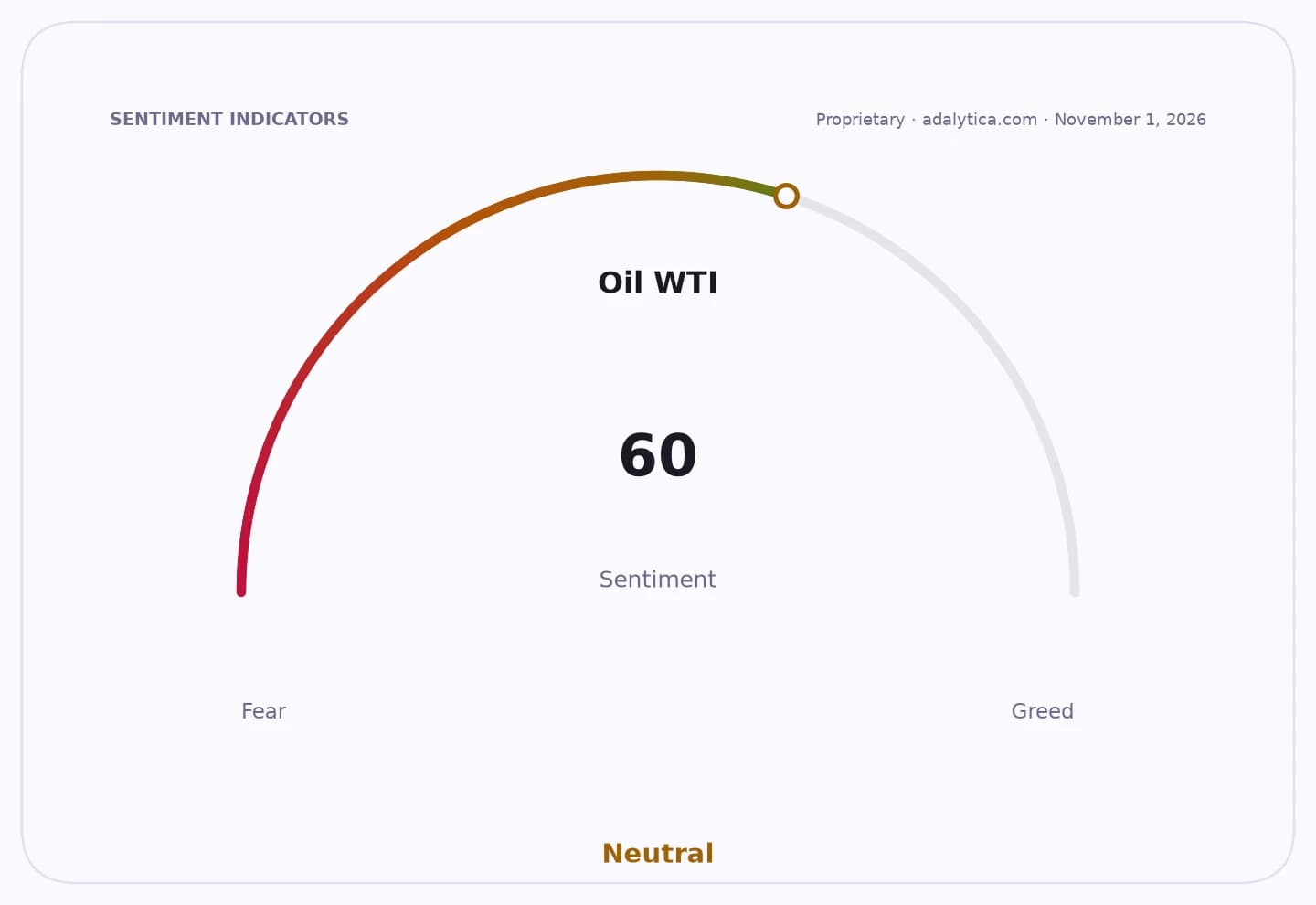
Sentiment Indicators
For companies, the impact will not be evenly felt. Slovenian gas infrastructure operator Plinovodi says households are unlikely to see a major bill shock this winter because most retailers have already locked in volumes for the season. But industrial buyers, who tend to hedge for shorter periods, will face the higher market price sooner when they next roll contracts. In other words, the cost hit shows up first in factory economics, not in the kitchen bill.
That is why this is more than a commodity story. High gas prices feed directly into Europe’s competitiveness at a time when the region is already struggling with heavier energy burdens than the U.S. or parts of Asia. When gas is around 100 euros per megawatt hour in Europe and roughly 9 euros in the U.S. market, the gap is large enough to affect production decisions, investment plans and, in some cases, where companies decide to build next. Energy-intensive industries are the first to feel pressure on margins, and they are also the most likely to slow output or push for relief.
The macro picture is just as important. Plinovodi’s chief executive, Matija Bitenc, warned that higher prices could filter through to households later, likely next autumn, while also weighing on broader growth. If firms produce more now to get ahead of future energy costs, some of this year’s growth could be borrowed from next year. That makes the gas market a potential source of both short-term inflation pressure and longer-term weakness in industrial activity.
There is also an investment case hidden in the stress. The companies best positioned are those with flexible supply, storage access and diversified sourcing, while those most exposed are buyers locked into spot or near-term contracts. Energy producers with LNG exposure and infrastructure operators should keep seeing strategic value in a market where security of supply commands a premium. The flip side is that any prolonged price spike makes Europe’s industrial base less competitive and raises the odds of government intervention, whether through subsidies, mandated storage, or emergency demand measures.
For investors, the key question is not whether gas prices can spike further — they already have — but how long the squeeze lasts and who can pass costs through. If geopolitical risk stays elevated and storage remains lighter than normal, the pain will spread from traders to manufacturers and eventually to consumers. That is why this deserves a place on every long-term investor’s watchlist, especially if you own energy-intensive businesses, European cyclicals or utilities. It is a reminder that in this market, energy security is not just a policy issue; it is a profit issue.
| Entity | Gains | Losses |
|---|---|---|
| LNG suppliers | ▲Higher selling prices | ▼Volatility and policy risk |
| Industrial buyers | ▲Little in the near term | ▼Higher input costs, thinner margins |
| Households | ▲Possible delay before bill shock | ▼Later price pass-through |
| Energy infrastructure firms | ▲More strategic value | ▼Pressure to invest faster |