The euro could slip below $1.10 in the first half of 2027 if France’s fiscal outlook worsens and higher energy prices keep inflation sticky, according to OCBC strategists, a call that underlines how Europe’s growth and political risks are beginning to matter again for currency markets.
Euro Could Slip Below $1.10 by 2027

The forecast from Sim Moh Siong and Christopher Wong, as reported by FXStreet, matters because it ties the euro’s medium-term path not to a single data release but to a confluence of macro forces: slower euro-zone growth, a potentially more hawkish Federal Reserve, and renewed concerns over French public finances ahead of the 2027 presidential election. In that setting, the euro’s resilience looks less assured even after a period in which the currency has held above the psychologically important $1.10 level.
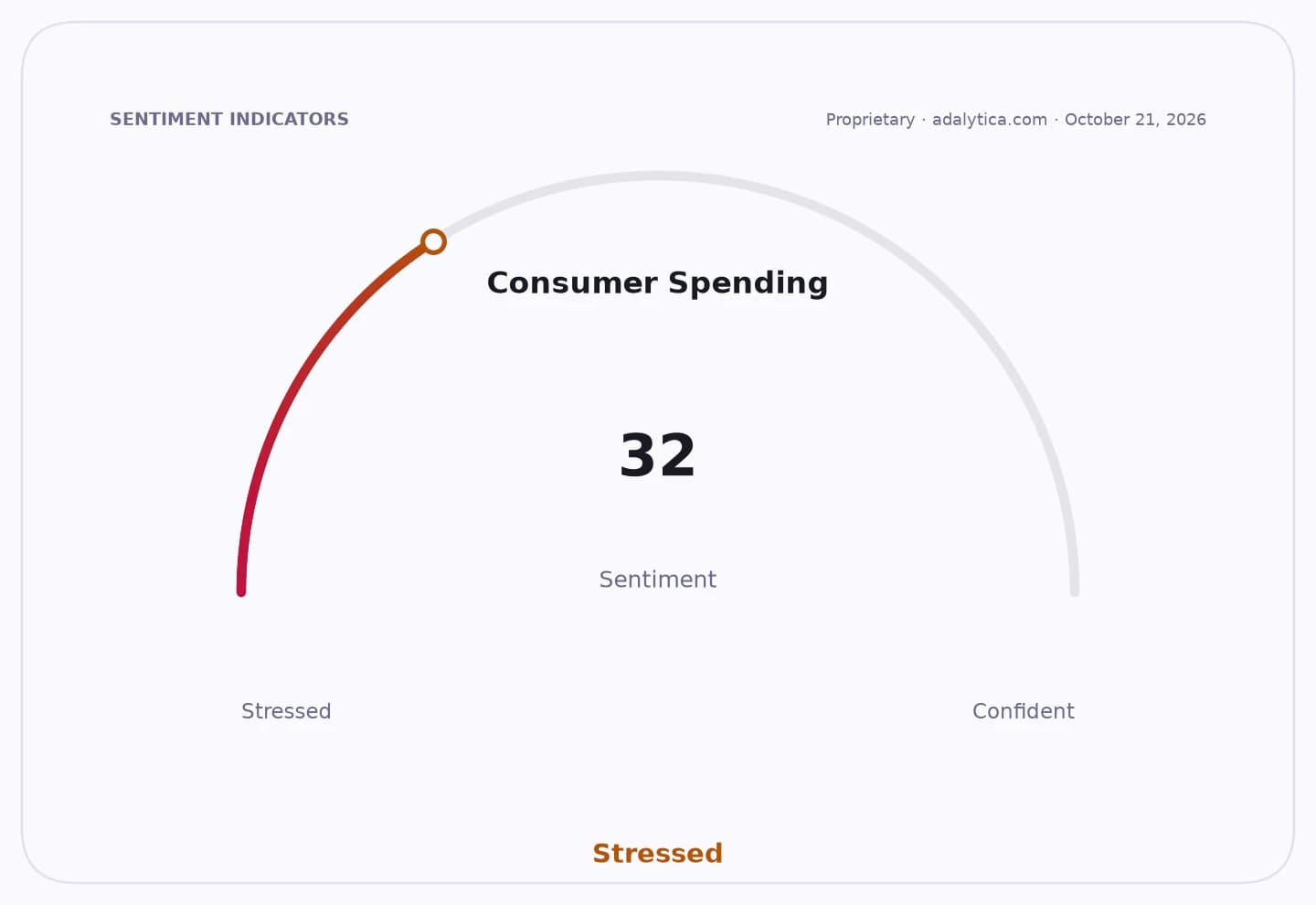
Sentiment Indicators
FX Vol Index
OCBC’s Nov. 2 Treasury Outlook listed EUR/USD at 1.1160 at day close, though without a timestamp or time zone, suggesting the pair was still trading above the key threshold when the note was prepared. But the strategists’ broader thesis is that the dollar can strengthen further before losing momentum, helped by U.S. artificial intelligence investment and growth, while the euro remains vulnerable to Europe’s weaker policy backdrop and energy exposure.
That split matters economically because currency moves feed directly into imported inflation, corporate margins and relative financial conditions. A weaker euro would support exporters in the euro area, but it would also raise the local-currency cost of imported energy and other dollar-priced goods, complicating the European Central Bank’s job if inflation proves slow to retreat. For investors, that means the euro may stay under pressure even if U.S. rates eventually stabilize, especially if markets reassess how much further the Fed can tighten amid signs of stress in credit and funding conditions.
The OCBC view also reflects a broader dollar narrative that is not purely bullish. FXStreet said the strategists see AI as supporting U.S. growth overall, but warned that AI-related financial stress could tighten conditions enough to make markets question how far the Fed can go. They also cited higher energy prices as an inflation risk and said possible currency-management efforts in China and Japan could limit further dollar gains. That makes the euro call less about a one-way dollar surge and more about whether Europe’s vulnerabilities can outlast the U.S. growth impulse.
France is the most immediate euro-specific concern in the note. FXStreet pointed to French fiscal risks ahead of the 2027 vote, and Agence France Trésor currently lists the country at Aa3 with a negative Moody’s outlook. That is not a sovereign funding crisis, but it is enough to keep investors alert to any widening of euro-zone political risk premia, particularly if debt dynamics deteriorate or the election campaign shifts toward looser fiscal policy.
Energy remains the other major transmission channel. Higher oil prices and a fragile European energy backdrop tend to weigh on the euro by worsening the region’s terms of trade, even as they support inflation and complicate monetary easing. The Romanian winter energy strain is a reminder of how supply-side shocks can still ripple through the continent, especially when power systems are tight and households are exposed to cost spikes.
For FX investors, the message is that the euro-dollar trade is being shaped by a three-way contest: U.S. growth support from AI, Europe’s fiscal and energy risks, and the degree to which central banks can offset those forces. OCBC’s scenario allows for a euro recovery in the second half of 2027 if U.S. growth cools after the first half and pressure for a more hawkish Fed eases. But until those assumptions are tested, the path of least resistance may remain lower for EUR/USD.
The key catalysts to watch are U.S. growth data tied to AI investment, French fiscal developments into the 2027 election cycle, and any renewed spike in energy prices. If all three move against Europe at once, a break below $1.10 would look increasingly plausible rather than merely theoretical.
| Entity | Gains | Losses |
|---|---|---|
| U.S. dollar | ▲Higher relative demand | ▼Euro and other majors |
| Euro-area exporters | ▲More price competitiveness | ▼Importers and consumers |
| French sovereign risk bears | ▲Higher risk premium trade | ▼French bonds and euro bulls |
| Oil and energy producers | ▲Support from higher prices | ▼European households and ECB policy makers |