Ethereum’s move back above $2,600 is a real momentum signal, but the bigger story is that size is now dictating how much return is still on the table.
Ethereum Reclaims $2,600 as Greed Readings Rise
At a market value near $300 billion, Ethereum can still rally, but each incremental leg higher demands billions of dollars in fresh capital. That makes the current rebound less a question of whether ETH can keep climbing and more a question of whether investors are being compensated for the capital intensity of a large-cap crypto asset versus the torque available in smaller, more reflexive bets.
Sentiment IndicatorsⓘProprietary · adalytica.com · September 23, 2026
This is a snapshot — live sentiment, awareness and momentum for 130+ markets update continuously in the dashboard.Open AlphaPulse
ETH was last trading around $2,625 after jumping more than 7% from a week earlier, recovering from a pullback that followed the Federal Reserve’s latest rate move and the collapse of hopes around the CLARITY Act. Technicals have improved sharply: the token has reclaimed a level it had not held in months, and the next widely watched target is around $2,800. On the charts, ETH is also holding above its 50-day moving average and well above its 200-day moving average, while RSI readings remain elevated but not yet at the kind of extreme that would usually scream exhaustion.
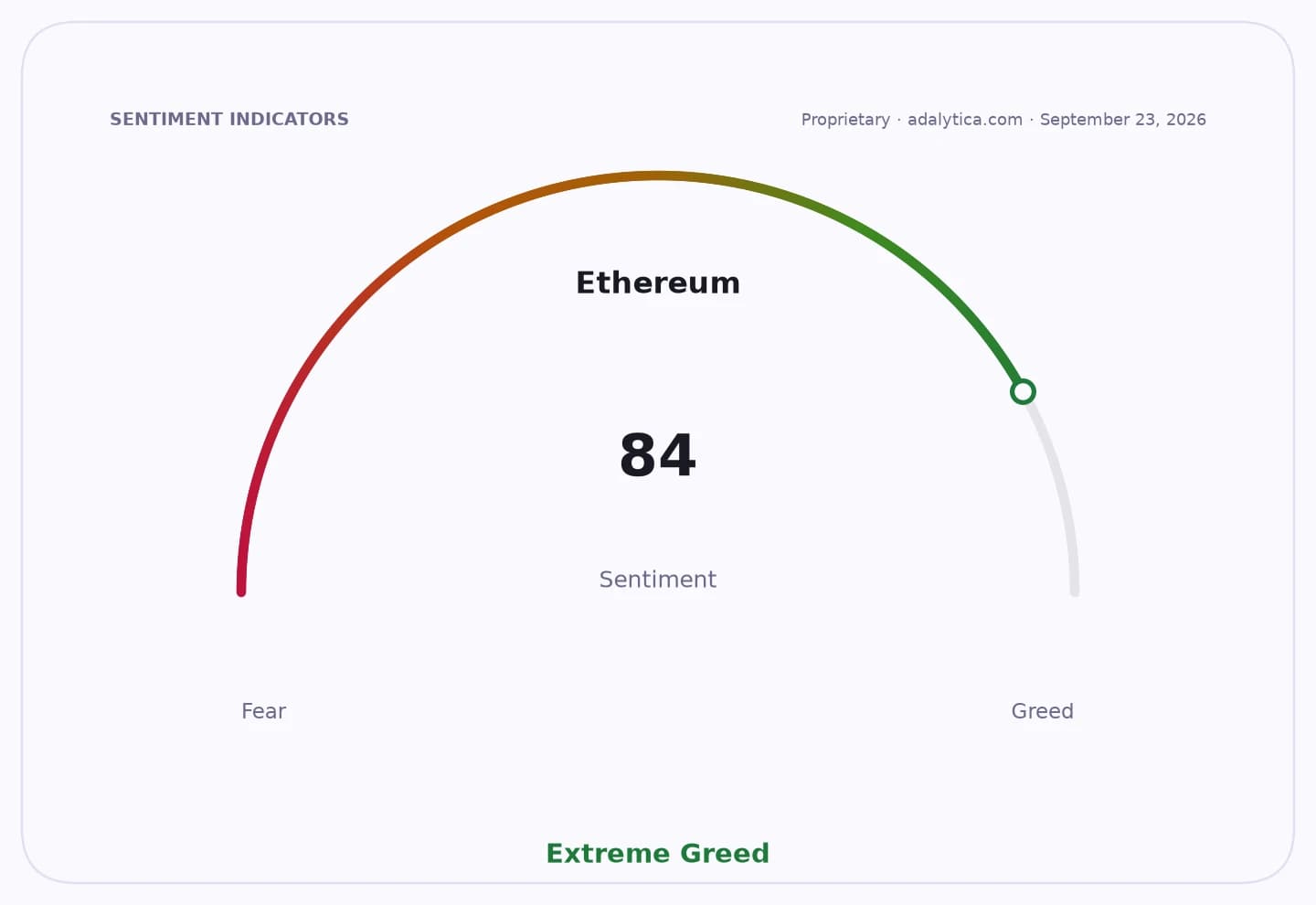
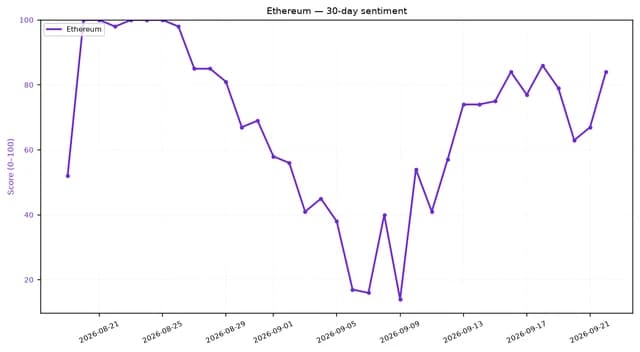
That matters because Ethereum is no longer trading like an early-stage asymmetric asset. It is behaving more like a macro-sensitive reserve crypto, one that responds to liquidity, policy expectations and risk appetite. The Adalytica Ethereum Fear & Greed Index is sitting at 84, a Greed reading, after a 17-point one-day jump and a 9-point rise over the past week. Bitcoin is even hotter, at 88 and in Extreme Greed territory, which tells you the whole crypto complex is being bid. But it also tells you the easy part of the move may already be behind us.
The market’s real dilemma is not whether Ethereum can reach $2,800 or even $3,000. It is whether a large-cap token with a $300 billion valuation can deliver the kind of multiple that smaller tokens promise when capital rotates deeper into the risk curve. That is why presale narratives are drawing speculative money even as ETH recovers: investors are chasing price discovery where the starting point is tiny and the upside math still looks explosive.
For long-term holders, Ethereum remains the most institutionally credible smart-contract asset, with an active ecosystem and a coming Glamsterdam upgrade that could support the next phase of network utility. But for traders, the market is sending a different message: the move above $2,600 is constructive, yet the ceiling on percentage gains is becoming more visible with every billion dollars added to the balance sheet of the asset.
My view is simple: Ethereum is still the core crypto exposure for investors who want durable network value, but the highest upside now sits in select second-order beneficiaries and smaller-cap speculation, not in expecting ETH itself to repeat the early-cycle kind of returns. If you own Ethereum, own it for the franchise; if you want exponential upside, look for the places where the market cap is still too small to cap the multiple.
| Entity | Gains | Losses |
|---|---|---|
| Ethereum holders | ▲Reclaimed momentum | ▼Diminishing multiple potential |
| Crypto bulls | ▲Risk appetite returns | ▼Late-cycle entry risk |
| Smaller tokens / presales | ▲Capital rotation | ▼Need to prove traction |
| Short sellers / skeptics | ▲Higher volatility | ▼Breakout squeeze risk |