More Dubai buyers are choosing to pay cash as borrowing costs stay elevated, but mortgages still finance the bulk of home purchases, showing that the emirate’s property market is adjusting to higher rates rather than shutting down.
Dubai Homebuyers Shift Toward Cash Purchases
That matters because Dubai’s housing boom has been built on easy liquidity, rapid population growth and an influx of foreign capital. When interest rates rise, leveraged buyers usually pull back first. A shift toward cash signals that wealthier buyers are still active, but it also hints at a more selective market in which financing costs are shaping who can buy, what they can afford and how long prices can keep rising.
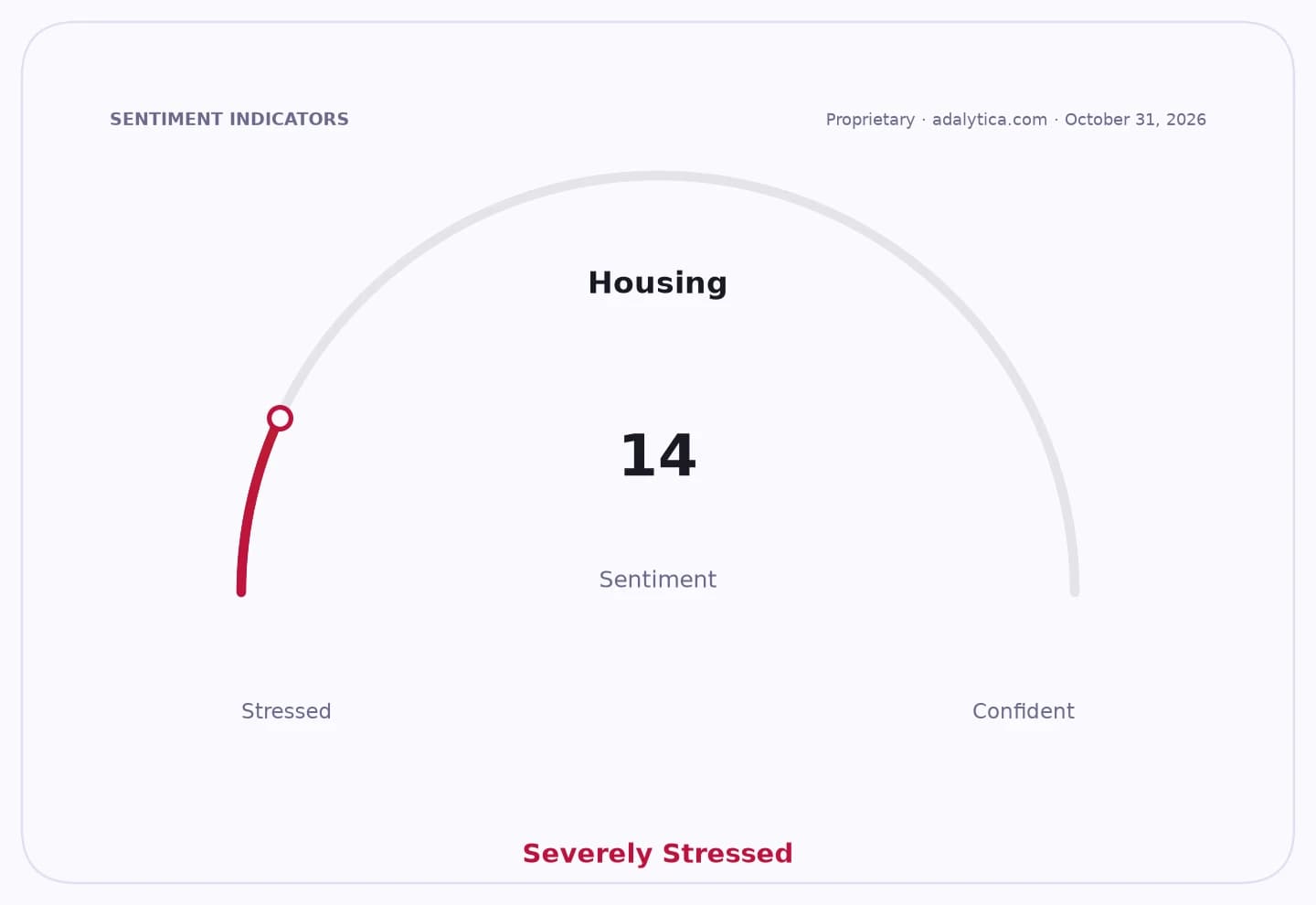
Sentiment Indicators
The backdrop is a global tightening in real estate finance. U.S. Treasury yields remain near 5% and Fed funds are still around 3.75%, leaving mortgage markets under pressure even as monetary easing in other countries looks uneven. In that environment, real estate investors, homebuyers and developers are all being forced to rethink leverage. For Dubai, where property demand has been one of the region’s standout growth stories, the rise in cash deals is a sign that buyers with deeper pockets are becoming relatively more important.
Still, mortgages remain central to the market. That tells investors two things. First, the housing market has not flipped into an all-cash niche; credit is still doing most of the heavy lifting. Second, banks and mortgage lenders remain exposed to any further increase in funding costs, because even a market with a growing cash share still depends on financing to sustain transaction volume.
The stock market takeaway is straightforward. Higher rates may cool the most price-sensitive segment of Dubai housing, but they are unlikely to derail the market unless financing tightens much further. Cash-rich buyers can cushion demand, while mortgage borrowers keep the market moving. For long-term investors, that combination usually supports a more durable but less explosive property cycle — one worth watching, especially if rates stay high into next year.
| Entity | Gains | Losses |
|---|---|---|
| Cash buyers | ▲More bargaining power | ▼Higher upfront capital outlay |
| Mortgage lenders | ▲Continued loan demand | ▼Greater rate sensitivity |
| Dubai sellers | ▲Support from wealthy buyers | ▼Pressure on rate-sensitive demand |
| Rate-sensitive buyers | ▲Potential for cooler prices | ▼Reduced affordability |