China’s push to narrow the artificial intelligence gap with the U.S. is sharpening investor focus on the picks-and-shovels names that stand to benefit if the race accelerates, with cybersecurity and chipmaking equipment companies among the clearest proxies.
CrowdStrike and Lam Research on U.S.-China AI race

That was the core message from Pacer ETFs president Sean O’Hara on Fox Business, where he warned that if China wins the AI race, “it’s curtains,” and pointed investors toward CrowdStrike and Lam Research as companies positioned to profit from the expansion of AI infrastructure and digital defense.
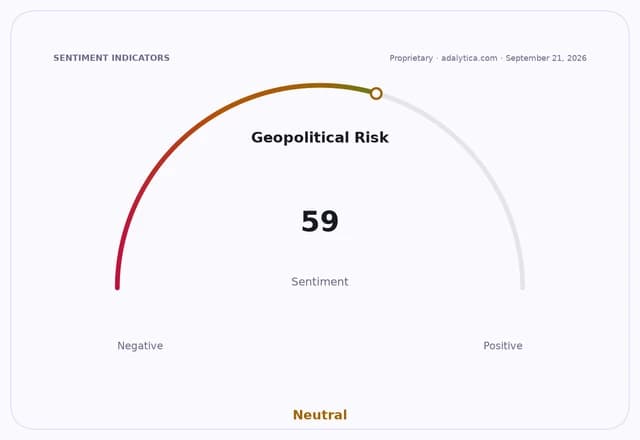
Sentiment IndicatorsⓘProprietary · adalytica.com · September 21, 2026
This is a snapshot — live sentiment, awareness and momentum for 130+ markets update continuously in the dashboard.Open AlphaPulse
The bigger economic issue is not just who builds the models, but who supplies the hardware, tools and security layers needed to scale them. AI spending is increasingly flowing into semiconductors, wafer equipment, cloud infrastructure and cybersecurity as companies and governments race to secure data, protect systems and expand compute capacity.
Lam Research sits directly in that supply chain. The chip-equipment maker has been volatile this year, but its shares were recently at $297.99, above the 50-day moving average of $306.33? Actually still below that level, reflecting a pullback after a sharp run. The stock has traded as high as $433.33 in June before sliding, while its long-term trend remains intact with the share price still above the 200-day moving average of $267.71.
CrowdStrike has also been extremely active, with shares ending Monday at $247.14, above both its 50-day moving average of $208.28 and 200-day average of $147.56. The cybersecurity name has rallied sharply from lows near $94.29 in February, a move that underscores how investors continue to pay up for companies tied to AI adoption and enterprise security, even after heavy volatility.
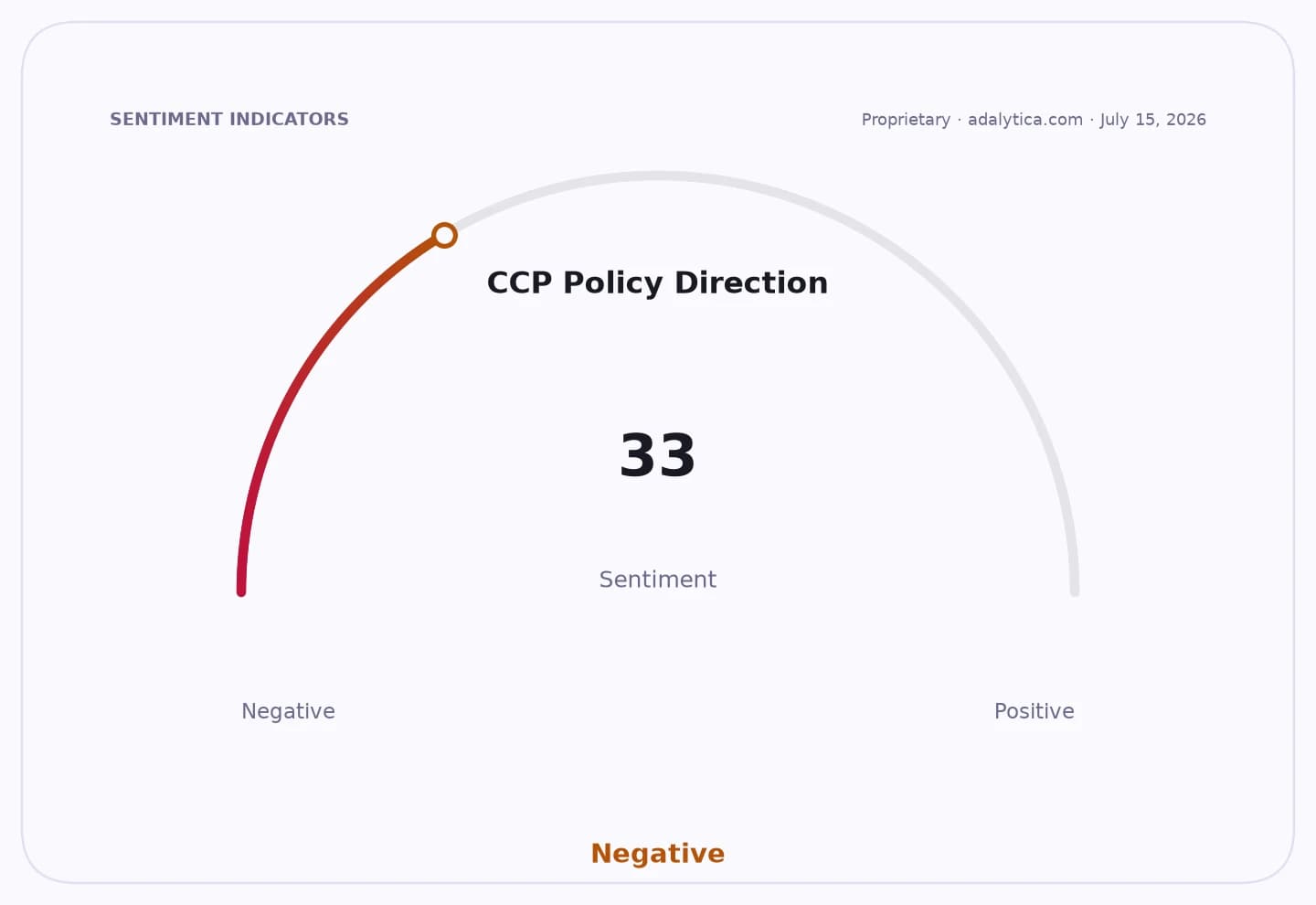
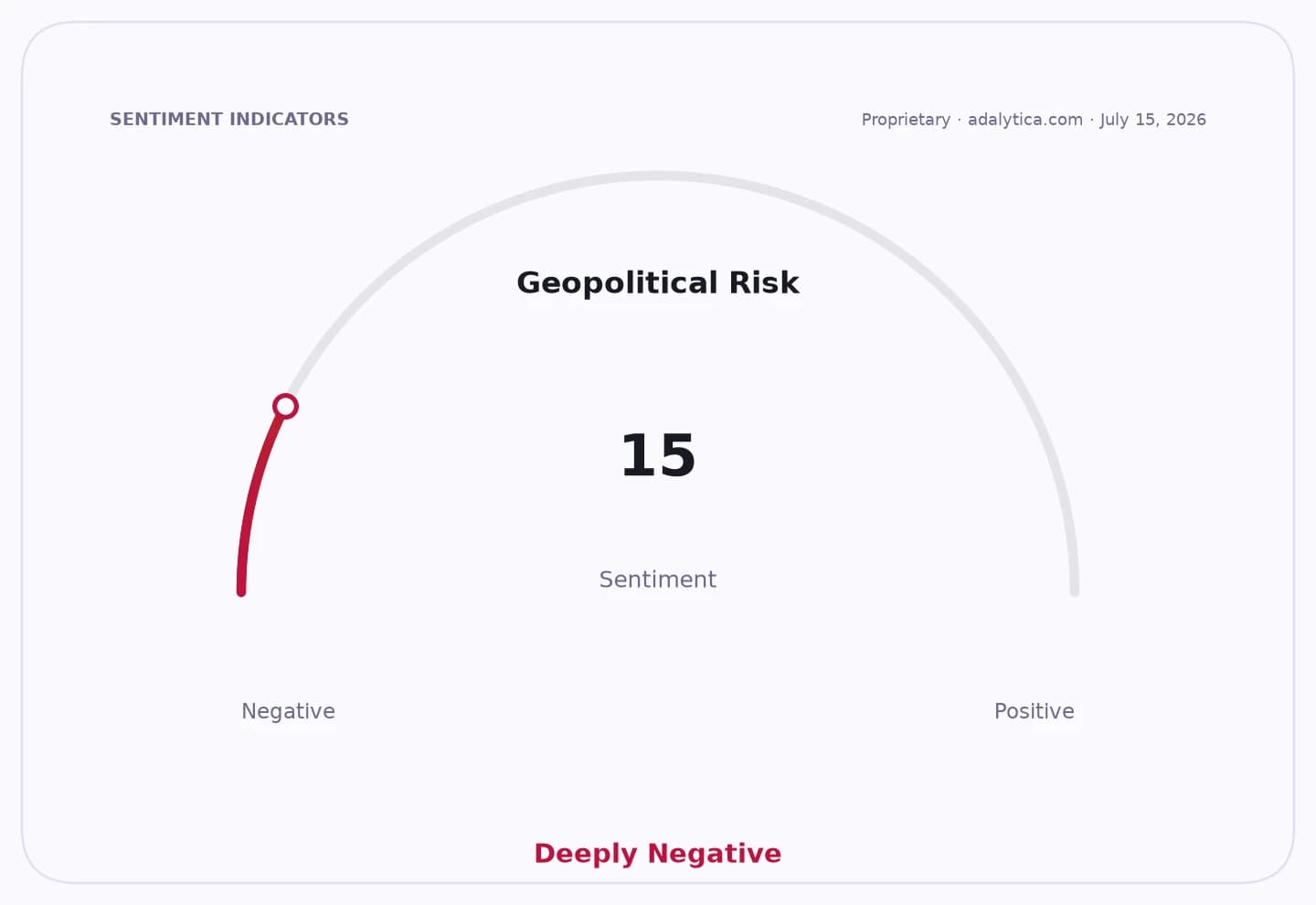
The geopolitical backdrop adds another layer. The U.S.-China AI contest is pushing both governments and corporate customers to prioritize speed, scale and resilience, while China’s growth sentiment remains weak in Adalytica’s gauge at 15, or “Extreme Fear,” suggesting investors are still wary of the country’s macro outlook even as the AI race intensifies. The broader global stability gauge is neutral, but with elevated fear around geopolitical risk.
For investors, the narrative is straightforward: AI leadership is becoming a national-security and industrial-policy issue, and that tends to favor the companies selling the infrastructure around the technology rather than the end-user apps alone. That leaves CrowdStrike as a security beneficiary and Lam Research as a beneficiary of continued semiconductor capital spending, particularly if policymakers and hyperscalers keep funneling capital toward domestic AI capacity.
The main risk is that the trade gets crowded. If U.S.-China tensions worsen, chip equipment and cyber names can benefit from the thematic bid, but they are also exposed to export controls, supply-chain disruptions and valuation resets. The next catalysts are more U.S.-China policy headlines, AI capital-spending updates from hyperscalers and the next round of earnings from semis and security software firms.
| Entity | Gains | Losses |
|---|---|---|
| CrowdStrike | ▲More AI-driven security demand | ▼Valuation resets |
| Lam Research | ▲Chip-capex growth | ▼Export-control risk |
| U.S. AI leaders | ▲Strategic advantage | ▼Cost pressure |
| China AI rivals | ▲Domestic urgency | ▼Slower access to tech |