Congress is headed toward a pre-Christmas funding deadline as a fight over war spending on Iran and a proposed $350 billion defense supplement threatens to derail a stopgap budget agreement.
Congress Faces Shutdown Risk Over Iran Spending Fight
The immediate risk is not a lack of money in the system but a lack of political consensus. Current federal funding expires on Dec. 11, leaving lawmakers with roughly three weeks to pass either a continuing resolution or several annual appropriations bills before a shutdown would begin. That window is even tighter because Congress is about to disappear for a week-long Thanksgiving recess, while any bipartisan measure in the Senate still needs 60 votes.
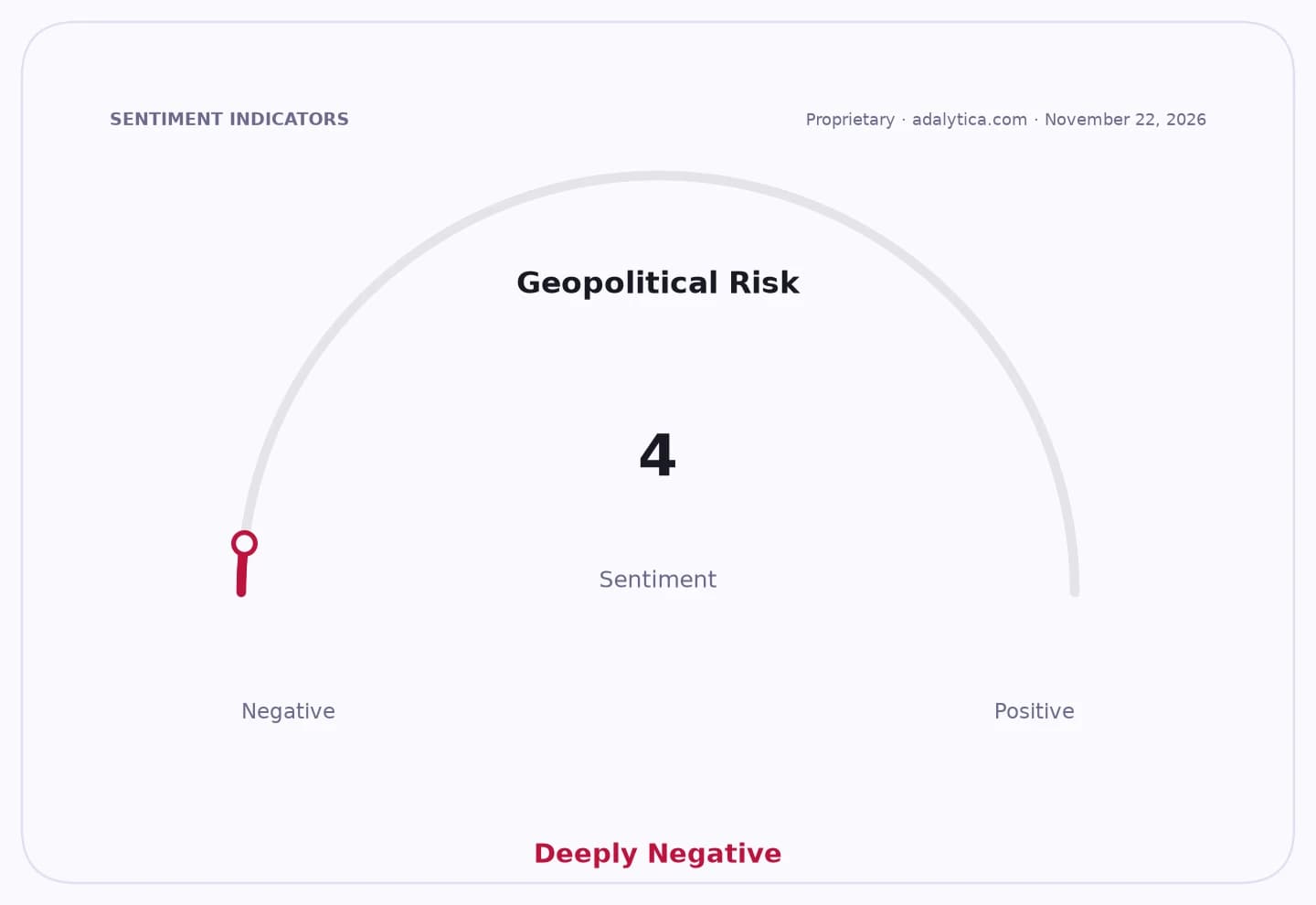
Sentiment Indicators
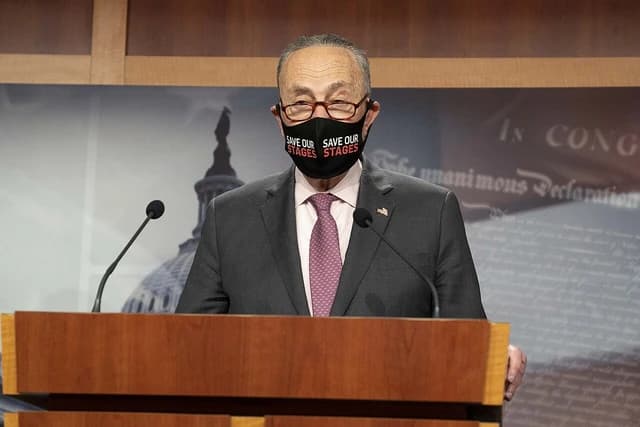
The standoff has turned the budget process into a proxy battle over President Donald Trump’s foreign policy and military spending priorities. Senate Democrats are divided over whether to use appropriations to try to curb the administration’s Iran campaign, even if that risks shuttering parts of the government. Some argue funding should not underwrite military action they oppose; others warn that forcing a shutdown would harm federal workers and disrupt basic services without changing policy in Tehran.
Republicans, meanwhile, are split over Trump’s push for an additional $350 billion for the Pentagon, complicating their ability to present a unified front. That division matters because defense spending is one of the few areas where a deal could theoretically be struck quickly, yet it is also the issue most likely to inflame both parties. The result is a familiar but economically consequential Washington trap: the closer lawmakers get to a deadline, the more the budget becomes hostage to unrelated policy fights.
A shutdown would matter because it would interrupt federal operations, delay payments to workers and contractors, and inject another layer of uncertainty into an economy already sensitive to policy shocks. It would also hit markets at a moment when broader risk appetite is fragile. Adalytica’s S&P 500 trade signals show “Extreme Fear,” while the SPY ETF has fallen below its 50-day moving average and slipped toward its 200-day moving average, underscoring how quickly political dysfunction can feed into market caution.
Defense contractors are among the clearest market watchers here. Lockheed Martin, RTX and peers such as Northrop Grumman, General Dynamics and Huntington Ingalls all depend on the timing of Pentagon appropriations and continuing resolutions to sustain production schedules and contract cash flow. Their businesses are not usually impaired by a brief funding gap, but repeated brinkmanship can delay awards, push out payments and cloud near-term visibility. For investors, that means the shutdown risk is less about a single missed budget date than about what it says on the durability of future defense spending.
The broader narrative is that Congress is once again trying to separate fiscal housekeeping from geopolitical confrontation — and failing. Lawmakers can still choose a short-term CR to buy time into early next year, but that would only postpone the clash. With Democrats expected to control both chambers after the midterm transition, the current Republican-led Congress has an added incentive to lock in as much as it can now. Whether it does so will depend on whether either party is willing to retreat from the Iran fight long enough to keep the government open.
| Entity | Gains | Losses |
|---|---|---|
| Federal workers | ▲paycheck continuity if CR passes | ▼furloughs if shutdown hits |
| Defense contractors | ▲full-year funding deal | ▼delayed awards and cash flow |
| Republicans | ▲leverage on Pentagon spending | ▼blamed for dysfunction |
| Democrats | ▲policy leverage on Iran | ▼risk of shutdown backlash |