Distressed commercial real estate sales are climbing again, but the bigger market story is that private lenders are now absorbing much of the pressure, delaying a wave of forced selling that would otherwise hit prices harder.
Commercial real estate distress rises as private lenders step in
Sales of distressed properties rose 26.4% in the first nine months of 2026 from a year earlier to $13.2 billion, according to a Bisnow analysis of MSCI data, with apartments leading the rebound as distress in multifamily jumped 62.8%. That is a clear sign that the easy-money era of 2020 through 2022 is still unwinding, even as higher-quality capital and renewed deal flow keep the broader market from fully breaking down.
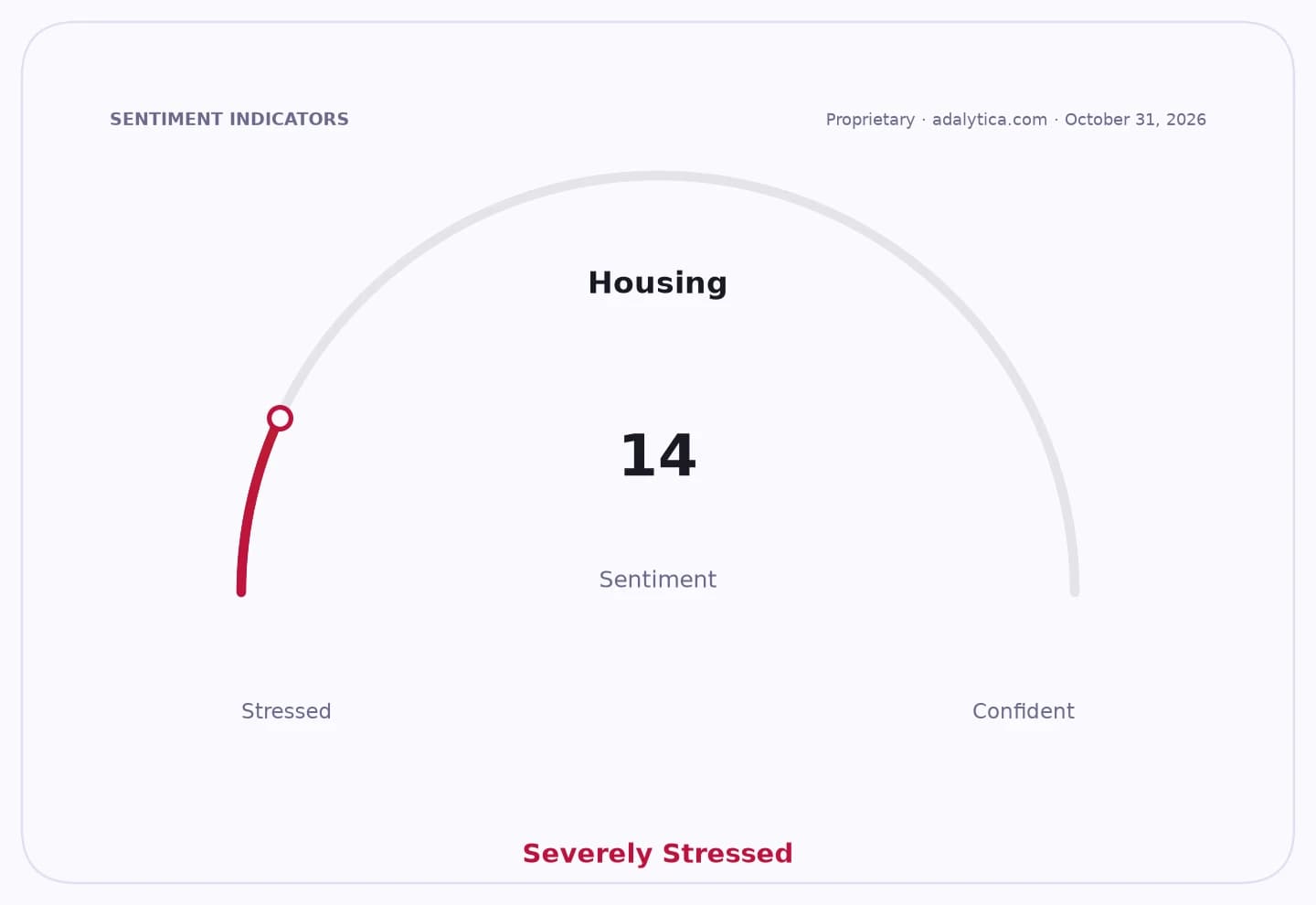
Sentiment Indicators
The economic significance is twofold. First, elevated interest rates and still-sticky inflation have kept refinancing costs above what many owners underwrote when cap rates were compressed and debt was cheap. Second, the absence of a more violent liquidation cycle shows how debt funds and private equity firms have become the market’s shock absorbers, stepping in where banks and insurers once dominated. That is limiting the share of distressed trading even as pressure builds underneath.
Total commercial real estate investment rose 49.7% year on year to $559.9 billion in the first three quarters, and nondistressed sales jumped 50.3%, which means distress is rising in absolute terms but not yet overwhelming the market. Distressed deals accounted for just 2.4% of total volume, down to 1.5% in the third quarter, the lowest since mid-2024. In other words, the market is not in free fall; it is repricing selectively, with stress concentrated in assets bought at peak valuations and financed with floating or soon-to-reset debt.
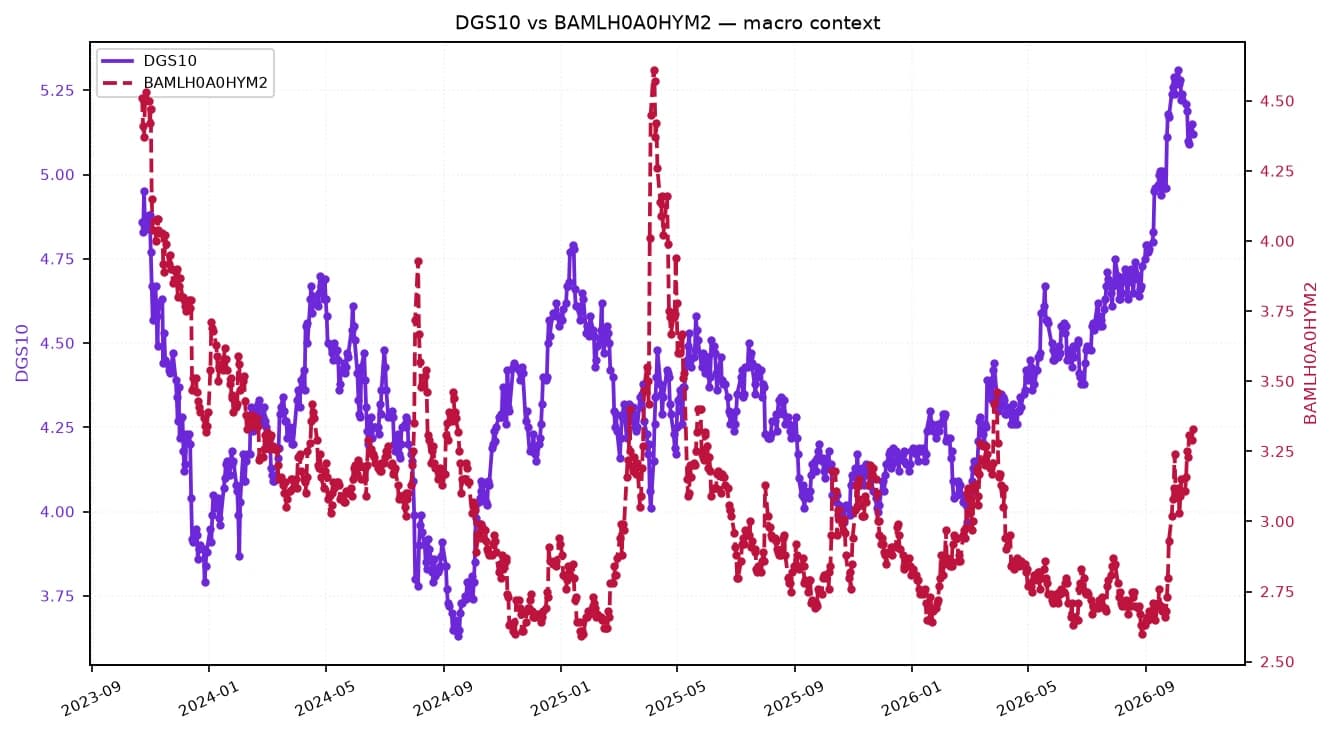
BAMLH0A0HYM2 vs DGS10 — macro contextadalytica.com
Explore this data interactively — full history, time series and cross-market comparisons.
Multifamily is the clearest pressure point. Owners who paid pandemic-era prices on thin yields are now facing mortgage resets in a higher-rate world, and the sector was the only one where distressed volume outpaced nondistressed growth. Office remains under strain as leases roll and vacancies remain elevated, while lodging shows the highest distress share at 8.9%. Industrial, by contrast, saw a 167.6% surge in distressed sales, but from a very small base.
For investors, the takeaway is that distress is becoming more tradable, not necessarily more systemic. Debt funds are effectively underwriting the option value of waiting for borrowers to run out of road, then taking title at a discount. That can preserve market functioning and cap downside in the short term, but it also means losses may be deferred rather than eliminated. CMBS distress rising to 8.02%, the highest since November 2020, suggests the pressure is still working through securitized credit, especially as roughly 78% of fixed-rate CRE loans maturing through 2028 carry coupons below the 10-year Treasury yield.
The next catalyst is the path of rates. If inflation eases and Treasury yields fall, refinancing stress could stabilize. If not, more owners will be forced into workouts, discounted sales or handovers to lenders. For now, the market’s defining feature is not mass liquidation, but a slow transfer of stressed real estate from overlevered owners to private credit players willing to wait.
| Entity | Gains | Losses |
|---|---|---|
| Debt funds / private equity lenders | ▲More workout opportunities | ▼Higher workout and asset-management risk |
| Distressed buyers | ▲Better entry prices | ▼Need patient capital |
| Overlevered apartment owners | ▲Limited by lender forbearance | ▼Refinancing stress and equity loss |
| Banks / insurers | ▲Avoid some immediate losses | ▼Lose share to private credit |