Chinese banks have raised interest rates on US dollar deposits to as high as 4.5% in a move designed to cool the yuan’s recent strength and slow the pace of foreign-exchange inflows into the banking system.
Chinese banks raise dollar deposit rates to 4.5%
Carry Trade
The increase matters because it shows Beijing is still managing the currency rather than allowing a one-way appreciation to build. By making dollar deposits more attractive, lenders can pull some savings and corporate cash back into foreign currency holdings, easing upward pressure on the yuan and helping keep capital flows more balanced.
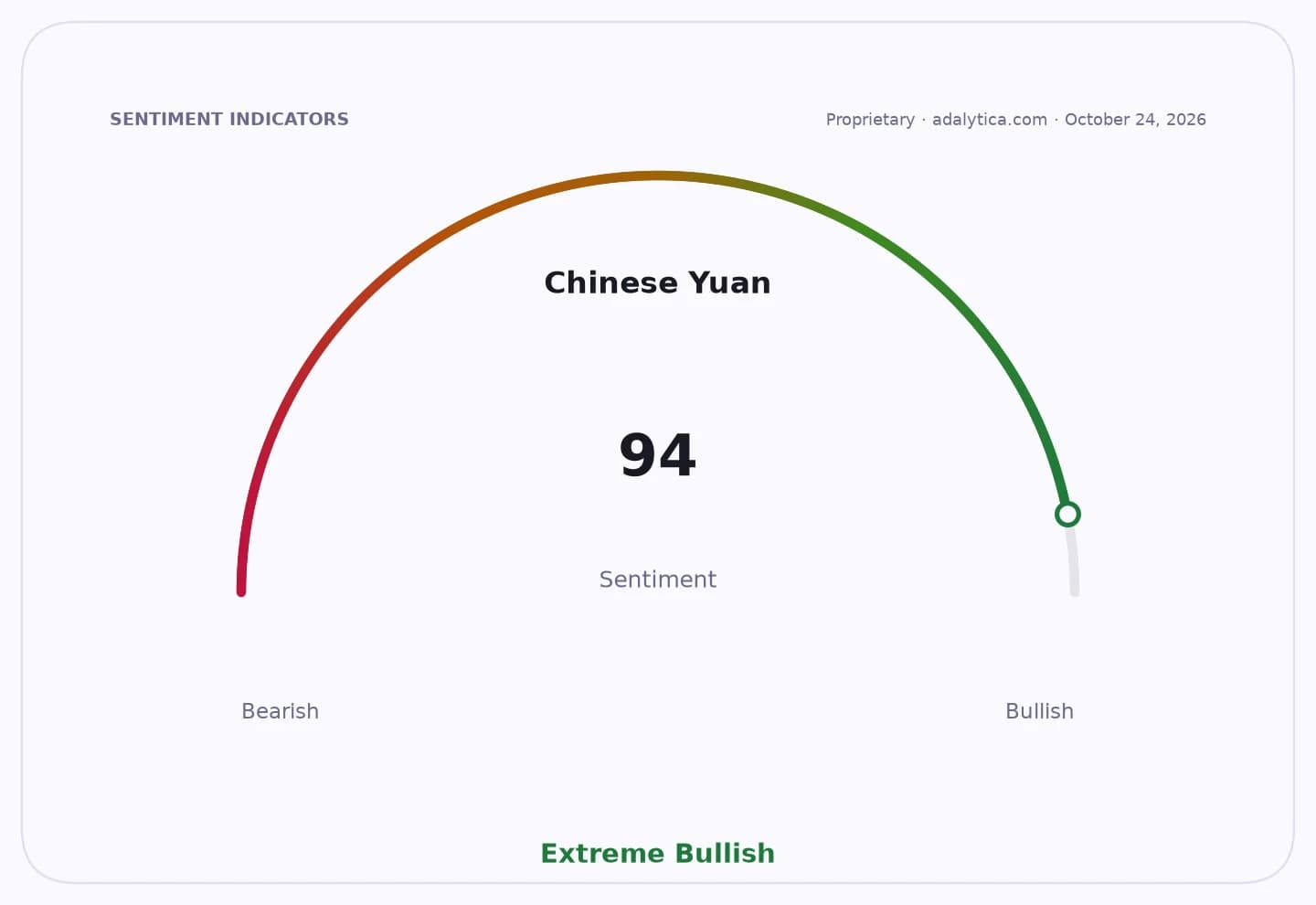
Sentiment Indicators
The adjustment also highlights the tension facing policymakers: a firmer yuan can help stabilize import costs and reduce imported inflation, but a rapid rise can hurt exporters, tighten domestic liquidity and invite more speculative flows. Raising dollar deposit rates is a relatively low-cost way to lean against that momentum without signaling a broader shift in policy. It also suggests demand for dollars remains solid among corporates and interbank clients, even as the yuan has strengthened.
For investors, the move is a reminder that China’s currency market is still being shaped by administrative tools as much as by fundamentals. It may reduce the appeal of yuan assets at the margin if depositors choose to stay in dollars, while also tempering some of the carry trade enthusiasm that has built around expectations of yuan gains. That dynamic is visible in broader market positioning: Adalytica’s FX carry-trade gauge shows extreme greed, while its yuan trade snapshot remains neutral, suggesting traders are still leaning on volatility rather than making a clean directional bet.
The backdrop is consistent with a market that has been receptive to China assets but not decisively committed. The iShares China Large-Cap ETF, which tracks major mainland-listed and Hong Kong-listed Chinese stocks, has been volatile and was last seen at $33.48, below its 200-day moving average of $35.26, indicating the equity market has not fully absorbed a more durable China recovery story.
The near-term question is whether banks extend the higher dollar deposit rates further if yuan appreciation persists. If they do, the policy signal would reinforce that authorities want a slower, more managed currency move rather than a sharper rerating that could unsettle exporters and complicate capital-flow management.
| Entity | Gains | Losses |
|---|---|---|
| Chinese banks | ▲More FX deposits | ▼Margin pressure |
| Yuan | ▲Less one-way appreciation | ▼Stronger upside |
| Dollar savers in China | ▲Higher deposit yield | ▼Currency risk |
| Chinese exporters | ▲Softer yuan strength | ▼Less FX relief |