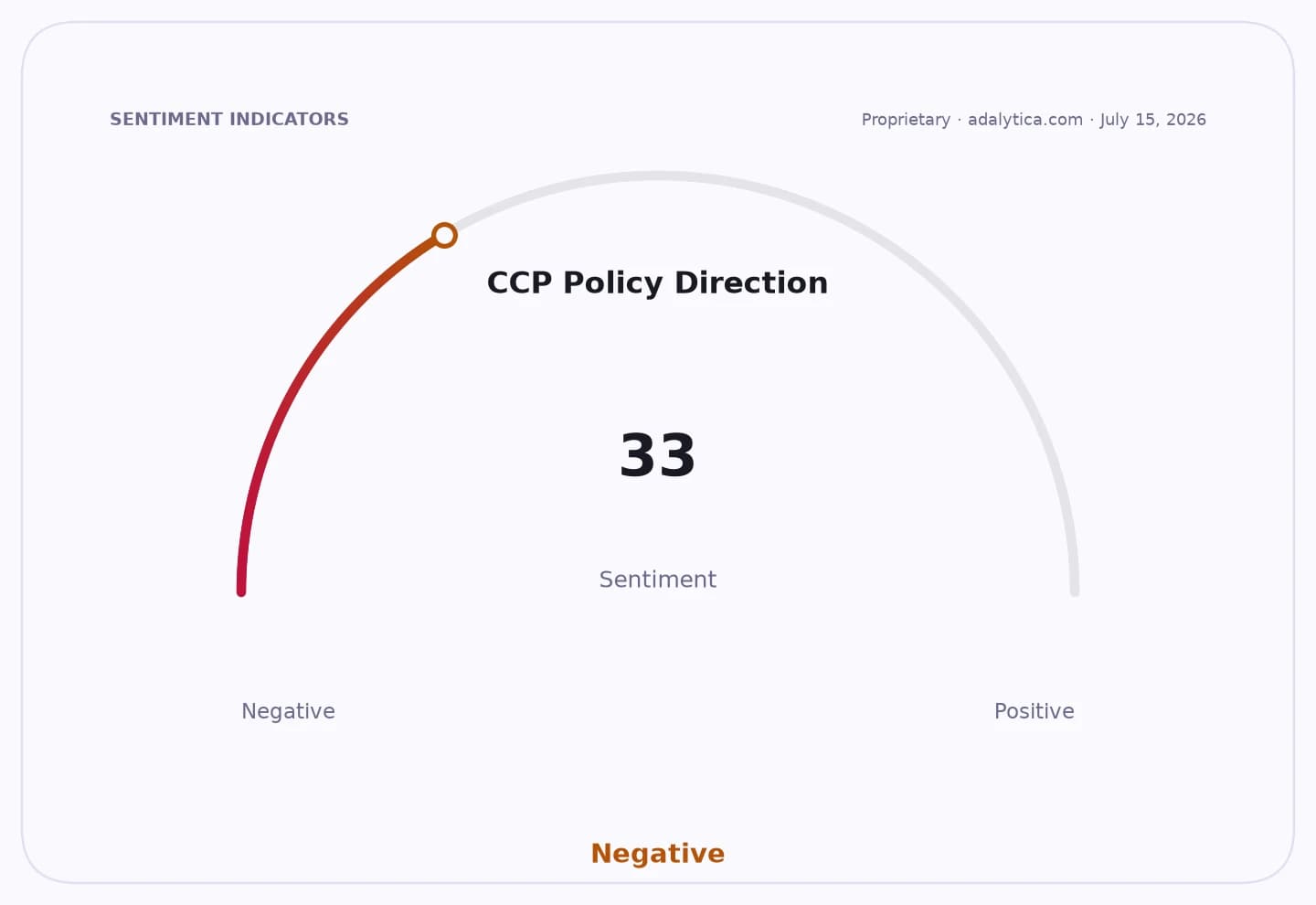
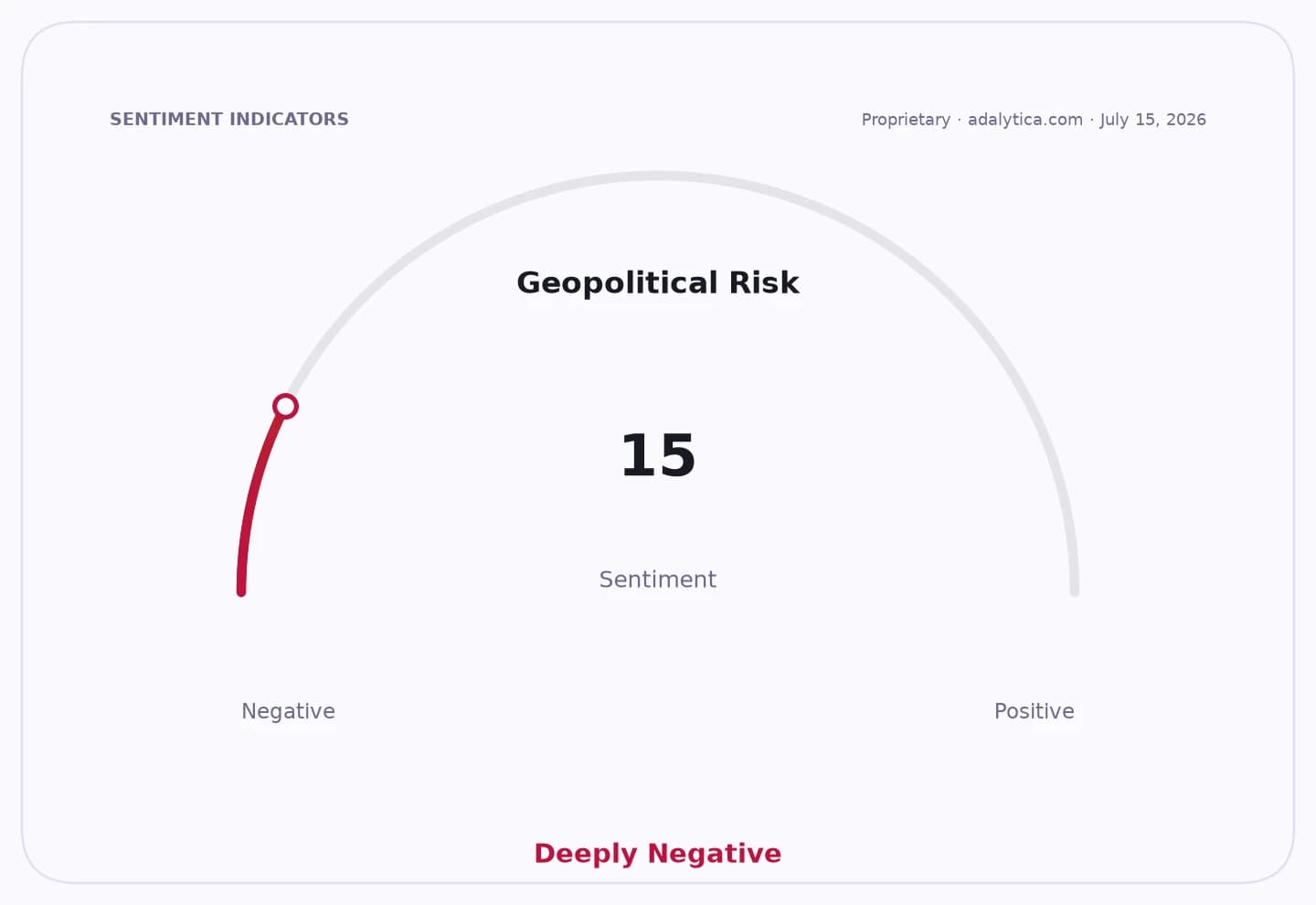
China is moving to seize the race to bring Mars samples back to Earth, with its Tianwen 3 mission aiming for a 2031 return that could make it the first country to recover material from another planet and potentially the first to detect signs of past extraterrestrial life.
China Tianwen 3 Mars sample return plan

That matters economically and politically because Mars sample return has become a high-stakes test of deep-space engineering, national prestige and long-duration industrial capacity. If Beijing lands the first samples, it would underscore China’s growing lead in autonomous navigation, heavy-lift launch and planetary protection — capabilities that also spill over into lunar, asteroid and outer-planet programs.
Sentiment IndicatorsⓘProprietary · adalytica.com · September 23, 2026
This is a snapshot — live sentiment, awareness and momentum for 130+ markets update continuously in the dashboard.Open AlphaPulse
The mission is set to launch in 2028, during a narrow Mars transfer window that opens only once every 26 months, and will use two Long March 5 rockets from Wenchang to carry a lander, ascent module, orbiter and return capsule. Chinese mission planners say the spacecraft will try to collect at least 500 grams of material, using a drill that can reach 2 meters below the surface to reduce contamination from radiation and oxidation.
The science prize is bigger than the politics. Mission scientist Hou Zengqian said Tianwen 3 will look for microbial traces and even the possibility of unfamiliar life forms shaped by Mars’ evolution, giving the samples a shot at answering one of planetary science’s biggest questions. China says it is also building a dedicated planetary protection laboratory to prevent biological contamination when the samples arrive.
The U.S. program is now the vulnerable side of the race. NASA’s Mars Sample Return effort, developed with the European Space Agency and built around Perseverance’s sample tubes, has been bogged down by cost blowouts and funding pressure, with the original plan estimated at as much as $11 billion and potentially stretching into the 2040s.
NASA is now considering cheaper, faster alternatives, including private-sector partners, but the delay opens the door for China to beat it to the finish line. Former NASA Mars research chief Scott Hubbard called the prospect a “Sputnik” moment, warning that a U.S. loss would be a technological and political shock with implications far beyond planetary science.
For investors, the story is less about a direct market trade than about the direction of state-backed spending, launch demand and strategic aerospace competition. China’s push supports the case for its heavy launchers, deep-space contractors and space infrastructure chain, while the U.S. outcome will shape future federal contracts for aerospace primes and private launch providers competing for NASA work.
The next catalysts are clear: China must lock in a landing site this year, keep the 2028 launch timeline intact and execute an autonomous orbital rendezvous around Mars, while NASA still needs to prove it can redesign its own return mission without losing the race entirely.
| Entity | Gains | Losses |
|---|---|---|
| China space program | ▲First-mover advantage | ▼U.S. prestige |
| NASA / ESA Mars Return | ▲Cost-cutting pressure | ▼Mission timeline |
| Aerospace contractors | ▲Future launch and deep-space contracts | ▼Delayed federal awards |
| Investors in China space names | ▲Strategic upside | ▼U.S. sample-return lag |