China appears to be building a dedicated support vessel for giant unmanned submarines, a step that could make its undersea drone program far more operationally useful and intensify pressure on the U.S. and its allies in the Pacific.
China builds support ship for giant unmanned submarines
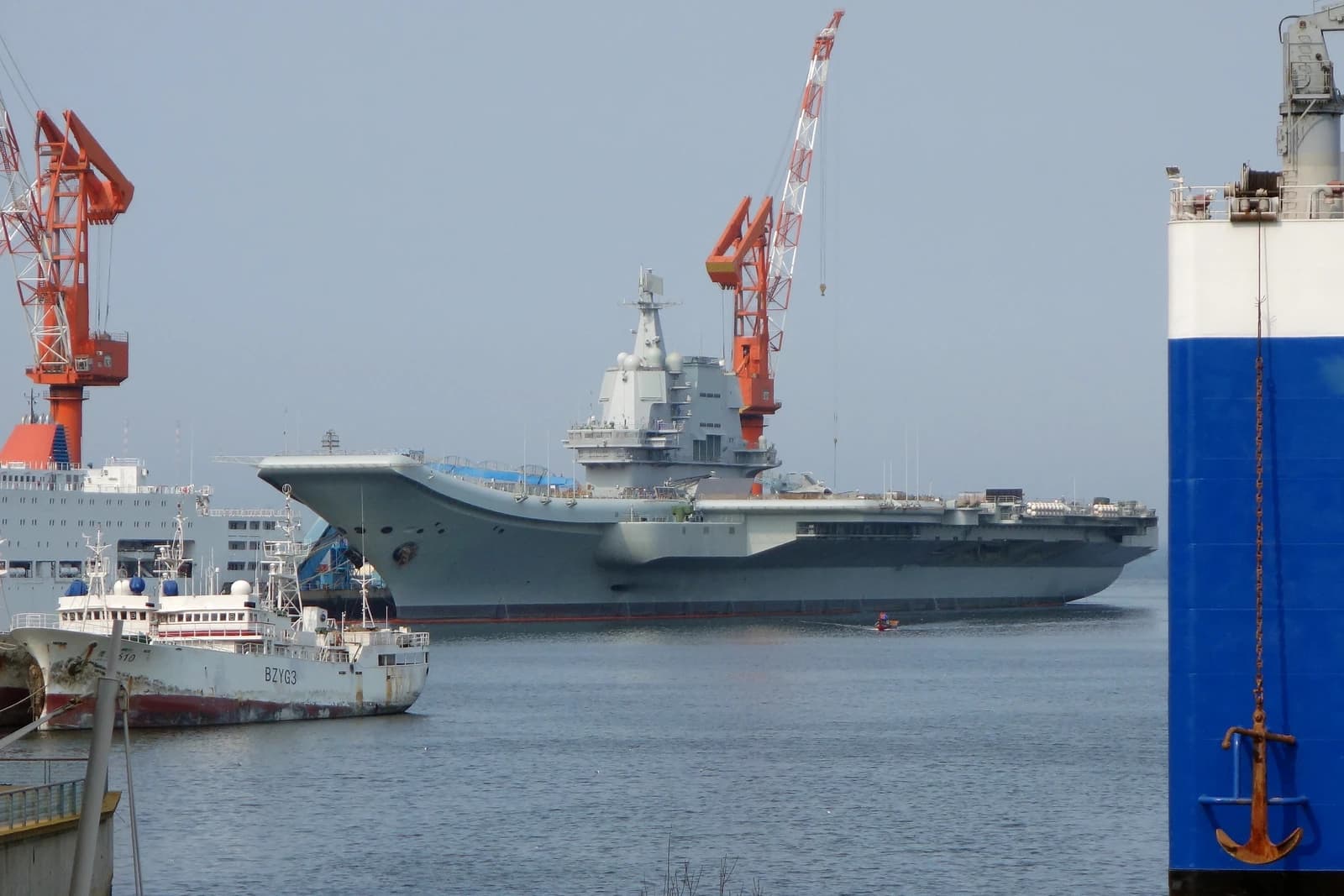
Satellite imagery analyzed by military observers shows a large, unusual ship under construction at Hudong-Zhonghua in Shanghai with a stern well deck and hydraulic launch system that strongly suggests it is designed to transport, launch, recover and service extra-large unmanned underwater vehicles. If confirmed, it would be the first purpose-built “mothership” for such systems, marking a shift from testing prototypes to building a deployable undersea warfare platform.
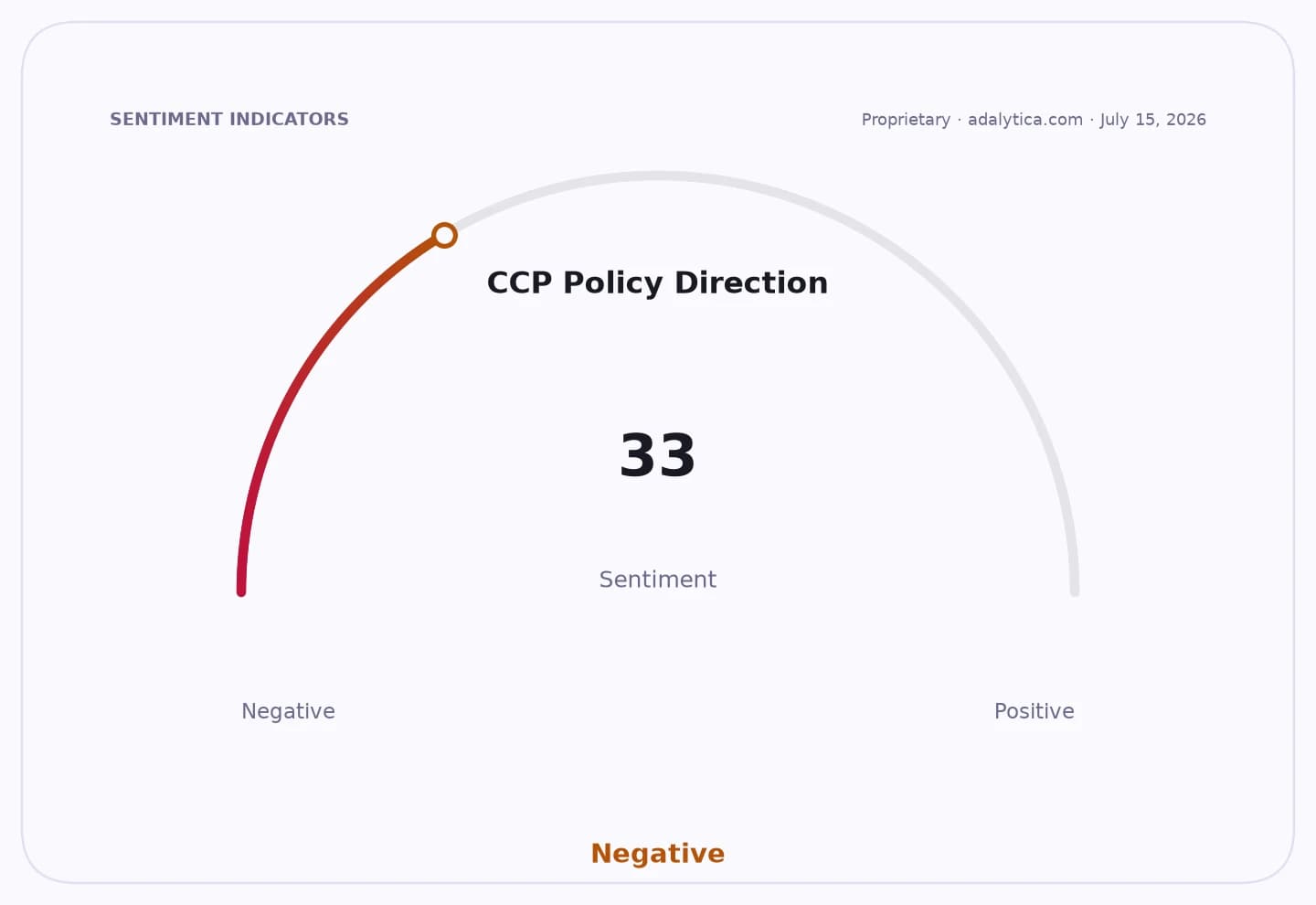
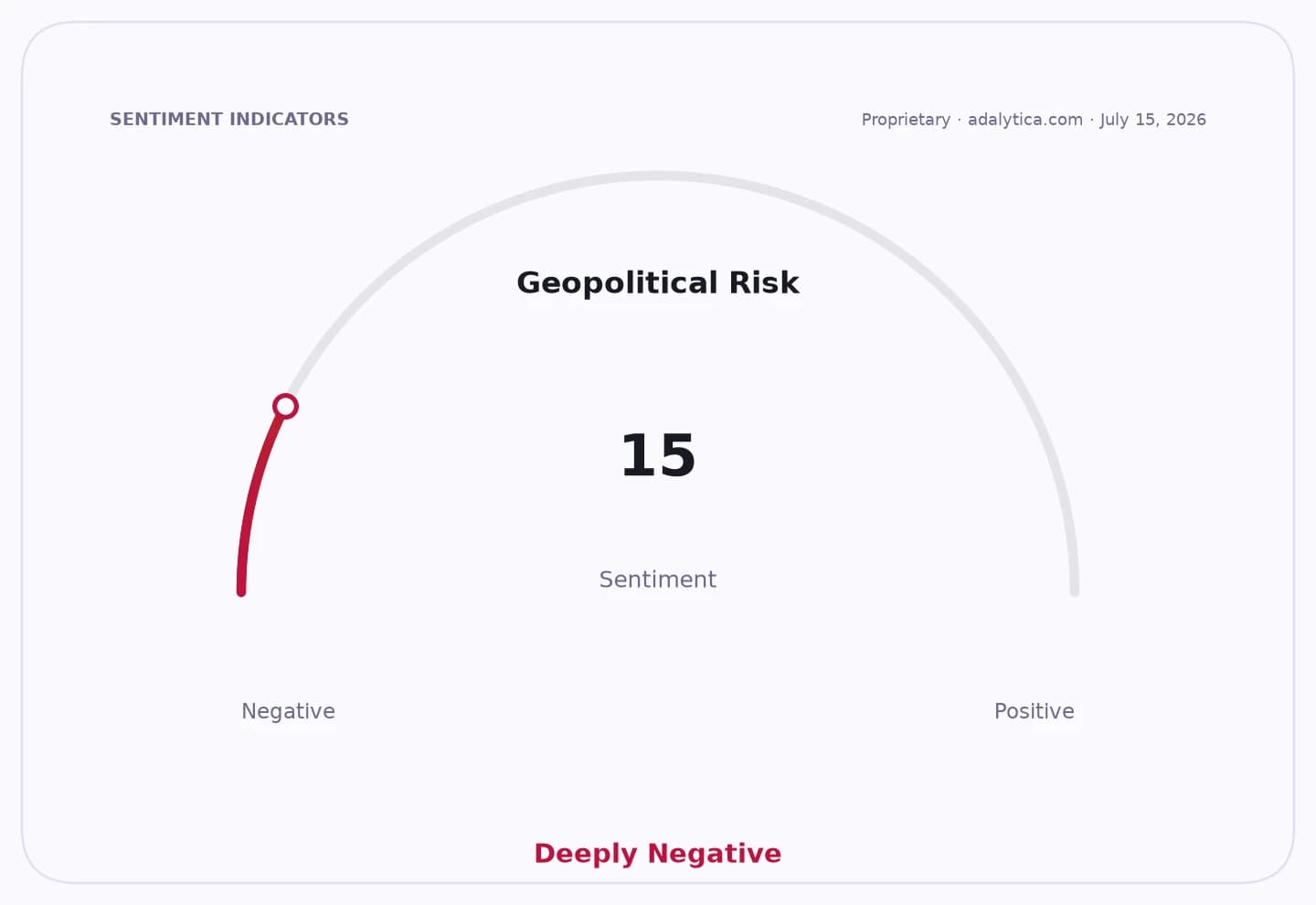
Sentiment IndicatorsⓘProprietary · adalytica.com · September 17, 2026
This is a snapshot — live sentiment, awareness and momentum for 130+ markets update continuously in the dashboard.Open AlphaPulse
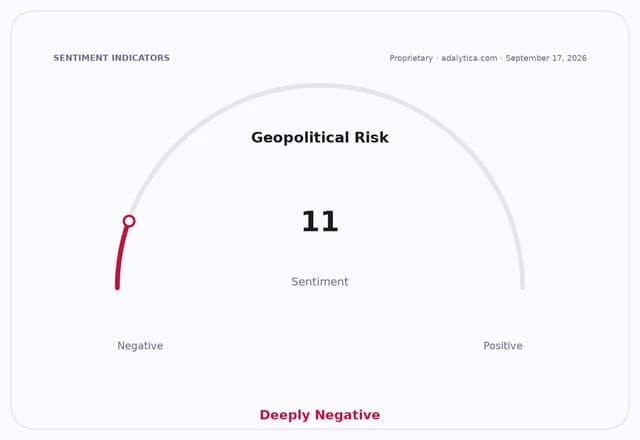
That matters because logistics are often the difference between an experiment and a weapons system. China has already tested two very large unmanned submarines, estimated at roughly 35 meters and 45 meters, or about six to eight times the size of Boeing’s Orca XLUUV. A support ship would let Beijing move those vehicles closer to patrol areas, extend their range beyond shore-based launch sites and reduce the constraints that have limited earlier unmanned undersea programs.
For investors, the broader significance is in the sustained militarization of the Asia-Pacific and the likelihood that defense spending, shipbuilding and undersea systems remain strategic priorities. The development reinforces expectations that China will continue to invest in asymmetric naval capabilities that can complicate U.S. surveillance and anti-submarine warfare planning around Taiwan, the South China Sea and broader Western Pacific routes.
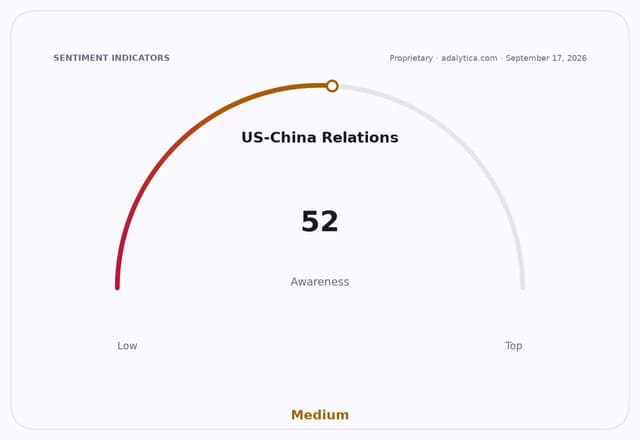
The commercial knock-on effects are harder to quantify but still relevant. Higher maritime tension can lift demand for naval platforms, sensors, communications systems and autonomy software, while also feeding into risk premiums across shipping and energy markets if it adds to security concerns in key sea lanes. Reuters and Bloomberg-style market reading would also note that the geopolitical backdrop has been worsening: Adalytica’s U.S.-China relations sentiment sits at neutral but has weakened sharply over the past week, while its global stability gauge points to “Extreme Fear.”
The project also fits a larger pattern of great-power competition in domains that are expensive to police and difficult to defend. A giant unmanned submarine, especially one launched from a dedicated support vessel, could be used for long-endurance reconnaissance, acoustic intelligence gathering and potentially mine-laying or strike missions, even if the final payload remains unclear. That ambiguity is part of the threat: it forces rivals to plan for a system that may be cheaper than crewed submarines but still capable of denying access or creating uncertainty at sea.
For Washington, the concern is not just another Chinese prototype but a sign that Beijing may be trying to field a scalable undersea architecture rather than isolated test assets. For investors, that points to a longer runway for defense-related spending, deeper rivalry in maritime technology and a geopolitical backdrop that remains a source of volatility rather than calm.
| Entity | Gains | Losses |
|---|---|---|
| China’s navy | ▲Longer-range undersea reach | ▼Higher scrutiny from rivals |
| U.S. and allies | ▲Defense procurement urgency | ▼Greater surveillance burden |
| Defense contractors | ▲Demand for undersea systems | ▼Pricing pressure from competition |
| Commercial shippers | ▲None | ▼Higher geopolitical risk |