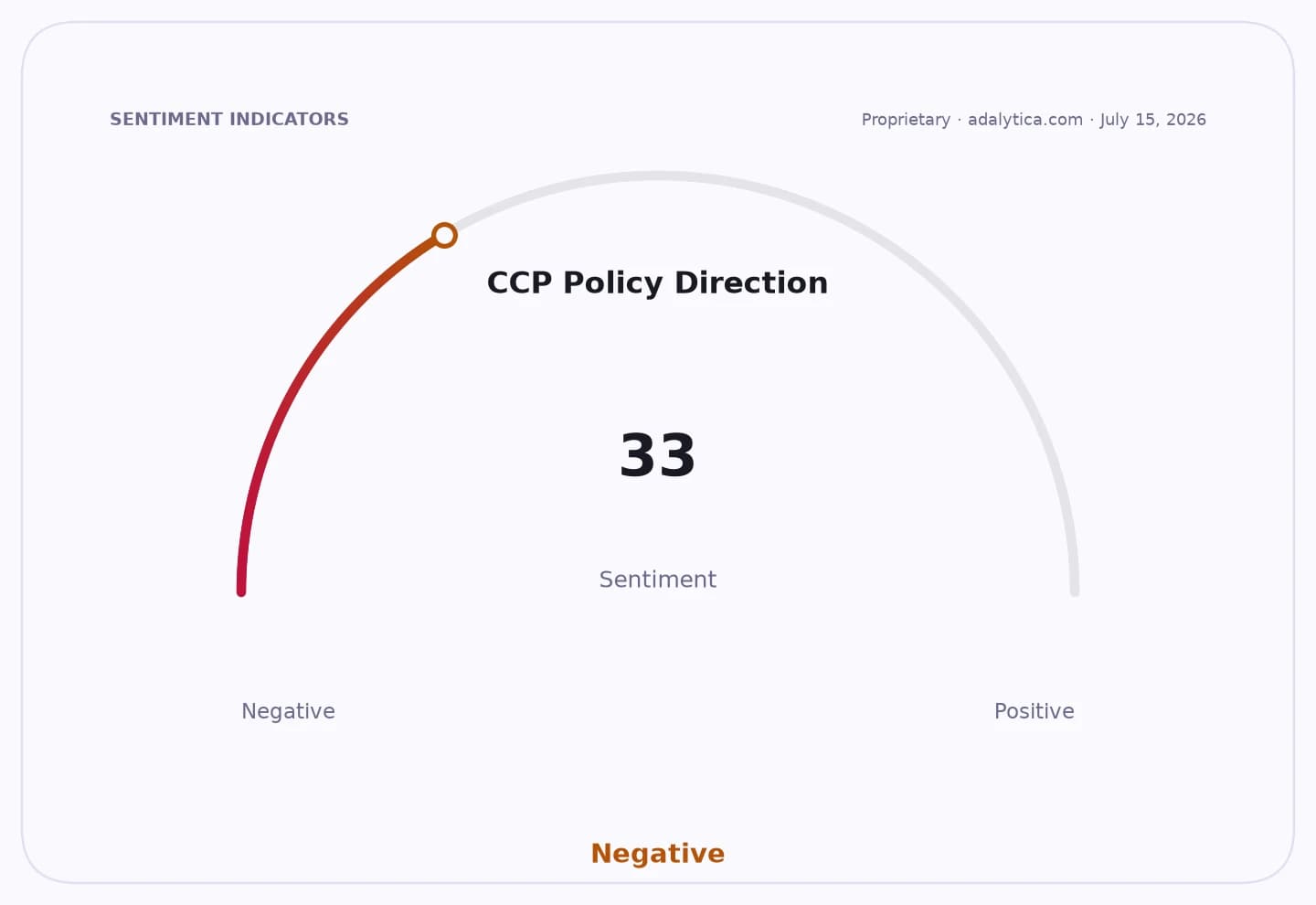
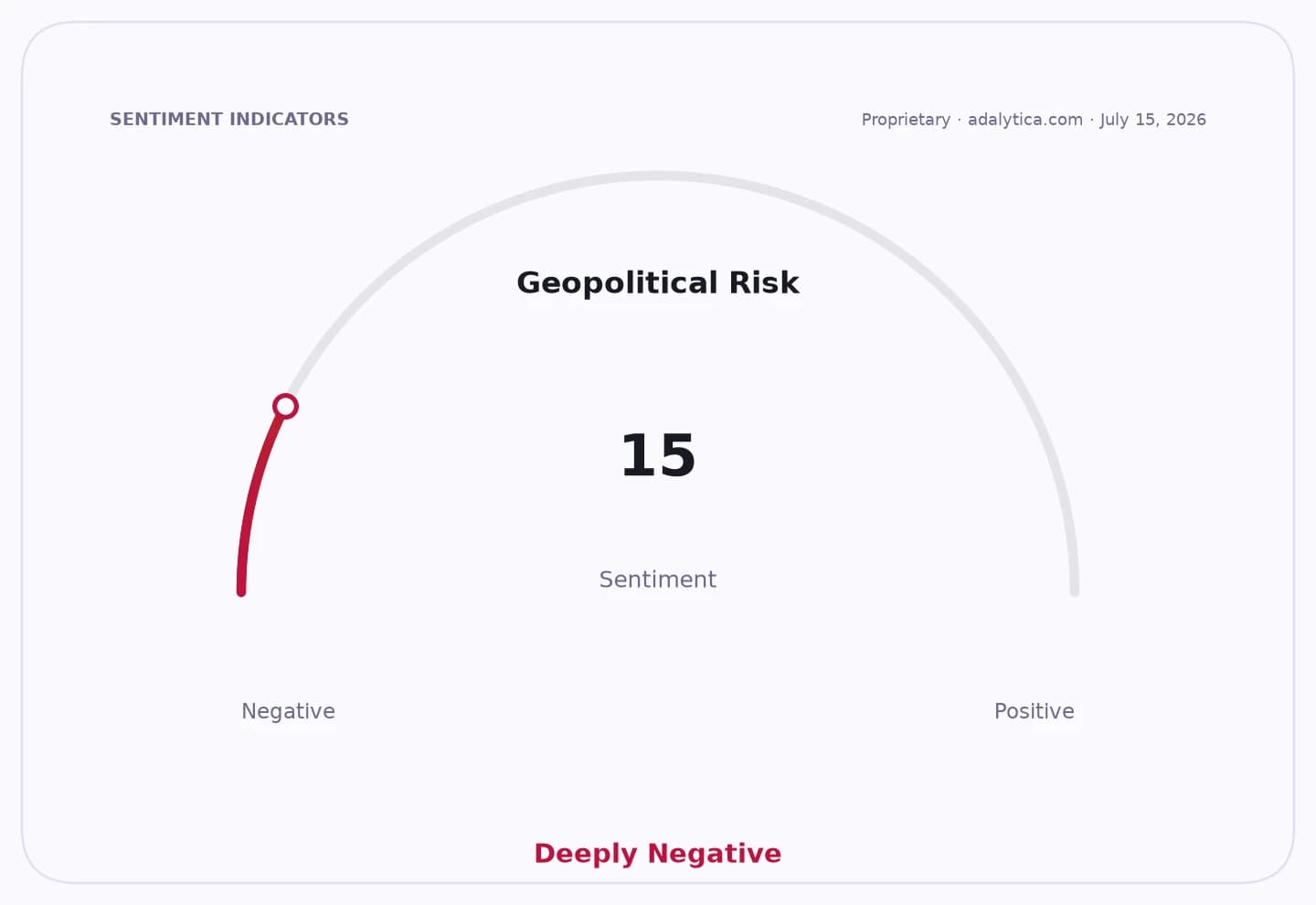
China and Indonesia pledged to deepen exchanges and cooperation after top lawmakers met in Beijing, underscoring how both governments are leaning on parliamentary diplomacy to keep their comprehensive strategic partnership moving even as regional tensions and trade competition sharpen.
China, Indonesia Pledge Closer Parliamentary Ties
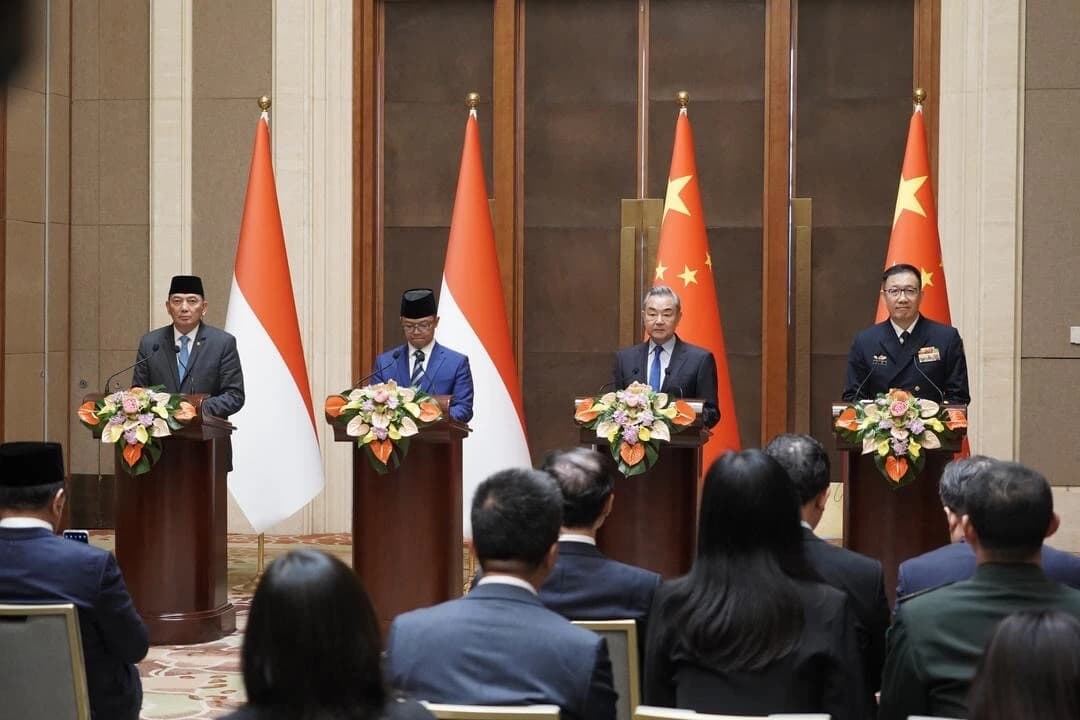
The meeting between Zhao Leji, chairman of China’s National People’s Congress Standing Committee, and Ahmad Muzani, chairman of Indonesia’s People’s Consultative Assembly, was pitched as a bid to expand cooperation, share governance experience and lift bilateral relations to a higher level. For the region’s two biggest economies, that matters because political alignment between Beijing and Jakarta can shape everything from supply chains and resource investment to ASEAN’s ability to balance China’s rise with regional stability.
Sentiment IndicatorsⓘProprietary · adalytica.com · September 23, 2026
This is a snapshot — live sentiment, awareness and momentum for 130+ markets update continuously in the dashboard.Open AlphaPulse
China’s interest is strategic as well as economic. Indonesia is Southeast Asia’s largest economy, a major commodity supplier and a key market for Chinese capital, infrastructure and industrial projects. Closer institutional ties can help Beijing secure political goodwill in a region central to its export engine and its push to deepen influence across ASEAN.
Indonesia also has reasons to keep the channel open. Jakarta has long tried to maintain a foreign policy that avoids choosing sides among major powers while attracting investment to support domestic development. Greater cooperation with China can bolster funding, trade and technology links, though it also leaves Indonesia exposed to scrutiny over dependence on Beijing and friction with Western partners.
For investors, the backdrop keeps Chinese assets in focus. The FXI ETF, which tracks large Chinese stocks, recently traded at $34.91, below its 50-day moving average of $35.17 and 200-day average of $36.27, while its RSI reading of 45.3 suggests the fund is neither overbought nor oversold. The move leaves room for sentiment to swing on any sign of improved regional diplomacy or fresh policy support for China’s external ties.
Indonesia equities have also been under pressure. The EIDO ETF finished at $12.36, just under its 50-day average of $12.59 and well below its 200-day average of $14.87, reflecting a market that still wants clearer proof of earnings momentum and foreign inflows. Any improvement in China-Indonesia cooperation could help sentiment toward Indonesia-linked trade, ports, commodities and industrial names.
The broader market tone remains sensitive to geopolitics. Adalytica’s US–China Relations Sentiment gauge has jumped to 85, labeled Greed, with awareness at 96, while its Global Stability Sentiment reading sits at 59, neutral. That suggests investors are watching diplomatic signals closely, even if the latest pledge is unlikely on its own to move markets.
The next test is whether the rhetoric turns into concrete follow-through, including more official visits, investment announcements or coordination inside ASEAN. For now, the message from Beijing is that both sides want to keep the relationship advancing rather than let strategic competition define it.
| Entity | Gains | Losses |
|---|---|---|
| China | ▲ASEAN influence | ▼Policy leverage rivals |
| Indonesia | ▲Investment access | ▼Diplomatic flexibility |
| FXI holders | ▲Improved sentiment | ▼Defensive positioning |
| EIDO holders | ▲China tie-up upside | ▼Slower macro catalysts |