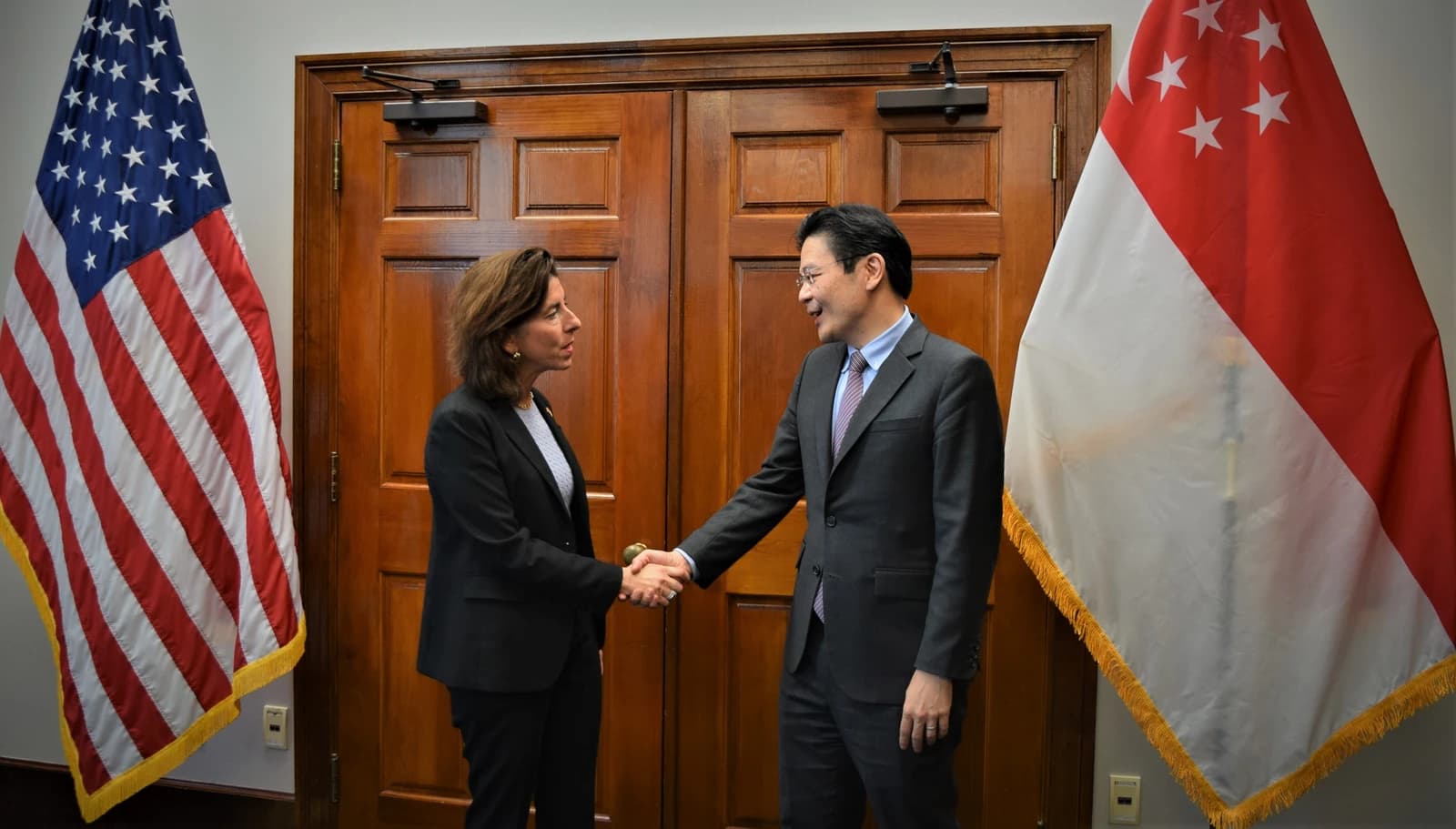
US Commerce Secretary Gina Raimondo ended a four-day visit to China with a blunt warning that American businesses increasingly view the country as too risky to invest in, underscoring how deteriorating commercial ties are beginning to carry real economic costs for both sides.
China ETFs Lag as Raimondo Warns on Investment Risk

That matters because foreign direct investment into China is already at an all-time low and the economy is under pressure, leaving Beijing more exposed to any further pullback from multinationals that have been a source of capital, jobs and technology transfer. Raimondo’s message also lands at a time when Washington is tightening restrictions on investment in sensitive Chinese technologies, deepening the split between the world’s two biggest economies.
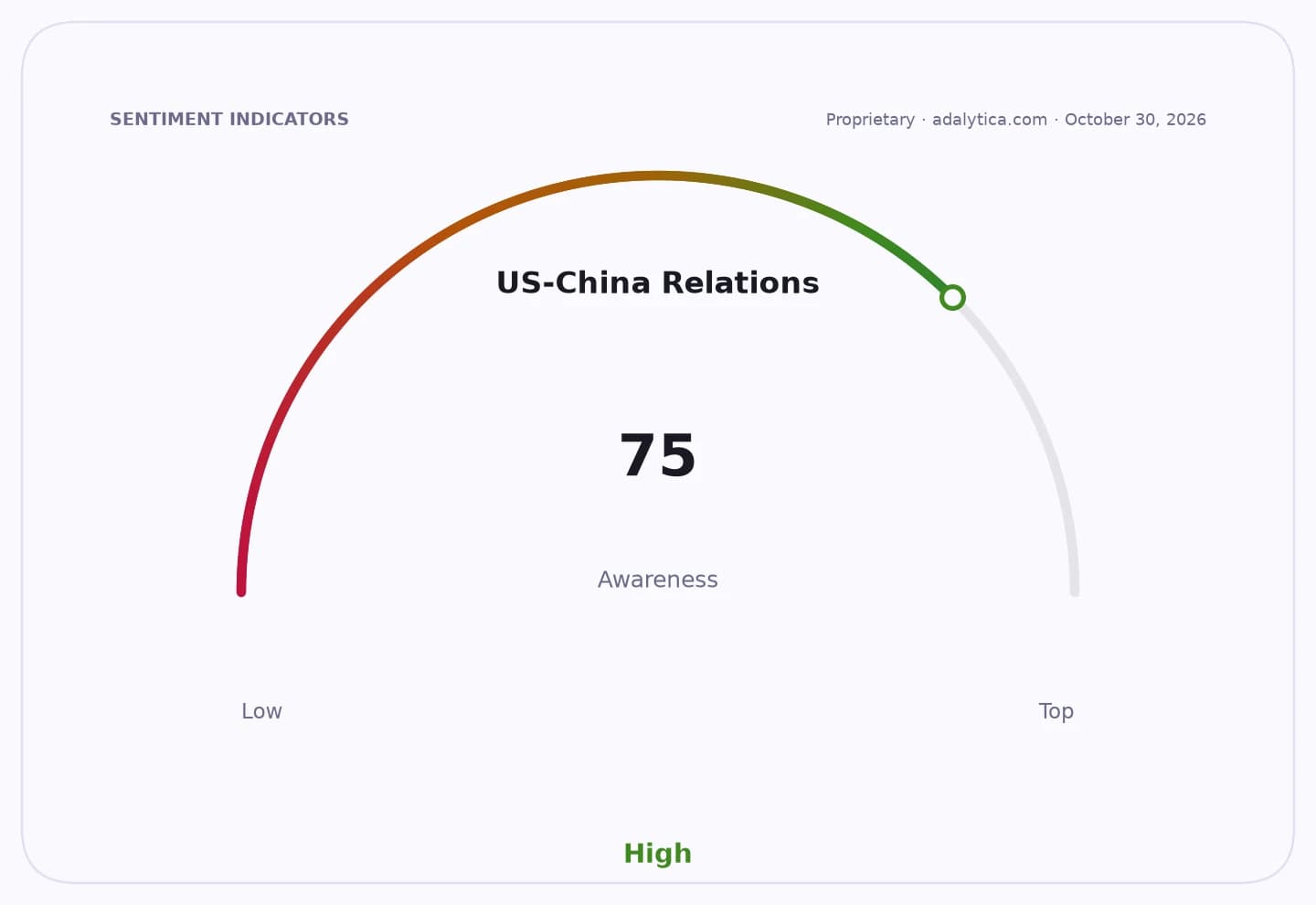
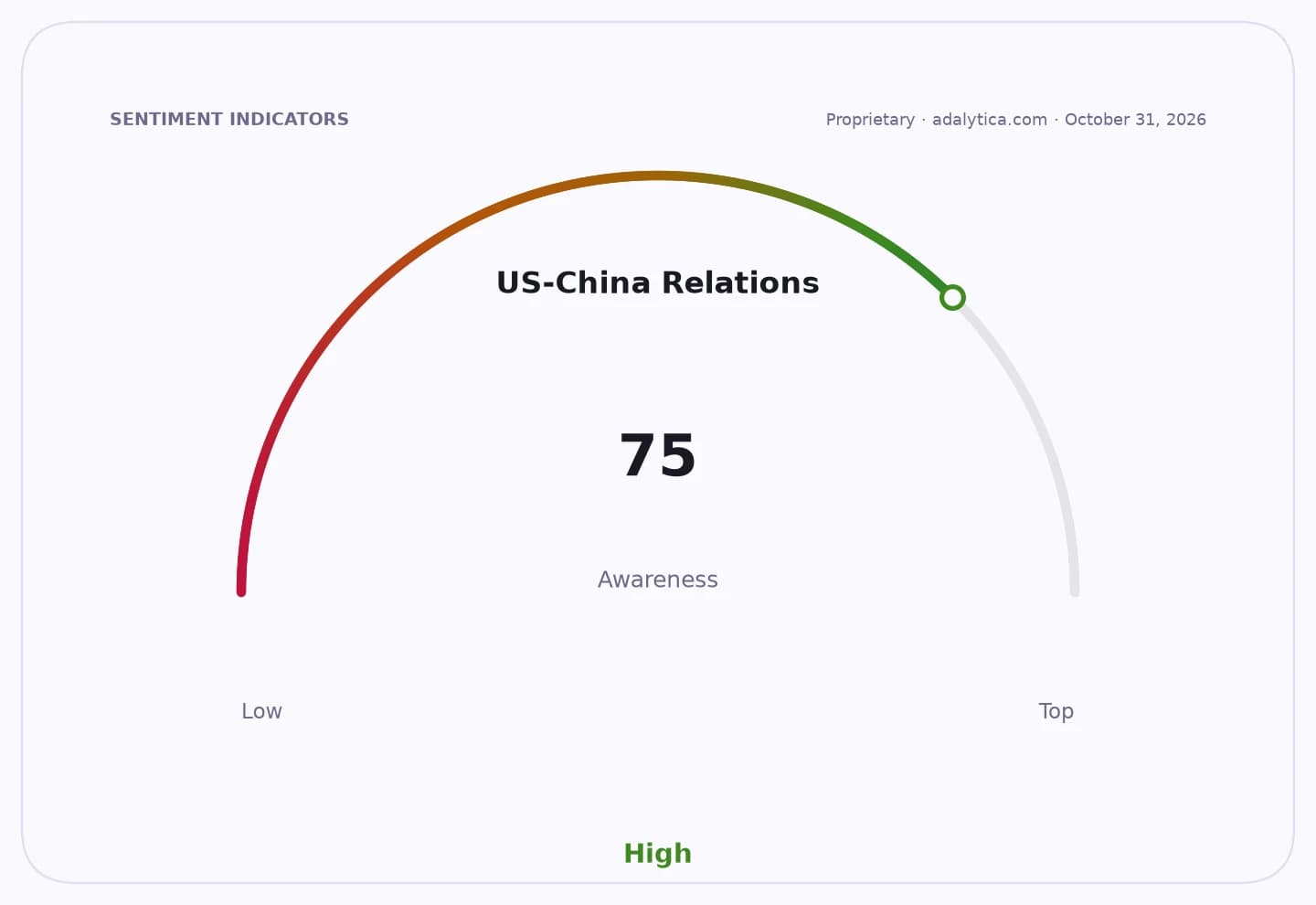
Sentiment Indicators
Raimondo said she was hopeful for “some results” over the next few months, but made clear she did not expect major breakthroughs from the trip. She said she had raised issues including intellectual property theft, raids on foreign firms and slow regulatory approvals, and that she had been “very firm” in telling Chinese officials about U.S. concerns.
The visit came as part of a broader diplomatic thaw after months of strained relations, following trips by Secretary of State Antony Blinken, climate envoy John Kerry and Treasury Secretary Janet Yellen. But engagement has not reversed the policy shift in Washington, where the Biden administration has kept most Trump-era tariffs in place and launched new curbs on U.S. investments tied to advanced semiconductors, quantum information and artificial intelligence.
US-China Relations vs FXIadalytica.com
Explore this data interactively — full history, time series and cross-market comparisons.
US-China Relations
For investors, the message is that any China reopening trade is running head-on into de-risking, not de-escalation. That keeps pressure on companies with heavy China exposure, including chipmakers and technology suppliers, while reinforcing the appeal of alternatives in India, Southeast Asia and other manufacturing hubs.
China-focused ETFs reflected that caution, with the iShares China Large-Cap ETF FXI at $33.21 on Nov. 2, still below its 50-day moving average of $34.14 and 200-day average of $35.49. The KraneShares CSI China Internet ETF KWEB closed at $23.35, also under both its 50-day average of $24.61 and 200-day average of $27.92, while the Direxion Daily FTSE China Bull 3X Shares YINN was trading at $22.80, far below its 50-day average of $25.32.
With U.S.-China ties still defined by tariffs, export controls and investment bans, the next catalyst is whether either side follows through with concrete concessions in the coming months or whether the latest round of talks ends up as another pause in a longer economic decoupling.
| Entity | Gains | Losses |
|---|---|---|
| U.S. firms | ▲Clearer risk warnings | ▼China exposure, investment plans |
| China | ▲Chance to reassure investors | ▼FDI inflows, business confidence |
| U.S. policymakers | ▲Leverage in talks | ▼Faster economic decoupling |
| China ETFs / multinationals | ▲Potential policy clarity | ▼Near-term valuation support |