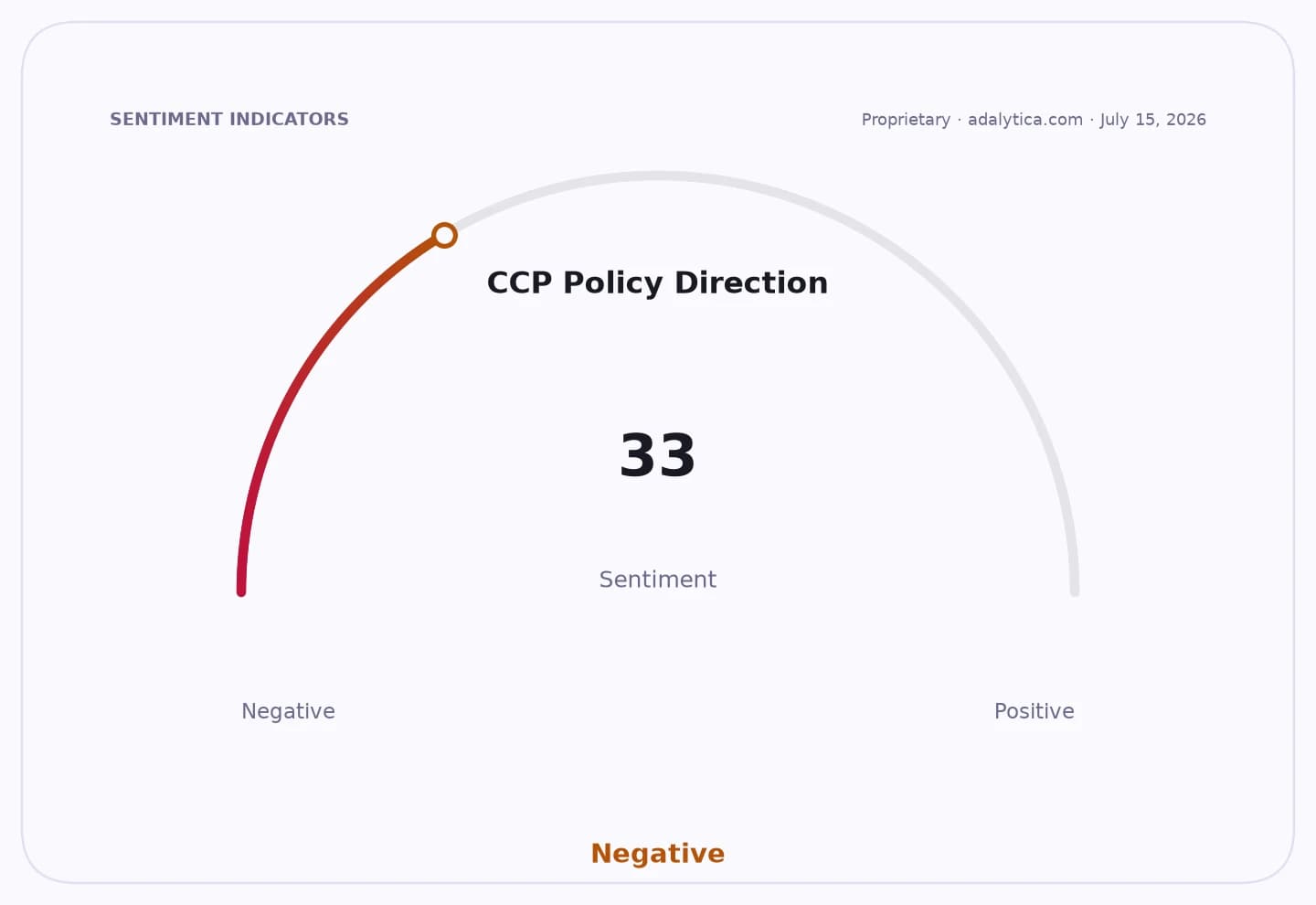
China’s rise as a source of new medicines is no longer just a supply-chain or licensing story for Big Pharma; it is turning into a national-security issue in Washington that could shape drug access, cross-border dealmaking and the valuation of major drugmakers.
China biotech deals face U.S. policy scrutiny
A Senate commission’s April report, which warned of a future “ChatGPT moment” for biotechnology if China reaches it first, has sharpened fears in the U.S. that dependence on Chinese innovation could become a strategic vulnerability. The political anxiety matters because the flow of Chinese drug candidates into Western pipelines is now large enough to affect blockbuster portfolios, while any tighter U.S. rules could slow dealmaking, raise development costs and leave investors with fewer low-cost external growth options.
The scale of the shift is hard to ignore. The share of medicines first launched in China jumped from 3.3% in 2004 to 28.7% in 2024, according to a study reposted by Roche Chief Executive Thomas Schinecker. That helps explain why Western companies from Roche to Novartis are increasingly buying Chinese science rather than building everything in-house, even as U.S. lawmakers worry those ties could deepen reliance on a geopolitical rival.
For investors, the tension is two-sided. On one hand, Chinese biotech has become an attractive reservoir of assets at a time when drug discovery remains expensive and failure rates high. On the other, any policy response that limits licensing, forces disclosure of China exposure or slows cross-border intellectual property transfers would directly affect the deal economics that have supported some of the biggest recent transactions in the sector.
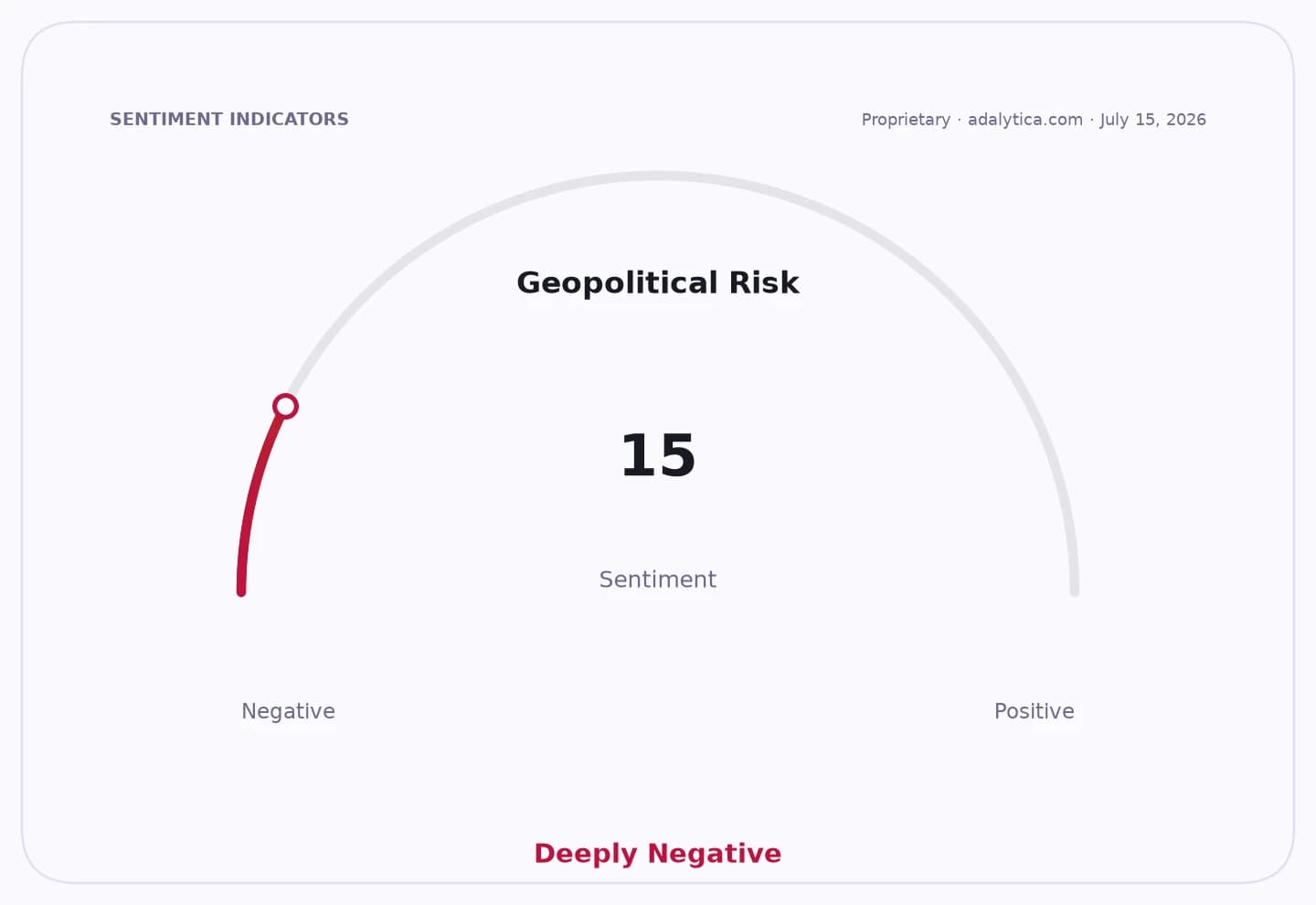
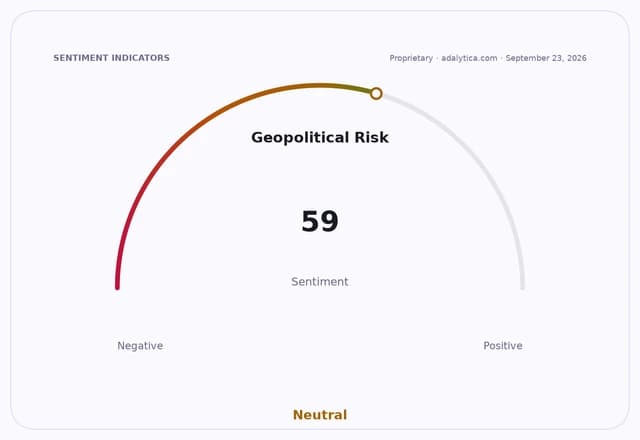
Geopolitical Risk — 30-day sentimentadalytica.com
Explore this data interactively — full history, time series and cross-market comparisons.Open AlphaPulse
Roche has been among the clearest beneficiaries of that model. It recently announced study success for a lung-cancer drug from partner Medi Link, and if the treatment wins approval Roche plans to sell it outside China. The Swiss group struck that first partnership in 2024 for about $1 billion, then added a second license deal with the same partner in January. Novartis has also leaned into the market, signing a licensing agreement with Argo that could total as much as $5.6 billion, while Bristol Myers Squibb agreed this spring to a deal worth up to $15.2 billion with Hengrui Pharma, though only $600 million was paid upfront.
Those structures reflect a crucial point for investors: Western buyers are still trying to manage scientific upside against regulatory and clinical-risk downside. Many Chinese assets look cheaper at the point of signing, but that discount is narrowing as global buyers crowd into the market. HSBC said in June it expects deal activity with Western pharma companies to slow as the “discount” for Chinese deals shrinks.
The quality question also remains central. China’s easier regulatory environment and faster, cheaper patient recruitment have lifted the number of clinical studies, but industry veterans caution that a large share are early-stage Phase 1 trials that tell little about ultimate efficacy. Later-stage studies can also be weaker than Western regulators require, especially if they compare a drug against simple chemotherapy rather than the best available therapy. That matters because the U.S. Food and Drug Administration will not accept trials based only on Chinese participants, forcing global re-testing and delaying monetization.
Still, the U.S. cannot easily wall off the sector without paying an economic price. Novartis Chief Executive Vas Narasimhan has argued that blocking access to Chinese know-how would be a mistake, and Reuters reported that the U.S. Treasury is working on a framework that could remain less restrictive than some lawmakers wanted, preserving room for licensing deals. That suggests Washington may stop short of an outright clampdown, at least for now.
China is also moving to keep more of the value at home. New rules that took effect on July 1 give Chinese authorities more say over offshore patent structures, including foreign vehicles that had often been used in Cayman Islands and similar jurisdictions. That adds another layer of uncertainty for dealmakers, who now face pressure from both sides: U.S. policymakers wary of strategic dependence and Chinese regulators determined to prevent innovation from flowing too freely abroad.
| Entity | Gains | Losses |
|---|---|---|
| Roche, Novartis, Bristol Myers Squibb | ▲External pipeline access | ▼Higher geopolitical and regulatory risk |
| Chinese biotech firms | ▲Bigger global deal values | ▼Greater scrutiny and tighter controls |
| U.S. policymakers | ▲Strategic leverage | ▼Patient access to drugs if rules tighten |
| Pharma investors | ▲More catalysts from licensing | ▼Lower returns if deal flow slows |