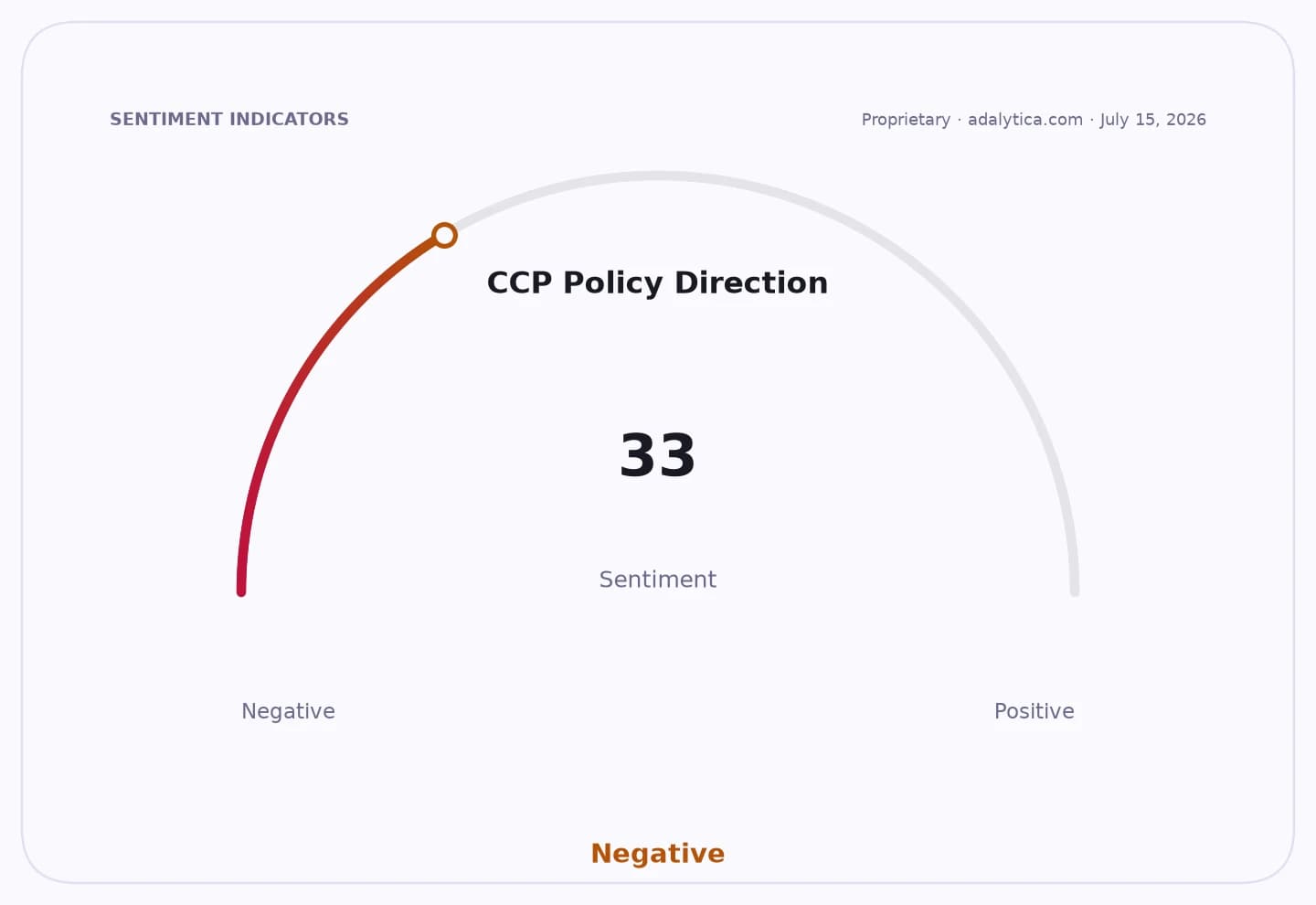
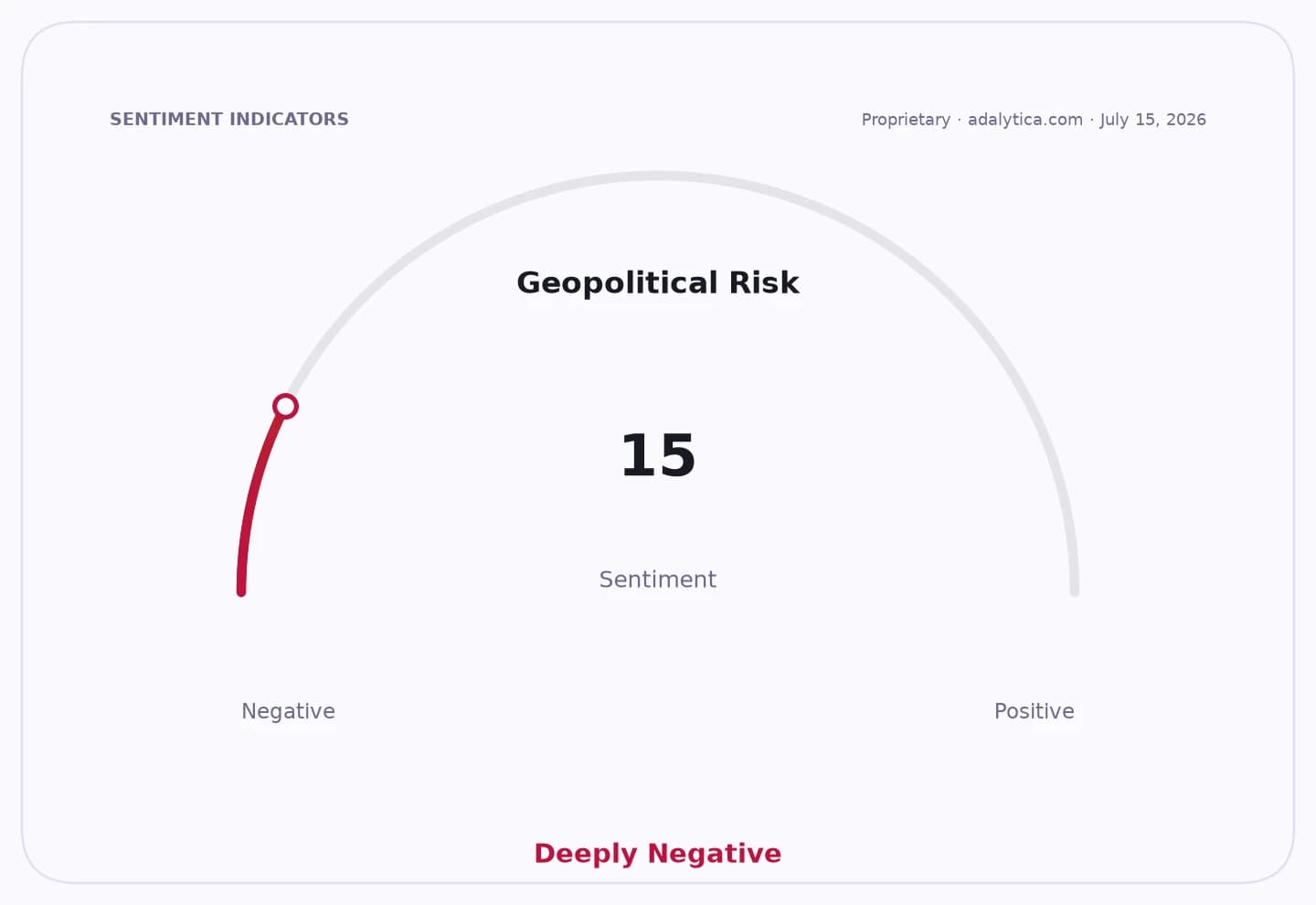
China’s annual push to deepen trade with Southeast Asia moved into public view on Sunday as the 23rd China-ASEAN Expo opened in Nanning, underlining how Beijing is leaning harder on ASEAN ties to cushion trade uncertainty with the United States and keep regional supply chains flowing.
China-ASEAN Expo Opens in Nanning
The expo matters because ASEAN has become one of China’s most important commercial counterweights as global trade frictions persist. China is preparing for new trade talks with the U.S., while ASEAN members are simultaneously trying to preserve their own strategic balance by keeping China engaged without abandoning ties to other partners.
Sentiment IndicatorsⓘProprietary · adalytica.com · September 23, 2026
This is a snapshot — live sentiment, awareness and momentum for 130+ markets update continuously in the dashboard.Open AlphaPulse
That makes the Nanning event more than a showcase of goods and investment pitches. It is part of a broader regional effort to lock in market access, logistics links and political goodwill at a time when companies are watching for signs of a more stable trade environment. Indonesia’s recent call for China to support ASEAN centrality adds to that message, framing Southeast Asia not just as a sales market but as a diplomatic anchor.
The timing also comes as infrastructure is starting to reshape the trade map. The opening of the Pinglu Canal is expected to improve connectivity between China and ASEAN countries, reinforcing the economic case for tighter integration and potentially lowering transport bottlenecks for exporters on both sides.
For investors, the story is less about one expo than about the durability of China’s regional trade corridor. Greater ASEAN integration can support Chinese industrial exporters, logistics firms and infrastructure-linked businesses, while giving multinational manufacturers another reason to keep production and sourcing spread across Southeast Asia.
It also highlights the market’s broader reading of China-ASEAN relations: a constructive backdrop for trade-sensitive assets, even as U.S.-China negotiations and geopolitical risk remain in play. China-focused ETFs such as FXI and broader EM funds like MCHI have been trading below their 200-day moving averages, leaving them sensitive to any improvement in external demand or policy confidence.
The next catalyst will be whether the expo translates into signed deals, investment commitments or clearer policy support for cross-border trade. If it does, the Nanning gathering could be remembered less as a public fair than as another step in China’s effort to hardwire ASEAN into its growth strategy.
| Entity | Gains | Losses |
|---|---|---|
| China exporters | ▲More ASEAN demand | ▼U.S. trade uncertainty |
| ASEAN economies | ▲Investment and market access | ▼Pressure to balance major powers |
| Logistics and infrastructure firms | ▲Higher trade flows | ▼Bottlenecks and slower routes |
| U.S. tariff hawks | ▲— | ▼China-ASEAN trade deepening |