The Canadian dollar edged higher even as benchmark U.S. yields eased, with the move underscoring how quickly rate expectations can reshape currency markets when the Federal Reserve’s tightening bias is still driving the dollar.
Canadian dollar rises as U.S. yields ease
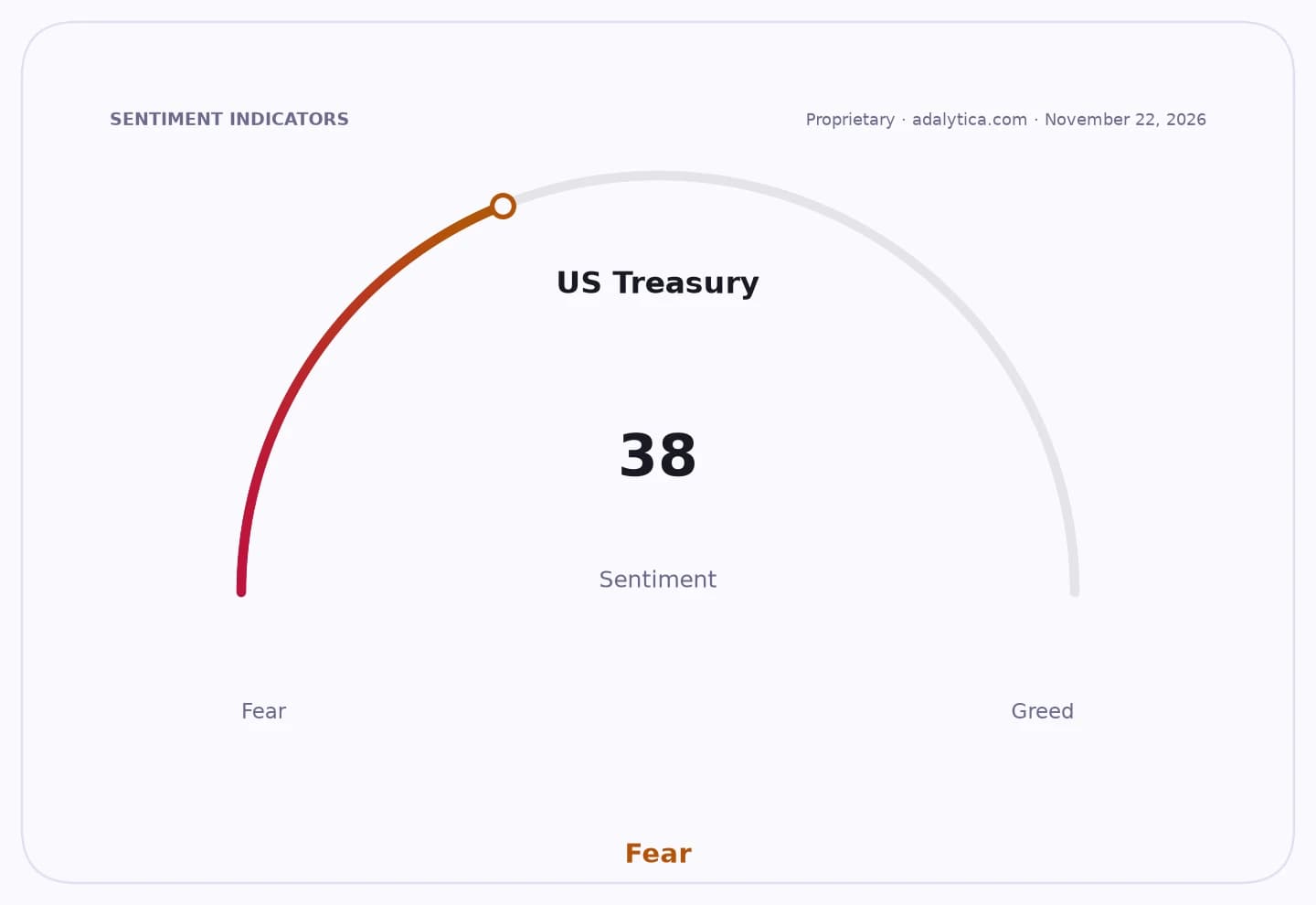
US Treasury
That combination matters because higher U.S. yields have been the main brake on risk-sensitive and commodity-linked currencies. When the 10-year Treasury yield slips, even modestly, it can take some pressure off the loonie by narrowing the relative advantage the dollar has enjoyed for months. The latest move left the 10-year at 5.015%, down from 5.04% on Nov. 19 and 5.07% the day before, while the 2-year yield slipped to 4.733%. The curve held just 29 basis points inverted, a sign the market still sees restrictive policy ahead but is beginning to price in less immediate upward pressure.
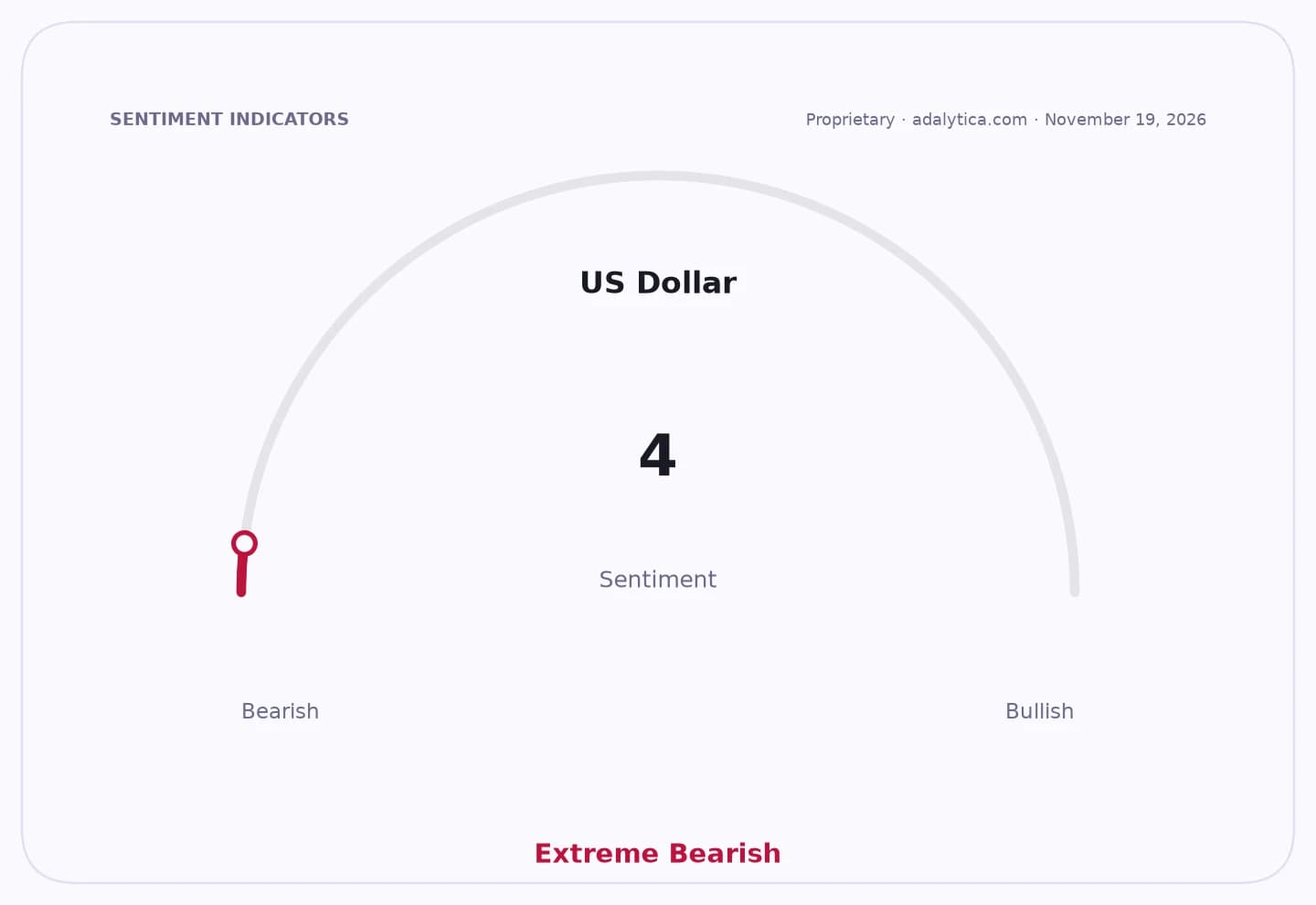
Sentiment Indicators
For investors, the key point is not the size of the yield decline — it is the direction. Currency traders have been leaning hard into dollar strength, and the Canadian dollar’s resilience suggests the market may be getting more selective about how far that trade can run. The U.S. dollar had been broad strong, but a softer benchmark yield gives the loonie room to stabilize, especially if global risk appetite remains intact and oil-linked currencies stop bleeding. That makes the move relevant for anyone exposed to Canadian equities, cross-border flows and hedged U.S. portfolios.
Royal Bank of Canada shares also reflected the broader stress in rate-sensitive financial assets, falling to C$183.45 from C$187.70 a day earlier and well below the C$198.73 50-day moving average. The stock’s drop, alongside the move in yields, shows investors are still recalibrating bank valuations around a world where funding costs, mortgage demand and capital-markets activity can shift quickly if rates stop rising. The broader message is that lower yields can ease pressure on the currency but also complicate the earnings outlook for lenders that have benefited from an elevated-rate environment.
The market is underestimating how quickly this can become a positioning story. If Treasury yields continue to drift lower from stretched levels, the Canadian dollar could keep clawing back ground even without a strong domestic growth surprise. For now, the trade is straightforward: reduced yield pressure helps the loonie, while sustained U.S. hawkishness keeps the upside capped. Investors should watch the next leg in Treasury yields closely, because that is likely to decide whether this is just a pause in dollar strength or the start of a broader repricing.
| Entity | Gains | Losses |
|---|---|---|
| Canadian dollar | ▲Less yield pressure | ▼Still capped by strong USD |
| U.S. Treasury bulls | ▲Lower benchmark yields | ▼Higher-rate momentum fades |
| Royal Bank of Canada | ▲Potential funding relief | ▼Rate-sensitive revenue pressure |
| U.S. dollar longs | ▲Ongoing hawkish Fed backdrop | ▼Softer yield support |