Cambodia is putting vocational training at the center of its growth strategy, with Prime Minister Hun Manet saying technical and vocational education must be tied closely to real market demand if the country wants to build a workforce that can support industrialization.
Cambodia ties vocational training to industrial growth

That matters because Cambodia’s next stage of development depends less on cheap labor alone and more on workers who can fill better-paid, more productive jobs in manufacturing, logistics and parts production. In other words, the country is trying to move from an economy long anchored in agriculture to one that can plug into regional and global supply chains with higher value added.
Sentiment Indicators
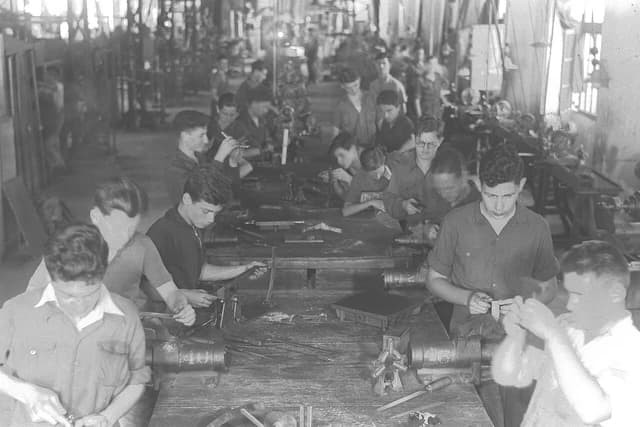
The comments came during a meeting in Phnom Penh with Sharan Burrow, chair of Bendigo Kangan Institute, an Australian technical training provider, underscoring that Cambodia sees foreign training partners as a practical way to speed up skills transfer. Burrow said building skilled labor is essential for economic diversification and pledged closer cooperation with Cambodian ministries, especially the labor ministry, to design training models that fit local conditions.
Hun Manet framed people as the government’s first priority and said investment in health, education, technical training and decent jobs is the foundation of human capital. That is not just policy language. For investors, it is a signal that Cambodia is trying to reduce one of its biggest structural bottlenecks: a shortage of workers trained for the jobs the economy actually needs.
The government also wants to deepen Cambodia’s role in regional and global supply chains for auto parts and vehicle equipment, moving beyond assembly work toward more domestic value creation. That could be game-changing over time if the country can produce technicians, machine operators and supervisors in sufficient numbers. Without that workforce, industrial policy tends to stall at the announcement stage.
For long-term investors, the broader message is that skills policy is becoming an economic competitiveness issue, not just an education issue. Countries that align training with labor-market demand are better positioned to attract manufacturing, lift productivity and support wage growth. Countries that do not usually end up importing expertise while exporting opportunity.
The challenge, as always, is execution. Training systems can look impressive on paper and still miss the mark if curricula are detached from employer needs or if graduates cannot find decent work afterward. Cambodia’s test will be whether partnerships like this one produce measurable results in factories, workshops and supply-chain jobs, not just in ministry statements.
If the government follows through, TVET could become one of the country’s most durable growth engines. For investors watching Cambodia’s industrial ambitions, this is a story worth following closely over the next several years.
| Entity | Gains | Losses |
|---|---|---|
| Cambodian workers | ▲Better job skills | ▼Mismatched training |
| Employers | ▲More qualified labor | ▼Higher training burdens |
| Government | ▲Stronger industrial base | ▼Risk of slow implementation |
| Bendigo Kangan Institute | ▲Deeper regional role | ▼Limited impact if plans stall |