Bulgaria’s agriculture minister said bread should not see a serious price increase, pointing to a strong grain harvest, state aid for farmers and tighter oversight on unjustified food-price hikes.
Bulgaria bread prices seen steady on strong grain crop

The comments matter because bread is a politically sensitive staple in Bulgaria and a key barometer for household inflation. Any sustained jump would feed directly into living costs, complicate the government’s effort to keep price pressures contained as the euro-transition debate continues, and test consumer confidence in a market already sensitive to food inflation.
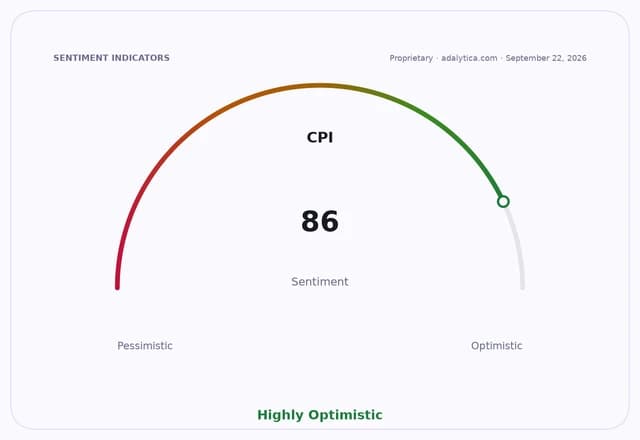
Sentiment IndicatorsⓘProprietary · adalytica.com · September 22, 2026
This is a snapshot — live sentiment, awareness and momentum for 130+ markets update continuously in the dashboard.Open AlphaPulse

Plamen Abrovski said the government has set aside 170 million euros to help farmers cover the gap in diesel and fertilizer costs between 2025 and 2026. He also said a good grain crop this year should secure quality wheat, flour and bread, reducing the chance of a broad price shock from raw materials.
He added that the ministry is preparing talks with the transport minister to cut logistics costs through rail infrastructure, arguing that transport is a meaningful part of grain pricing. That could matter for millers, bakeries and traders, where freight costs often get passed through quickly when supply chains tighten.
Abrovski also said the law on the euro’s introduction, which bars unjustified price increases, has been extended until Jan. 1, 2027, with the consumer protection authority monitoring compliance closely. In his telling, any higher food prices would need to be justified by real economic factors rather than opportunistic markups.
For investors and operators, the message points to limited near-term upside in bakery pricing power, but continued margin pressure if energy, fertilizer or transport costs stay elevated. The bigger risk is not a collapse in demand, but a squeeze on smaller producers that cannot absorb input costs or meet regulatory requirements as oversight tightens.
The next market catalyst is whether the government follows through with rail-freight relief and whether fresh crop data confirms the expected wheat supply, both of which will shape flour and bread pricing into year-end.
| Entity | Gains | Losses |
|---|---|---|
| Consumers | ▲Lower bread inflation | ▼Price shock risk |
| Bakers/millers | ▲Stable wheat supply | ▼Margin upside |
| Farmers | ▲170 million euros support | ▼Cost inflation pressure |
| Government | ▲Inflation control narrative | ▼Political blame if prices rise |