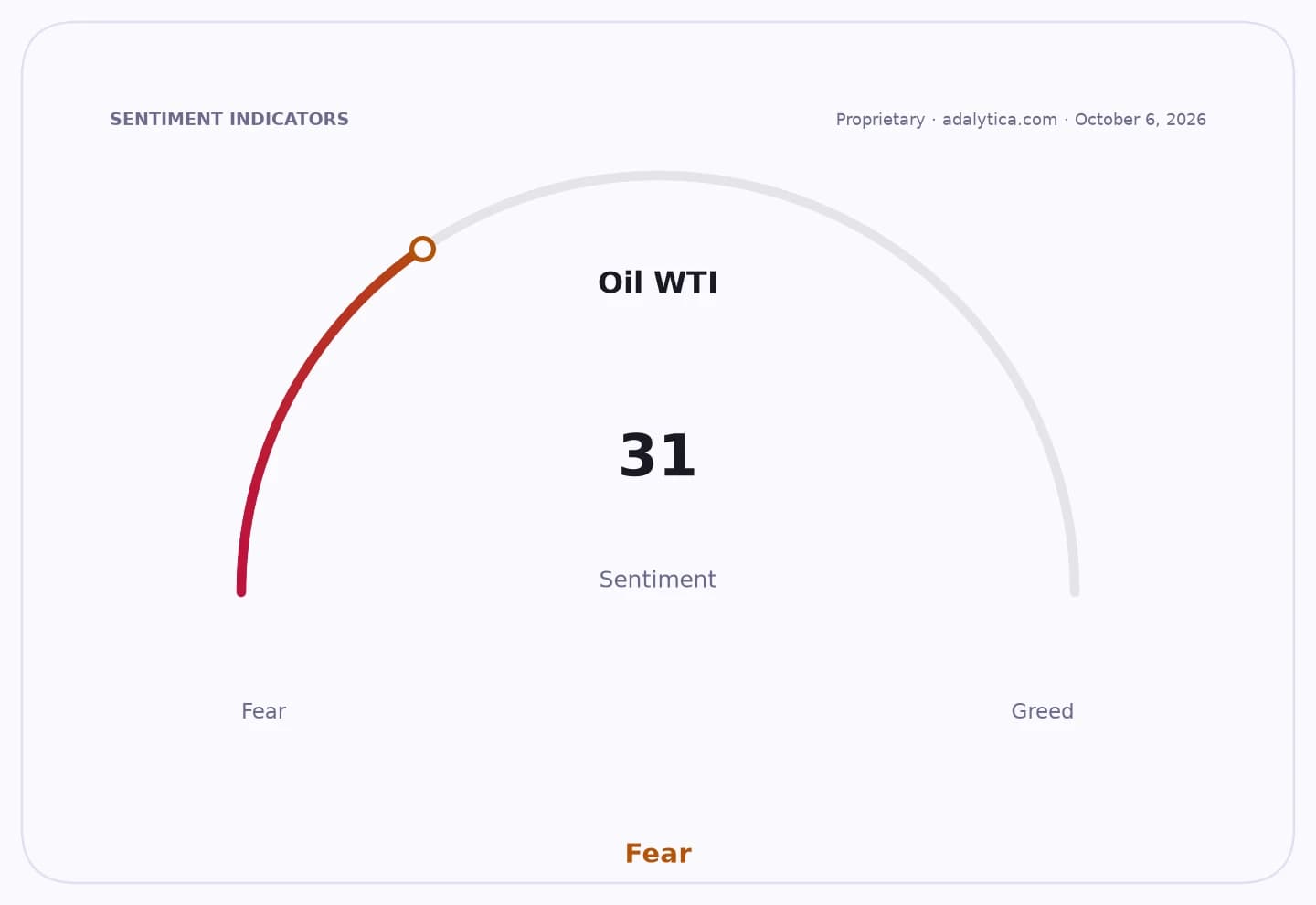
Brent crude slid more than 3.5% on Monday to just under $109 a barrel, wiping out nearly all of last week’s gains even after President Donald Trump said he was not eager to negotiate over Iran. The selloff shows traders are pricing less immediate geopolitical risk, at least for now, as diplomatic signaling outweighs the White House’s harder rhetoric.
Brent crude falls on easing Iran risk
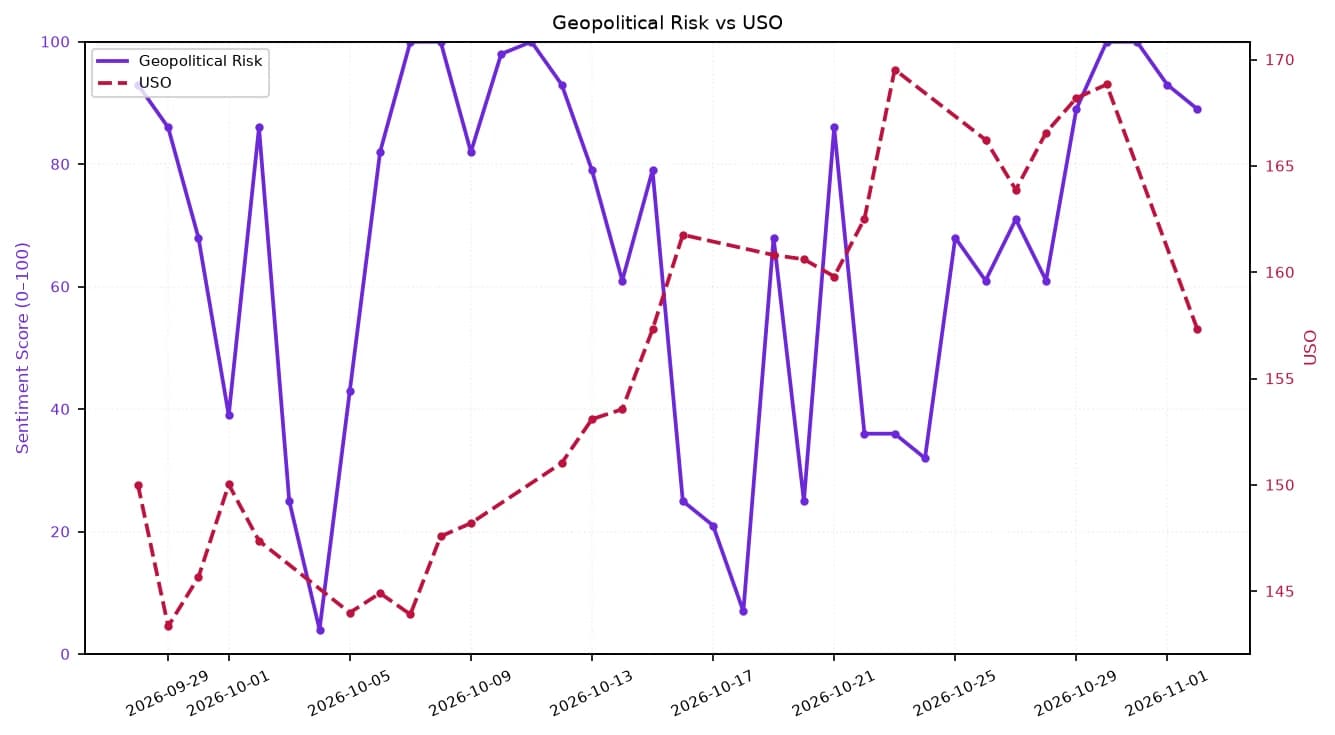
Geopolitical Risk
The drop matters because oil remains the market’s fastest-moving barometer of Middle East escalation. A pullback of this size eases inflation pressure, supports consumers and airlines, and trims the near-term premium embedded in fuel and refining margins.
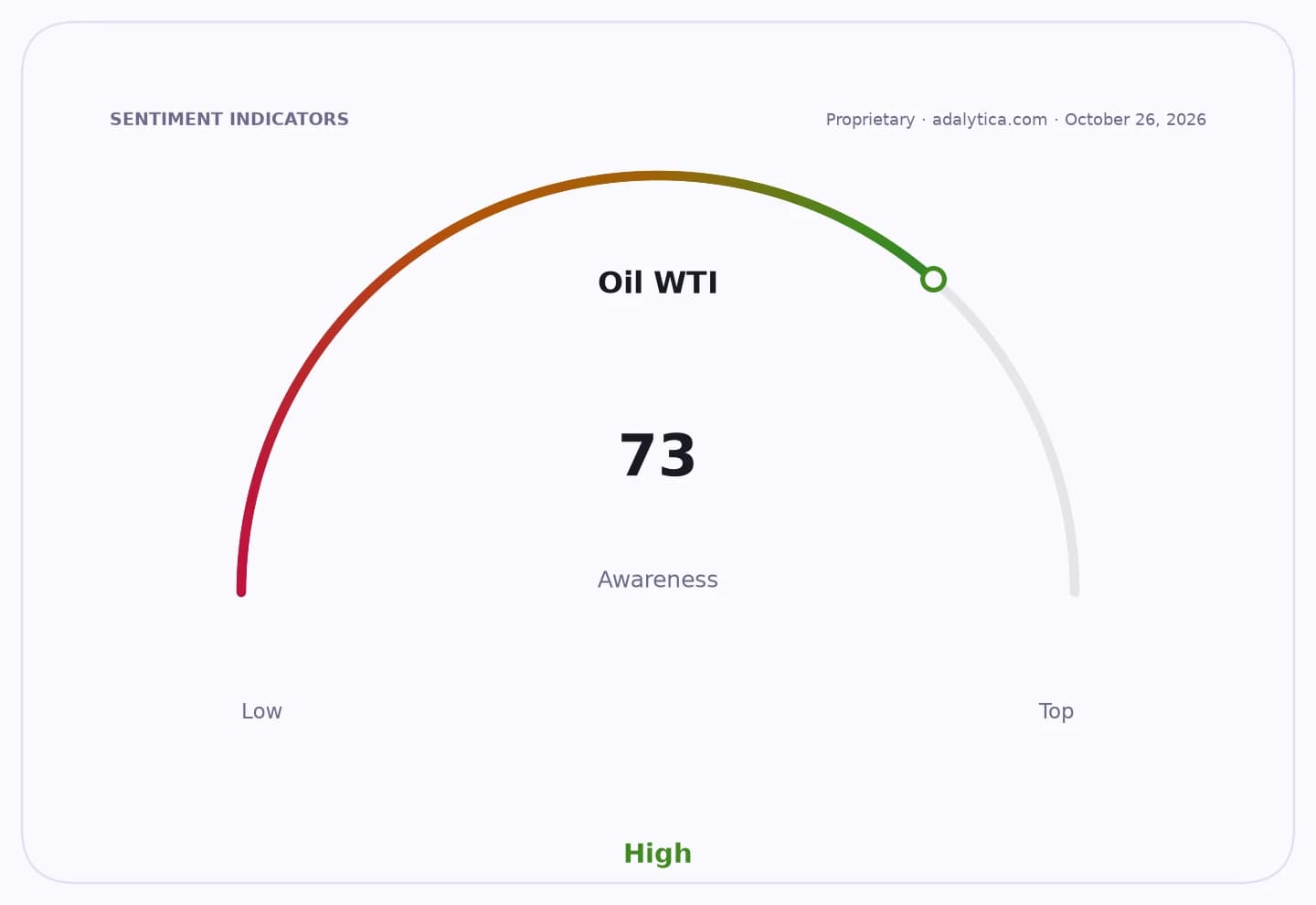
Sentiment Indicators
Geopolitical Risk
The move was driven less by Trump’s public posture than by reports from Axios that he told Israeli Prime Minister Benjamin Netanyahu he wanted to give diplomacy more time before considering renewed strikes. Secretary of State Marco Rubio also said no new attacks had been decided and that Trump preferred a diplomatic outcome.
That reading was reinforced by the timing of U.S. domestic politics. Wall Street Journal reporting that Washington had warned some Gulf states to prepare for a possible short, intense campaign against Iran only after Tuesday’s midterm elections encouraged the view that any escalation may be delayed, removing some urgency from crude prices in the short term.
Still, the market is not treating the risk as gone. Iranian Foreign Minister Abbas Araghchi said talks through Qatari intermediaries on reopening the Strait of Hormuz were still underway but had produced no deal, while Tehran said it was considering shortening a plan to restore full shipping security in the waterway to two days if U.S. demands are met. Two more tanker incidents over the weekend underlined how quickly the situation could turn.
Supply-side factors also pressured prices. Seven OPEC+ producers, including Saudi Arabia and Russia, kept December output limits unchanged, while Vortexa data showed floating oil inventories fell 11% in the week to Oct. 30 to the lowest since July, suggesting some easing in supply disruption. Goldman Sachs lifted its December Brent forecast to $105 and warned that a renewed flare-up in China or the Strait of Hormuz could send crude back toward $120.
For investors, the message is that geopolitics is still setting the tone for oil, but the market is increasingly trading the gap between official threats and what policymakers may actually do. Brent is still comfortably above its 50-day moving average and the broader uptrend remains intact, yet Monday’s reversal shows how quickly the risk premium can unwind when diplomacy appears to have room.
The next catalyst is clear: any sign that talks fail, tanker disruptions deepen or military preparations resume after the U.S. vote could quickly restore the bid. A more durable pullback would require evidence of real progress in negotiations and continued restraint from OPEC+.
| Entity | Gains | Losses |
|---|---|---|
| Drivers and consumers | ▲Lower fuel costs | ▼Less protection from inflation |
| Airlines and refiners | ▲Cheaper input costs | ▼Weaker refinery pricing power |
| Oil bulls | ▲None in Monday’s move | ▼Lost geopolitical premium |
| Iran diplomacy | ▲More room for talks | ▼Less leverage from higher crude |