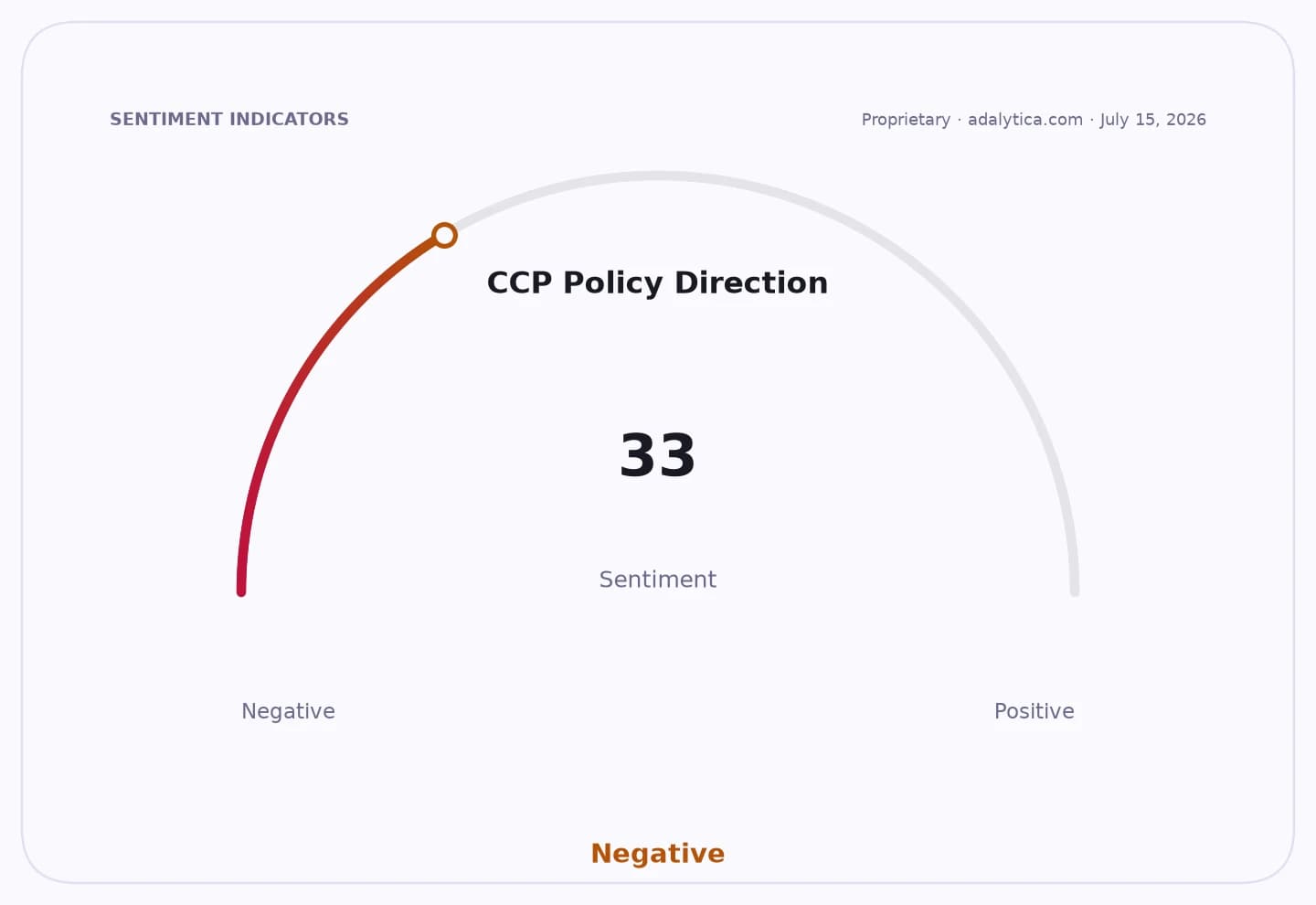
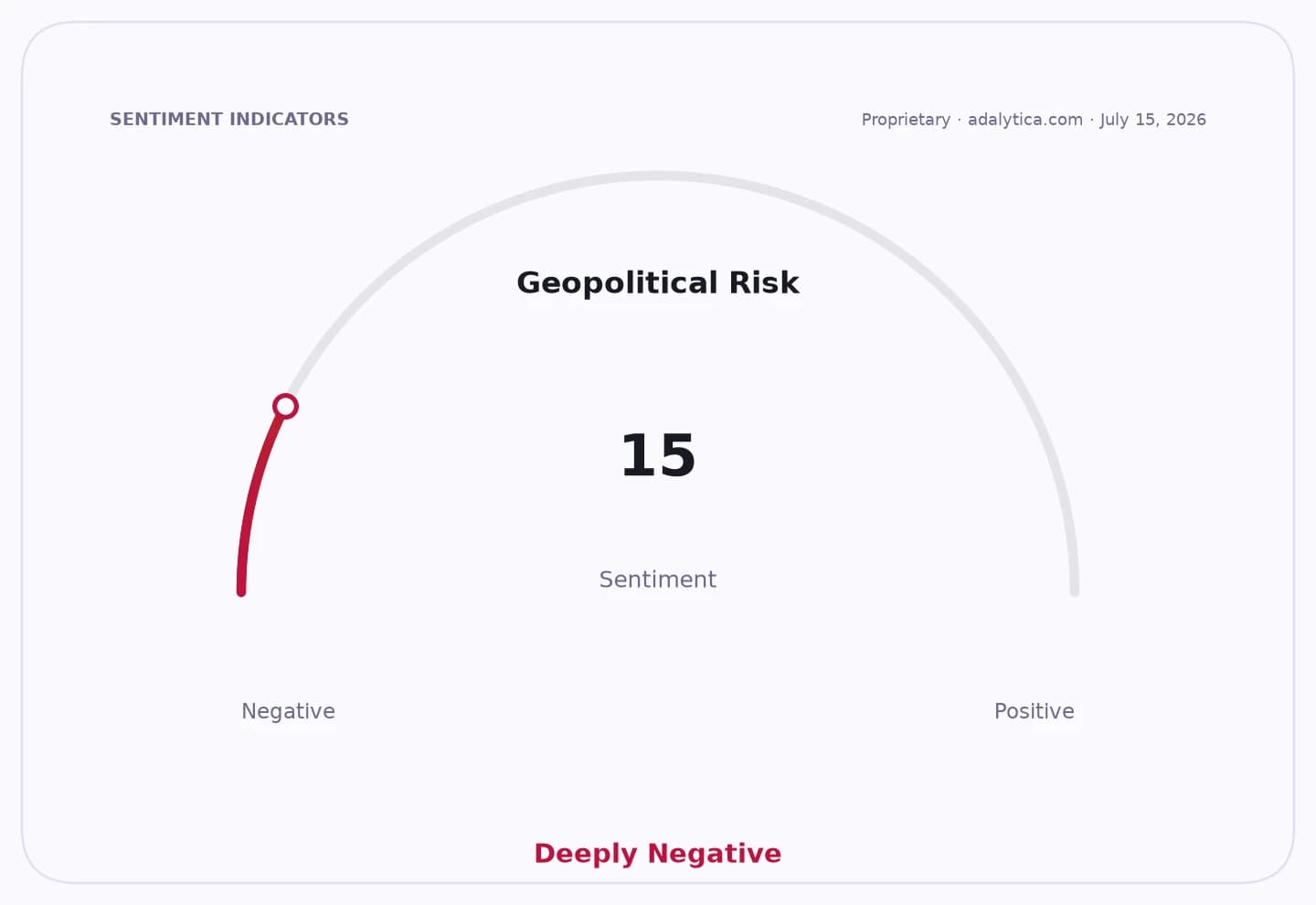
Brazil’s presidential race is turning into a referendum on whether the country deepens its economic orbit with China or tries to rebuild ties with the United States, and that matters for trade, capital flows and the outlook for Brazilian assets.
Brazil race, China ties and U.S. trade risk
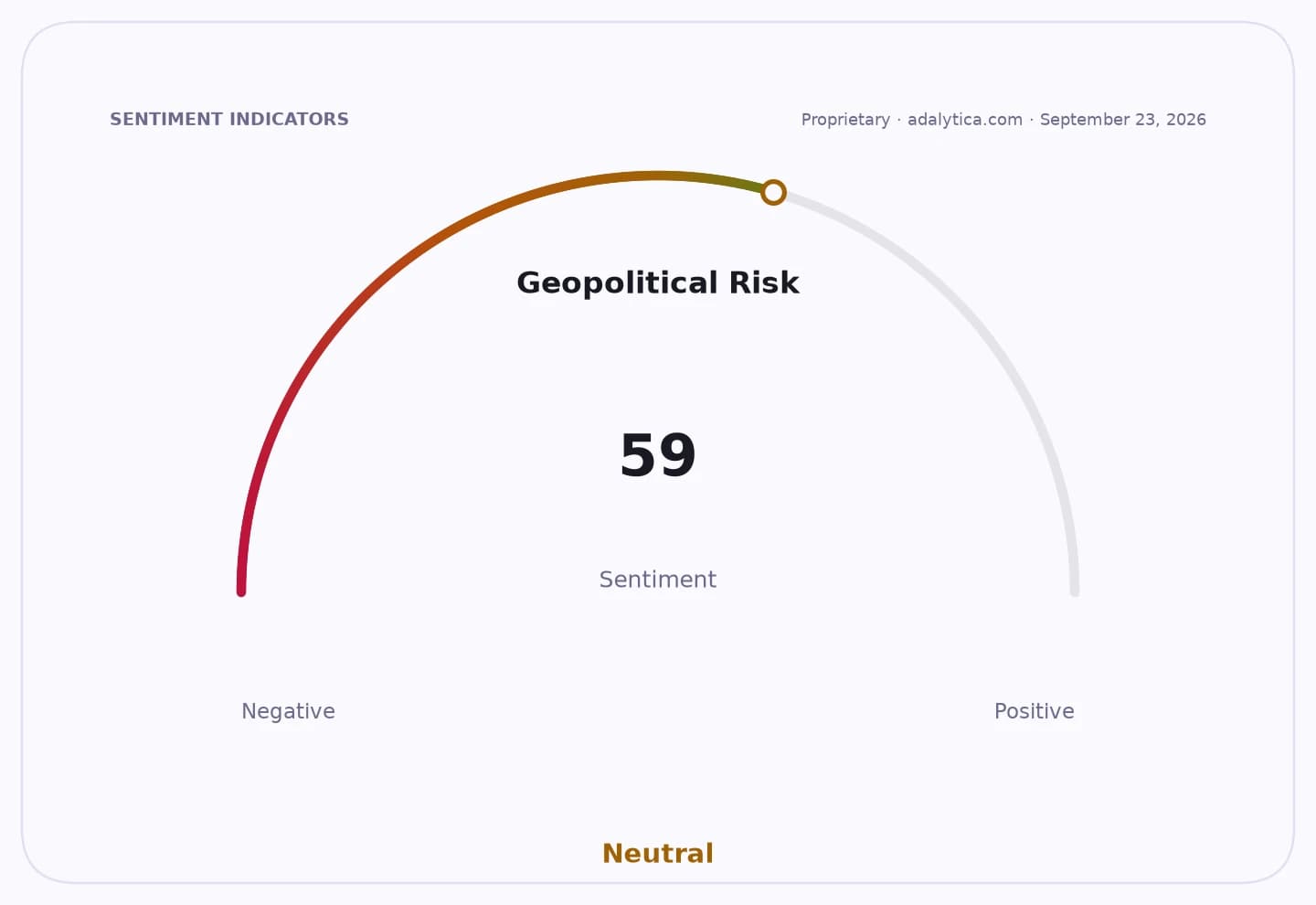
For investors, this is bigger than foreign policy theater. Brazil is Latin America’s largest economy and one of the world’s key commodity suppliers, so the direction of its diplomacy can affect export demand, financing conditions, tariff exposure and the premium global markets assign to Brazilian stocks and the real. A Lula victory would likely extend a strategy that leans into China, the BRICS bloc and the Global South. A win for Flávio Bolsonaro would point toward a more explicit alignment with Washington and Donald Trump’s America-first worldview.
Sentiment IndicatorsⓘProprietary · adalytica.com · September 23, 2026
This is a snapshot — live sentiment, awareness and momentum for 130+ markets update continuously in the dashboard.Open AlphaPulse
China is already the anchor of Brazil’s external economy. It has been Brazil’s biggest trading partner since 2009, and bilateral trade hit a record $171 billion in 2025. China was also the biggest source of Chinese investment into Brazil that year, sending $6.1 billion into the country. That kind of scale is why the campaign’s foreign-policy divide matters: whoever wins will be dealing not with an abstract alliance, but with the country that buys a huge share of Brazil’s commodities and increasingly shapes its infrastructure and green-transition funding.
Lula’s camp is signaling continuity. Celso Amorim, one of the president’s top foreign-policy advisers, traveled to Beijing during the campaign and met Chinese foreign minister Wang Yi, who said China and Brazil should deepen cooperation and coordinate on major international and regional issues. That fits the broader narrative around Lula’s diplomacy: more engagement with China, India, Russia and the BRICS as Brazil seeks leverage in a more fragmented global order.
Flávio Bolsonaro would likely point Brazil back toward the U.S. and away from that model. Analysts quoted in the report expect him to echo, if perhaps less loudly, the pro-Trump posture his father adopted in office. But investors should not assume that a friendlier tone would automatically mean tariff relief. Washington’s recent tariffs on Brazilian products have been tied to politics and to U.S. domestic interests, not just to who sits in Brasília. That means the most bullish case for markets is not simple alignment with the White House, but a steadier, more predictable foreign policy that lowers the odds of sudden trade shocks.
The market is already pricing in that uncertainty. The iShares MSCI Brazil ETF, EWZ, has been volatile but resilient, recently trading around $37.52 after briefly touching $38.61 earlier this month. The fund remains above both its 50-day and 200-day moving averages, a sign that long-term momentum has held up even as the RSI has eased from overbought levels. In other words, investors are watching Brazil not just as a political story, but as a tradable expression of commodity demand, trade risk and regional realignment.
There is also a broader strategic layer. Brazil-China cooperation is moving beyond soybeans and iron ore into areas such as carbon credits, rail links and wider industrial coordination. That could support Brazil’s long-term growth if it helps finance infrastructure and opens new markets. But it also deepens Brazil’s exposure to the China cycle at a time when the U.S. is increasingly weaponizing tariffs and sanctions in its dealings with Latin America.
For long-term investors, the key question is not which leader is more popular in Washington or Beijing. It is whether Brazil can preserve access to both sides while protecting its own bargaining power. Lula’s path likely means deeper Chinese integration and stronger ties to emerging-market blocs. Flávio Bolsonaro’s path likely means a warmer rhetorical embrace of the U.S., but not necessarily easier trade terms. Either way, Brazil remains a market worth watching closely, because its next president could change the country’s place in the global supply chain for years.
| Entity | Gains | Losses |
|---|---|---|
| Brazil under Lula | ▲China trade, BRICS ties | ▼U.S. reset hopes |
| Brazil under Flávio Bolsonaro | ▲U.S. alignment, Washington access | ▼China-first strategy |
| China | ▲Strategic influence, Brazil imports | ▼U.S. influence in region |
| U.S. exporters/tariff hawks | ▲Stronger leverage under Bolsonaro | ▼Closer Brazil-China coordination |