Jair Bolsonaro was hospitalized again for severe abdominal pain, reviving concerns over the former Brazilian president’s health just as his legal troubles and prison conditions keep him at the center of the country’s political crisis.
Brazil Bolsonaro hospitalization raises political risk
The immediate market relevance is limited, but the episode matters because Bolsonaro remains one of Brazil’s most polarizing political forces and any deterioration in his health can ripple through an already fragile political backdrop. For investors, that means more headline risk for Brazilian assets, more uncertainty around the country’s institutional stability and a greater chance that the fight over his treatment, detention and conviction spills back into the streets, the courts and Congress.
Bolsonaro’s son Carlos said his father was taken out of home arrest and to a hospital because of intense abdominal pain tied to the stabbing attack he survived in 2018. He blamed the decline on the conditions of confinement and said the former president, now 70, is weakening under what he described as psychological torture. Bolsonaro has undergone multiple surgeries since the knife attack during the 2018 campaign, and his family has repeatedly argued that incarceration is worsening his health.
That dispute is economically important because Brazil’s investable narrative depends heavily on policy continuity, institutional credibility and the government’s ability to keep social tensions contained. When a former president under a long prison sentence remains a focal point for legal and political confrontation, foreign investors tend to demand a wider risk premium, especially in assets tied to domestic growth, fiscal execution and the real.
The latest moves in Brazilian politics only deepen that unease. News of Bolsonaro’s hospitalization comes as other legal and political developments continue to inflame tensions, including court rulings against allies and a broader crackdown on organized crime. The combination keeps Brazil in a mode of elevated political volatility, which can weigh on sentiment even when the macro picture is driven by other factors.
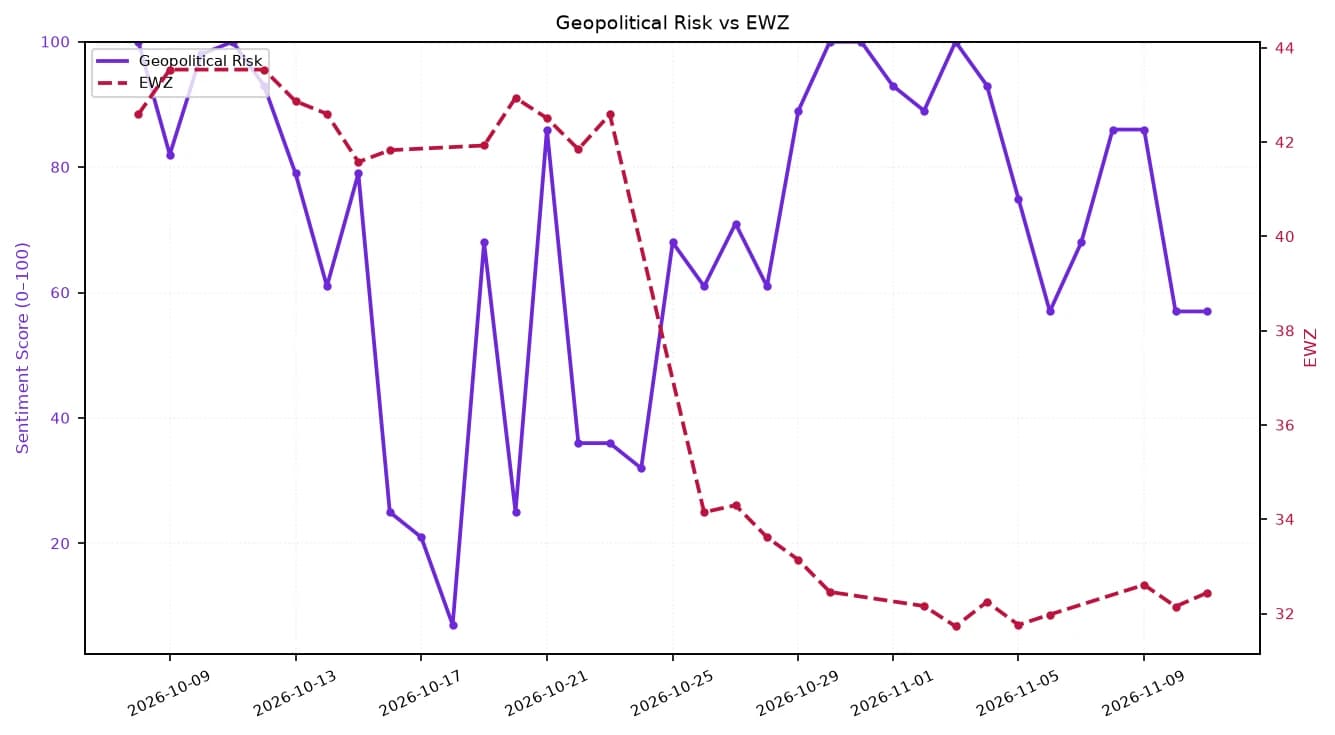
For investors, the more actionable point is that Brazil’s near-term trade is increasingly about headlines and institutions rather than pure fundamentals. The iShares MSCI Brazil ETF, EWZ, has already fallen sharply from above 42 in late October to 28.54 on Friday, with the 14-day RSI sinking to 27.4 and the price sliding well below both the 50-day and 200-day moving averages. That kind of setup tells you the market is pricing in stress, not comfort.
I believe the market underestimates how quickly political drama can dominate Brazilian assets when confidence is already thin. If Bolsonaro’s condition worsens, or if his legal saga intensifies, investors should expect more volatility in Brazilian equities and in the real, while companies with heavy domestic exposure could remain under pressure. By contrast, exporters and dollar earners are better insulated if political risk keeps the currency weak.
The message for investors is straightforward: Brazil is not trading like a clean macro recovery story right now, and Bolsonaro’s hospitalization is another reminder that political risk remains a live input into asset prices. In a market this sensitive, staying selective matters more than chasing a bottom.
| Entity | Gains | Losses |
|---|---|---|
| Bolsonaro family | ▲Sympathy narrative | ▼Political momentum |
| Brazilian opposition | ▲Rallying point | ▼Policy focus |
| EWZ bulls | ▲None | ▼Sentiment and price action |
| Exporters/dollar earners | ▲Weaker real | ▼Domestic consumers |