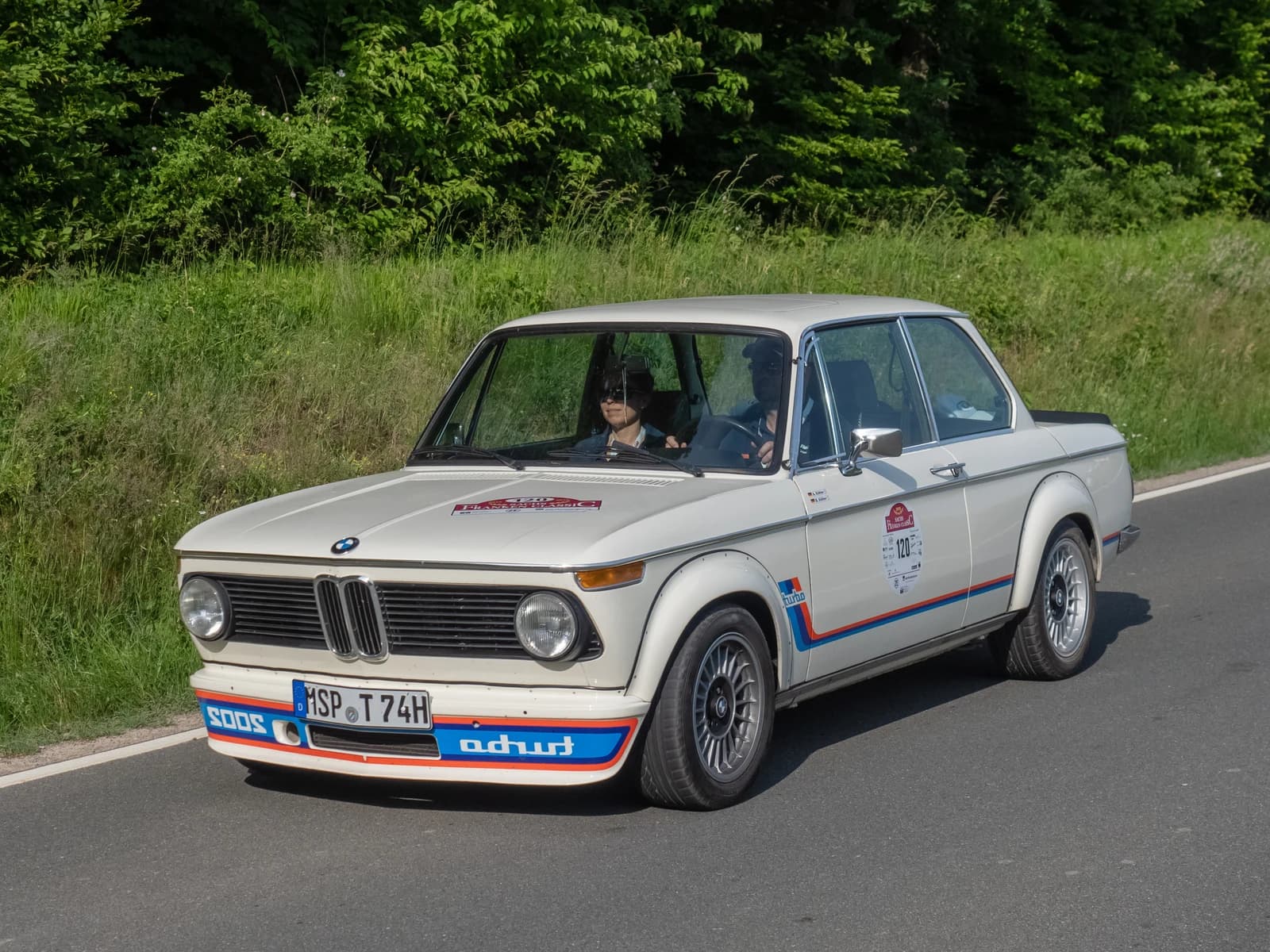
A rare BMW 2002 Turbo, the car that helped launch Europe’s turbocharging era, is on the market for 149,950 euros, or about $175,000, underscoring how the earliest performance icons continue to command serious money from collectors.
BMW 2002 Turbo listed for 149,950 euros
For investors, the significance goes beyond nostalgia. As interest in blue-chip classic cars holds up, scarcity and provenance keep driving pricing power in a market where the most desirable examples are increasingly treated like rolling assets rather than old machinery. That is especially true for milestone models — cars that mark a technological first, carry a clear production story and have the kind of cult following that can support long-term value.

This BMW is one of the key names in that category. Built in 1974 and first registered in 1975, the silver example has covered only about 47,000 kilometers. It belongs to a model that BMW unveiled at the 1973 Frankfurt Motor Show as its first turbocharged production car and the first European turbo car, with just 1,672 made over two years. Those numbers matter. In collectibles, limited supply is often the strongest fundamental of all.
The car’s specifications still read impressively today: a 2.0-liter engine with a KKK turbocharger, 170 horsepower, 240 Nm of torque, a 0-100 km/h sprint in 6.9 seconds and a top speed of 210 km/h. But the real value is historical. This is the sort of object that appeals to buyers who want a piece of automotive engineering history, and that audience tends to be less sensitive to short-term market swings than buyers of ordinary used cars.
That helps explain why the asking price can be benchmarked against modern BMW performance models and still look plausible to enthusiasts. A new M2 starts lower in Hungary, while an M5 with hybrid V8 power sits at roughly a similar price point. Yet those comparisons only go so far. The 2002 Turbo is not competing on horsepower alone; it is competing on rarity, story and status.
For long-term investors, the lesson is simple: the collectible car market rewards enduring icons, not just expensive machines. The best examples can preserve value when they are properly documented, lightly used and tied to a meaningful first in automotive history. This BMW 2002 Turbo fits that mold closely, and it is worth watching for anyone interested in tangible assets with scarcity on their side.
| Entity | Gains | Losses |
|---|---|---|
| BMW 2002 Turbo sellers | ▲Higher collector pricing | ▼Smaller buyer pool |
| Collectors/buyers | ▲Rare historic asset | ▼Large upfront cash outlay |
| BMW brand | ▲Heritage value | ▼None directly |
| Modern performance cars | ▲Price reference point | ▼Historical prestige gap |