Bitcoin’s plunge below $56,000 matters because it is not just a price break — it is a forced deleveraging event that is still draining liquidity from the entire crypto market.
Bitcoin Falls Below $56,000 After Liquidations
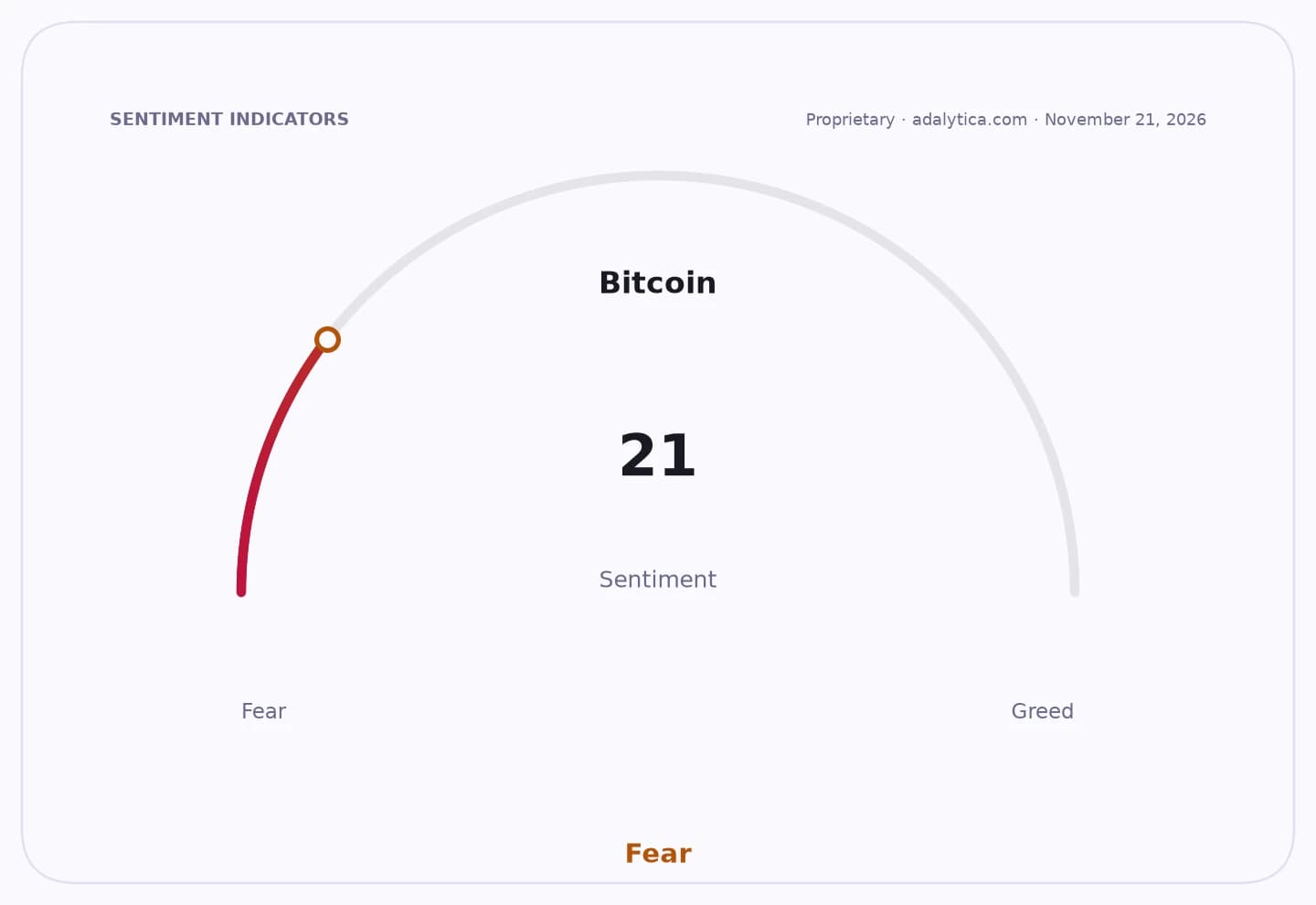
Bitcoin
The largest cryptocurrency fell to $55,106 in early trading before rebounding, after roughly $2.7 billion of leveraged crypto positions were liquidated in 24 hours, according to the Kobeissi Letter. That makes the move one of the biggest liquidation cascades in crypto history and the clearest sign yet that this selloff is being driven by market plumbing, not by a single external shock.
Sentiment Indicators
That distinction matters to investors because liquidation-driven declines can feed on themselves. When traders use borrowed money, falling prices trigger automatic sales as collateral gets wiped out. Those forced sales then push prices lower, hitting the next layer of leverage and creating a loop that can turn a routine slide into a capitulation. Bitcoin’s intraday trading showed exactly that pattern, with the heaviest selling coming in thin overnight hours as the market snapped through successive liquidation levels.
The damage is not limited to Bitcoin spot traders. U.S. spot bitcoin ETFs have now posted three straight sessions of outflows, including a $582 million withdrawal, removing a major source of demand just as leveraged positions were being unwound. That combination is poisonous for price stability: the speculative bid disappears at the same time the forced seller appears.
For investors, the deeper message is that crypto is still behaving like a highly leveraged risk asset rather than a mature store of value. Bitcoin is now more than 52% below its all-time high, and technical indicators remain weak, with the 50-day moving average far above spot and the RSI still in deeply oversold territory. A daily close below $58,566 would suggest the break has not finished.
This is where the opportunity and the danger diverge. If you believe the long-term Bitcoin thesis remains intact, the current setup argues for patience, not heroics. The market underestimates how fast a leverage flush can overcorrect to the downside before the next durable buyer steps in. Until ETF flows stabilize and forced selling runs its course, crypto remains vulnerable to one more air pocket. The actionable takeaway: avoid chasing the bounce, and wait for evidence that deleveraging has ended before treating Bitcoin as a fresh entry.
| Entity | Gains | Losses |
|---|---|---|
| Short sellers | ▲Volatility profits | ▼— |
| Spot bitcoin ETF investors | ▲Lower entry prices later | ▼Near-term outflows |
| Leveraged crypto traders | ▲— | ▼Forced liquidations |
| Long-term Bitcoin buyers | ▲Potential reset in valuation | ▼More downside before stabilization |