Bangladesh’s jewellers have cut gold prices to their lowest level in a year, a move that reflects the force of the global bullion downturn and is likely to ease costs for wedding-season buyers while squeezing traders’ margins.
Bangladesh cuts gold prices below 200000 taka
The Bangladesh Jewellers Association, or BAJUS, said late Saturday it will reduce the price of 22-carat gold, including VAT, to 194,964 taka per ভরি from 201,146 taka, a cut of 6,182 taka. The new rate, effective Sunday, takes the price back below 200,000 taka for the first time since it crossed that threshold on Oct. 29, 2025.
Sentiment Indicators

The association also lowered 21-carat gold to 186,216 taka per ভরি, 18-carat gold to 159,972 taka and traditional gold to 130,345 taka. Silver prices were left unchanged.
The domestic adjustment follows a sharp fall in international gold prices, which have come under heavy selling pressure as investors reassess the pace of US monetary easing and broader risk appetite improves. Gold fell close to $3,500 an ounce this week, its weakest level in 14 months, after a bout of volatility that drove prices down nearly 10% over the week before a modest rebound. GLD, the largest gold ETF, has dropped below its 200-day moving average, while Newmont and Barrick-linked shares have also weakened, underscoring how quickly the correction has spread through the precious-metals complex.
Gold
For Bangladesh consumers, the cut matters immediately because gold is both a jewellery staple and a store of wealth. Lower prices should support retail demand at a time when households are sensitive to wedding and festival costs. But the move also confirms that local jewellers are passing through a global price decline rather than absorbing it, which can leave inventory holders exposed if bullion prices remain unstable.
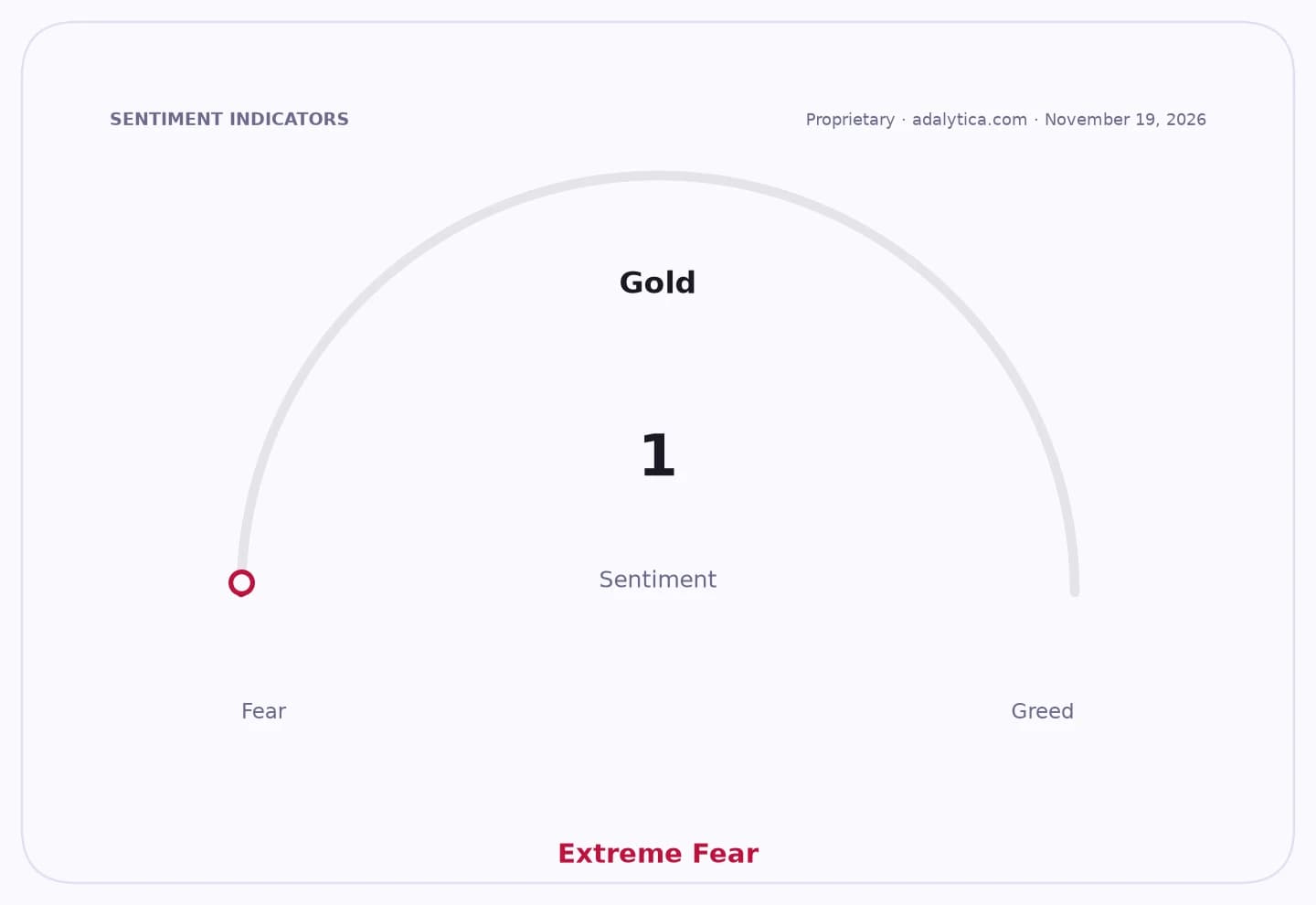
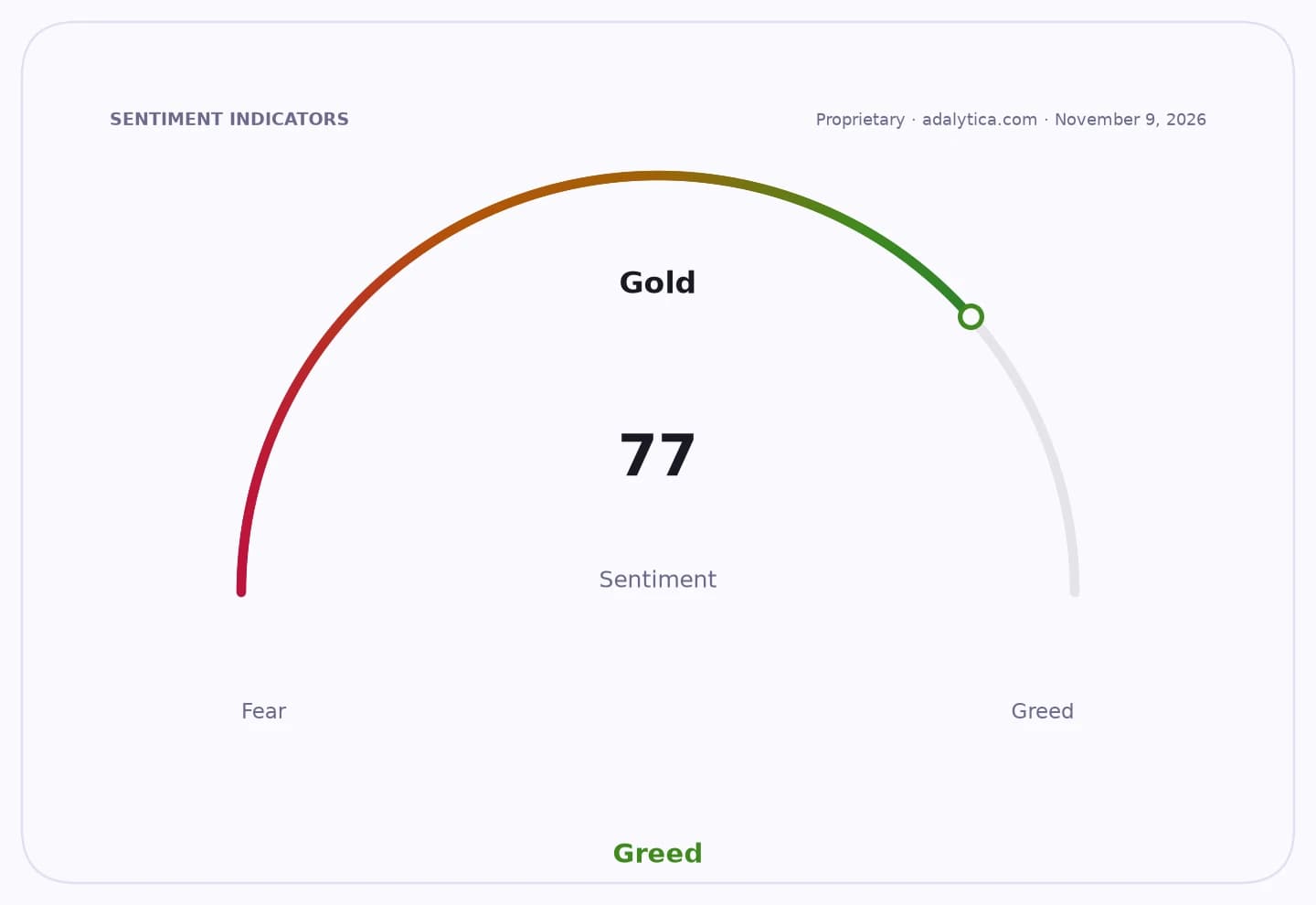
That volatility is part of the story for investors as well. Gold’s recent slide has prompted a sharp shift in sentiment, with Adalytica’s Gold Fear & Greed Index showing extreme fear even as awareness of the move remains elevated. The US dollar trade signals also point to heightened market tension. If the retreat deepens, bullion-linked equities and ETF flows could stay under pressure; if prices stabilise, bargain buying and central-bank demand could quickly re-enter the market.
BAJUS said making charges and VAT rules remain in place across jewellery shops until further notice, meaning the headline price cut will not translate one-for-one into final retail costs. Still, the association’s move is a clear marker of a market repricing that now stretches from global bullion desks to Bangladesh’s shop floors.
| Entity | Gains | Losses |
|---|---|---|
| Bangladeshi buyers | ▲Lower jewellery costs | ▼None immediately |
| BAJUS members | ▲Demand may improve | ▼Margins on inventory |
| Global gold sellers | ▲Can clear stock | ▼Price momentum |
| Gold miners/ETF holders | ▲— | ▼Mark-to-market losses |