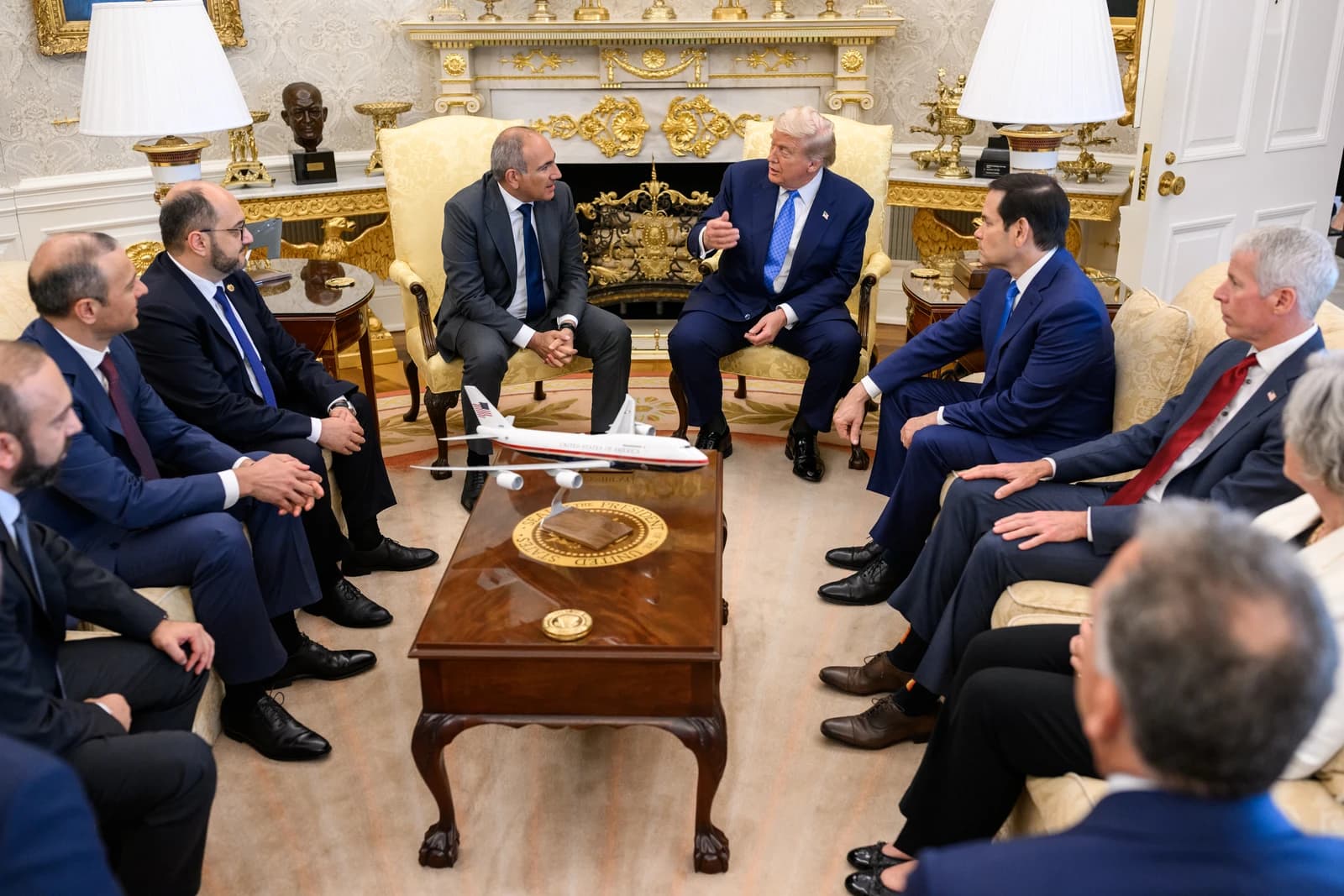
Armenia is pressing ahead with the so-called “Trump Route” project despite warnings from Tehran, a move that could redraw trade flows through the South Caucasus and give Iran a new economic outlet at a time of elevated regional risk.
Armenia Presses Ahead on Trump Route Project
Geopolitical Risk
The project matters because it sits at the intersection of diplomacy, transit economics and energy security. A functioning corridor through Armenia would not only alter how goods move between the Caspian, the Black Sea and the Middle East, it could also give Tehran a practical route to deepen commerce with a neighbor that has remained one of its few reliable regional partners.
Sentiment Indicators
That backdrop helps explain why the issue is drawing attention well beyond Yerevan. Iran has signaled that it sees the corridor less as a geopolitical threat than as a commercial opportunity, particularly if it can expand gas sales and broader trade links with Armenia. Armenian officials have also been trying to balance relations with Iran, Türkiye and Azerbaijan while avoiding steps that would shift the regional balance too sharply in any direction.
Markets have not priced a direct impact in a single asset yet, but the macro implications are straightforward. More stable overland trade in the South Caucasus could ease bottlenecks for regional commerce, while any improvement in Iran-Armenia connectivity would be especially relevant for energy logistics and cross-border supply chains. That comes as investors remain sensitive to any development that could affect sanctions exposure, shipping routes or the security premium attached to Middle East and Caucasus trade.
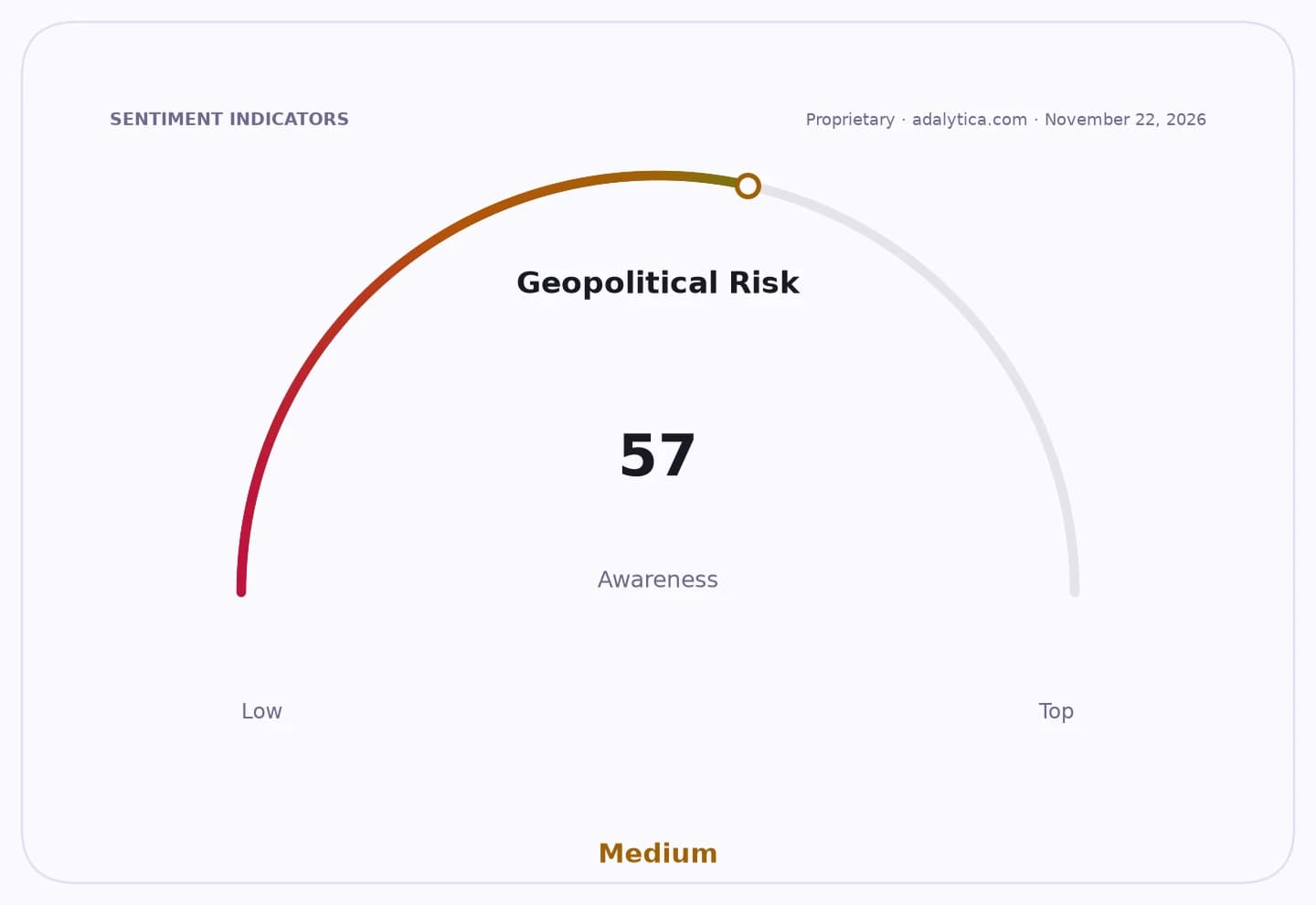
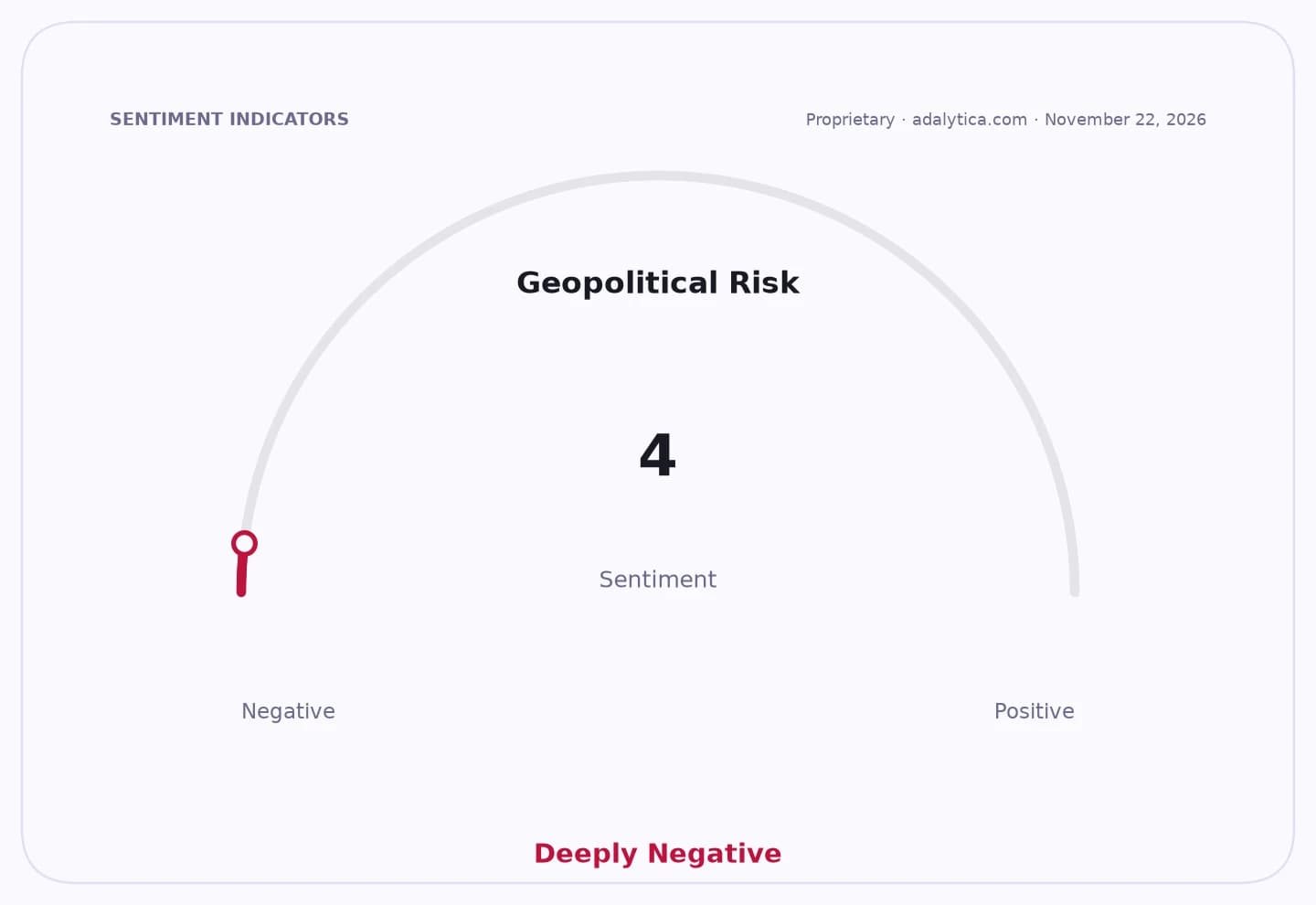
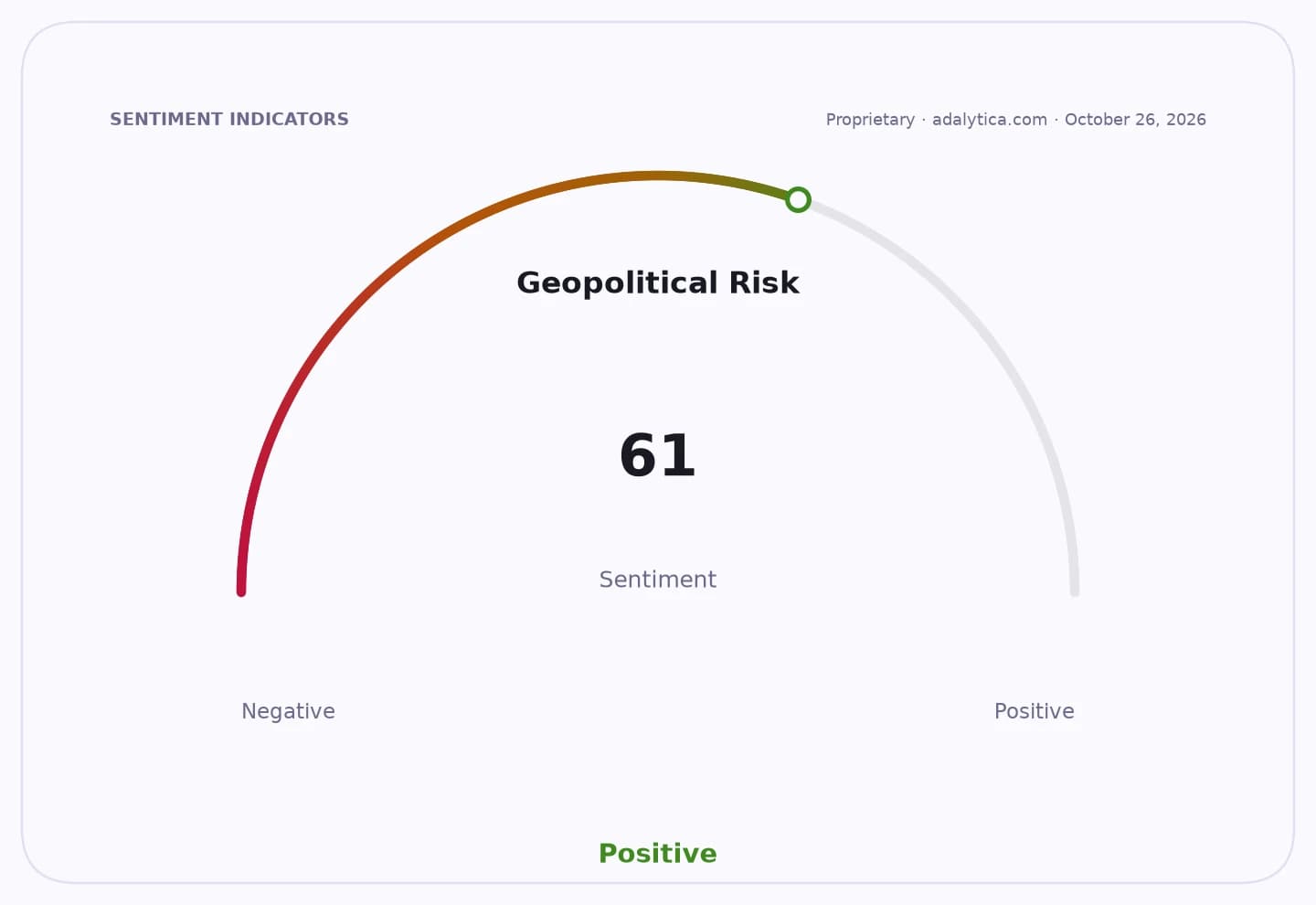
The wider market backdrop is one of caution rather than calm. Adalytica’s Global Stability Sentiment index has fallen to 36, with awareness at an “Extreme Fear” reading of 7, underscoring how quickly geopolitical headlines can move risk appetite. The US dollar, by contrast, remains firm, with Adalytica’s trade signals showing sentiment in “Greed” territory at 81, suggesting investors still favor liquidity and safety when regional tensions intensify.
That matters for commodities and transport-linked assets as well. USO, the oil fund, has retraced from its recent highs but remains well above its 50-day and 200-day moving averages, while the yen proxy FXY stays weak, reflecting a market still comfortable holding dollar strength and energy exposure even as geopolitical noise rises. The move in the ten-year US Treasury yield toward 5.124% also points to a market that is still pricing firmer growth, sticky inflation and uneven geopolitical risk rather than a clean de-escalation.
For Iran, the economic prize is not the corridor itself but the optionality it creates: more transit revenue, greater access to regional markets and a chance to anchor its ties with Armenia at a time of broader diplomatic pressure. For Armenia, the calculation is more delicate. It gains a route and potentially new investment interest, but must manage the risk of antagonizing neighbors or being pulled deeper into a regional contest between larger powers.
Investors should watch whether the announcement turns into binding financing, border arrangements and customs coordination, because that will determine whether the “Trump Route” becomes a symbolic project or a real trade corridor. If implementation advances, the beneficiaries are likely to be firms tied to logistics, energy and regional infrastructure; if it stalls, the main losers will be those betting on a more open South Caucasus trade map.
| Entity | Gains | Losses |
|---|---|---|
| Iran | ▲New trade outlet | ▼Transit pressure |
| Armenia | ▲Transit investment | ▼Diplomatic friction |
| Regional shippers | ▲Shorter routes | ▼Route uncertainty |
| Rival corridors | ▲Less certainty | ▼Lost traffic |