Argentina’s ruling Libertarian alliance has won the political foothold it wanted in Mendoza, but Governor Alfredo Cornejo still has not secured the one guarantee that really matters for his province: whether Luis Petri will be cleared to challenge for the governorship in 2027.
Argentina Milei camp secures Mendoza alliance
That split outcome matters because it shows how Javier Milei’s camp is building power in the provinces without giving up leverage over local succession fights. For investors, it reinforces the view that the government is consolidating its electoral machine ahead of the midterm and the 2027 presidential cycle, while leaving open a potentially messy provincial battle in one of Argentina’s more business-friendly regions.
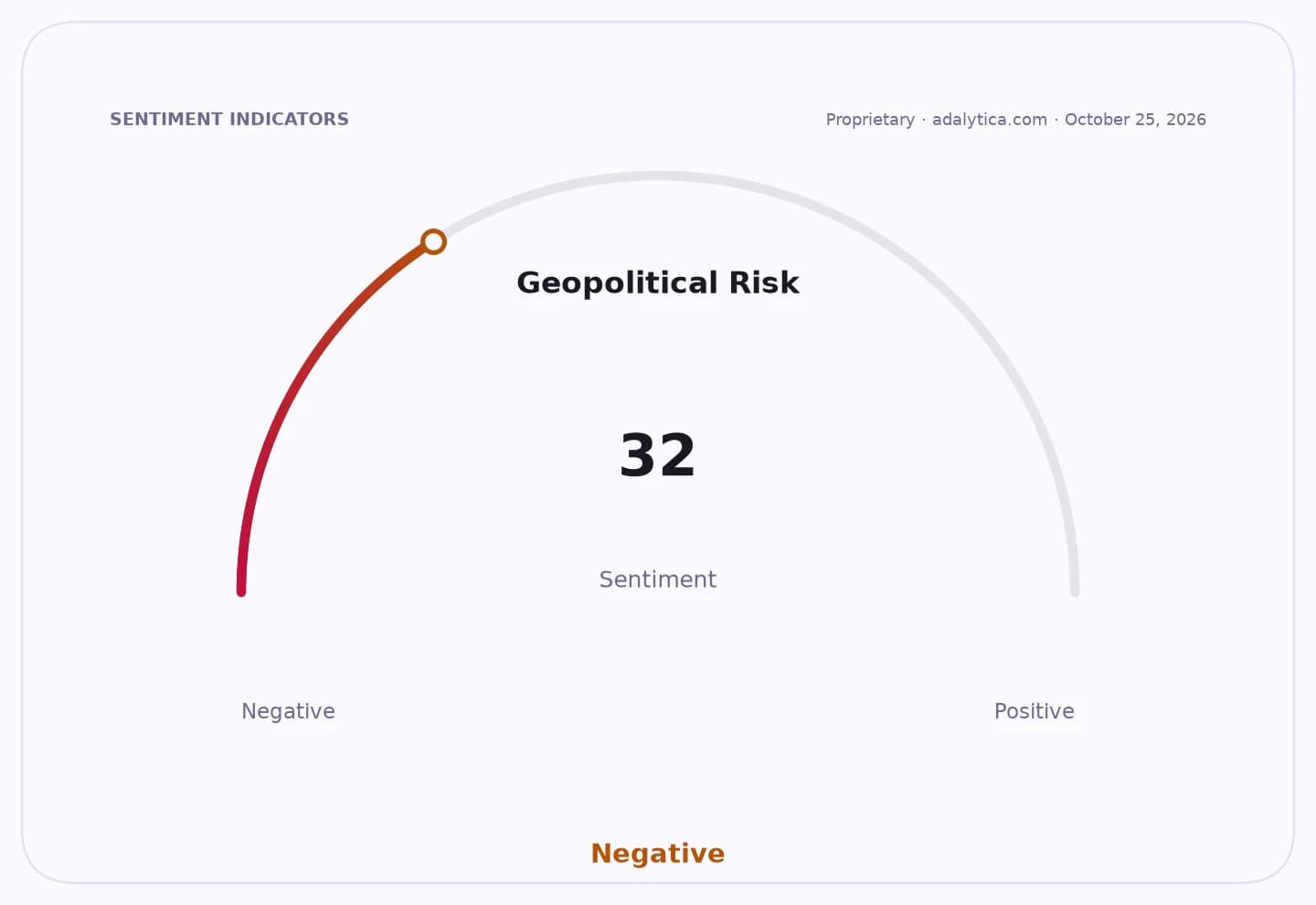
Sentiment Indicators
According to local reporting, Chief of Staff Diego Santilli confirmed that the national government has an agreement with Cornejo on the composition of the lists for national deputies and senators, but that the provincial question will be handled later. In other words, Buenos Aires got what it needed now: a working alliance to shore up congressional arithmetic. Cornejo, however, did not get the provincial endorsement he wanted for the succession plan he prefers.
That distinction is not cosmetic. The Milei camp, led politically by Karina Milei and the Menem brothers, is trying to lock in territorial pacts that strengthen its legislative base and preserve a path to reelection without surrendering control of local structures. Mendoza fits that strategy perfectly: it is valuable enough to negotiate over, but not so strategically essential that the ruling party needs to hand Cornejo a blank check.
Petri is the obstacle. He already built his own political capital by challenging Cornejo in Mendoza’s 2023 primary, then gained national visibility as defense minister. He now has the profile, the brand and the incentive to run under the Libertarian banner. For Cornejo, that is a direct threat to the continuity of the provincial ruling structure that has held Mendoza since 2015.
The market implication is straightforward: Milei is not just negotiating votes, he is building a repeatable electoral framework. That lowers the odds of a legislative setback that could slow fiscal and structural reform. At the same time, the unresolved Mendoza succession fight is a reminder that local alliances are still fragile, and that provincial politics can quickly turn into fragmentation if the national government refuses to pick a side.
That matters for Argentine assets because the country’s rally still depends on the market believing Milei can keep enough political cover to push through his agenda. Any sign that he is losing control of his coalition would hit risk appetite fast. Conversely, every successful provincial pact that expands Libertarian reach without a major concession supports the investment case for Argentine equities, dollar-linked assets and politically exposed names.
For now, the clearest winner is the national government, which secured the legislative arrangement it wanted without committing to Mendoza’s succession. Cornejo gets access to the national ticket, but not the assurance he needs to close the provincial race. And Petri remains the wildcard that could split the official vote if the province heads into 2027 with competing alliances.
That is why this story matters beyond Mendoza. It is a test of whether Milei can turn electoral bargaining into durable political infrastructure. If he can keep provincial allies close while preserving his own internal options, the Libertarian project gets stronger. If not, local power struggles could start to chip away at the broader reform story investors are buying.
| Entity | Gains | Losses |
|---|---|---|
| Milei government | ▲National legislative pact | ▼Less clarity on Mendoza |
| Alfredo Cornejo | ▲Access to ruling alliance | ▼No succession guarantee |
| Luis Petri | ▲Open path to candidacy | ▼Pressure to align or exit |
| Mendoza radical coalition | ▲National backing | ▼Risk of internal split |