Apollo Global Management has lined up 13 banks to arrange a roughly $9 billion debt package for ADT, a deal that underscores how aggressively private capital is using leveraged financing to support large corporate transactions even as credit markets grow more selective.
Apollo lines up banks for $9B ADT debt package
The size of the package matters because it signals that lenders are still willing to back sponsor-led buyouts and recapitalizations, but only with a broad syndicate and, likely, tighter structuring. For Apollo, the financing is central to closing a transaction tied to ADT, a business with recurring cash flow but limited growth, making debt capacity and pricing more important than ever in a higher-rate environment. For investors, the deal is a read-through for both leveraged finance demand and the appetite of banks to warehouse risk in a market where borrowers are increasingly seeking refinancing and restructuring options.
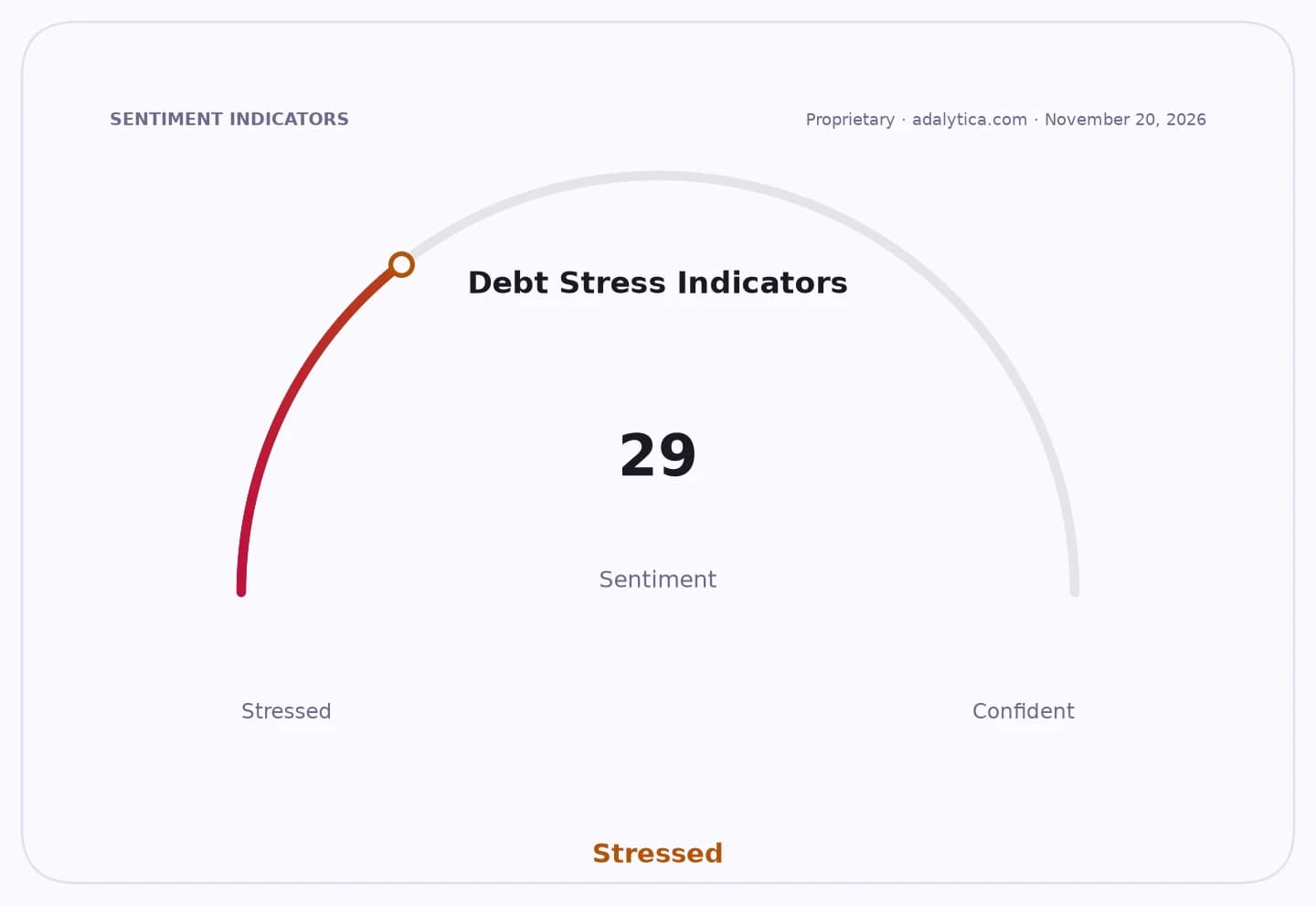
Sentiment Indicators
ADT’s shares have also reflected the market’s uncertainty. The stock was last trading around $9.87 on Nov. 20, up sharply from earlier in the year, after a volatile stretch that saw it fall as low as $6.25 in June before recovering above both its 50-day and 200-day moving averages. That rebound suggests traders have already been positioning for a corporate event, though the recent flattening in momentum indicators shows the market is still waiting for confirmation that the financing can be executed on favorable terms.
The broader backdrop is one of rising debt pressure across corporate balance sheets, with financiers and borrowers alike looking for alternative funding structures to manage maturities and reduce refinancing strain. Apollo itself has been active in debt markets, including a recent $600 million subordinated notes sale, reinforcing the firm’s willingness to use capital markets to support its investment strategy.
If the package is completed, it would cement Apollo’s ability to move on a sizable ADT transaction and test whether banks can still distribute jumbo leveraged loans in a market increasingly sensitive to credit quality, leverage and execution risk. A delay or repricing, by contrast, would highlight how far underwriting conditions have tightened and how much more expensive large sponsor deals have become.
| Entity | Gains | Losses |
|---|---|---|
| Apollo Global Management | ▲Deal execution leverage | ▼Higher financing costs |
| ADT | ▲Acquisition certainty | ▼Balance-sheet flexibility |
| Banks | ▲Fee income | ▼Underwriting risk |
| Existing lenders | ▲Refinancing visibility | ▼Weaker negotiating power |