Ambiensa’s opening of a New York office is a distribution move as much as a sales one: the Ecuadorian developer is trying to capture remittance-backed demand from migrants who want to buy property at home, while lowering the frictions that have kept cross-border home purchases out of reach for many households.
Ambiensa opens New York office for Ecuador home buyers
The office, in Jackson Heights, Queens, puts the company physically inside one of the largest Ecuadorian communities in the U.S. and gives it a direct channel to buyers who may not qualify for conventional bank loans in Ecuador. That matters economically because diaspora savings and remittances are a stable source of purchasing power at a time when many households remain shut out of traditional credit. For Ambiensa, the strategy is designed to convert that flow into apartment sales and financing income; for Ecuador’s housing market, it could widen the pool of eligible buyers beyond domestic wage earners.
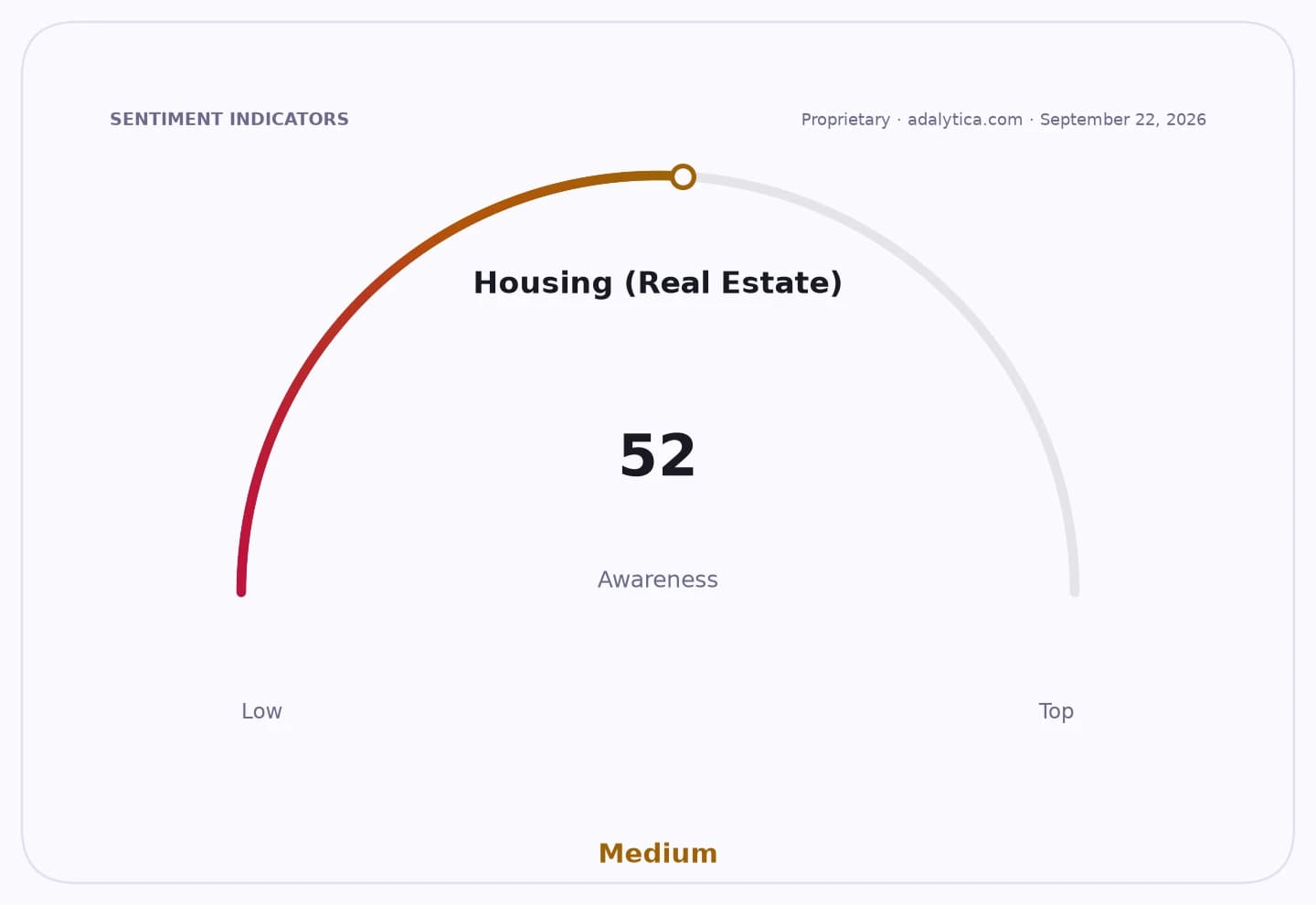
Sentiment IndicatorsⓘProprietary · adalytica.com · September 22, 2026
This is a snapshot — live sentiment, awareness and momentum for 130+ markets update continuously in the dashboard.Open AlphaPulse
Ambiensa said it is offering end-to-end advice, from unit selection to financing, including a direct-loan product aimed at customers without access to the traditional financial system or an IESS affiliation. The product would finance 100% of the property over eight years, backed by a trust structure, with rates regulated by Ecuador’s central bank and immediate delivery of the unit after closing. It also plans to guide buyers toward state-backed programs such as the Miti-Miti loan, with a 4.89% annual rate through private banks, and Biess’ CrediCasa, at 2.99% for affiliates.
The pitch is aimed squarely at migrants who may have steady cash flow but limited formal credit history. That is a meaningful niche in a region where homeownership often depends on access to payroll-linked lending. If Ambiensa can underwrite that risk effectively, it gains a higher-value customer base and a way to move inventory in projects that might otherwise depend on slower domestic demand. If it cannot, the model could expose the company to funding and collection risks that are harder to manage across borders.
The homes on offer are in Nueva Ciudad, a development in northern Guayaquil that Ambiensa says is built around a projected population of more than 120,000 people and the “15-minute city” concept. The project combines housing with retail, schools and recreation, and the company is promoting earthquake-resistant construction, private security, environmental certifications and energy- and water-saving features. Those attributes matter because migrant buyers are not just purchasing shelter; they are buying perceived safety, resale value and a hedge against inflation and currency risk back home.
The company is broadening reach in New York through partner advisory points at Unión Andina and Altamirano Financial Services in Queens and Brooklyn. That suggests Ambiensa sees the U.S. migrant market less as a one-off sales trip and more as a durable channel for financing and after-sales service.
For investors, the key question is whether this is a scalable demand source or a niche diaspora trade. The bull case is that migrant households are cash-generating, brand-loyal and motivated to preserve wealth in property. The bear case is that cross-border credit underwriting, legal structure and servicing complexity can limit growth even when demand exists. The success of Ambiensa’s New York push will depend on whether it can turn community access into repeatable sales without taking on credit losses that overwhelm the margin benefit of a captive buyer base.
| Entity | Gains | Losses |
|---|---|---|
| Ambiensa | ▲New buyer pipeline | ▼Higher underwriting complexity |
| Ecuadorian migrants in New York | ▲Easier home purchase access | ▼Exposure to loan obligations |
| Traditional banks | ▲Less direct demand | ▼Lost share of unmet borrowers |
| Guayaquil housing projects | ▲More potential sales | ▼Reliance on diaspora demand |