A 63-year-old retirement saver who moved $500,000 into her 401(k)’s core bond fund could still take about a $30,000 hit if interest rates rise a full percentage point — a reminder that “safe” fixed-income funds are not risk-free just because they sit inside a retirement plan.
401(k) Bond Funds Can Lose Value as Rates Rise
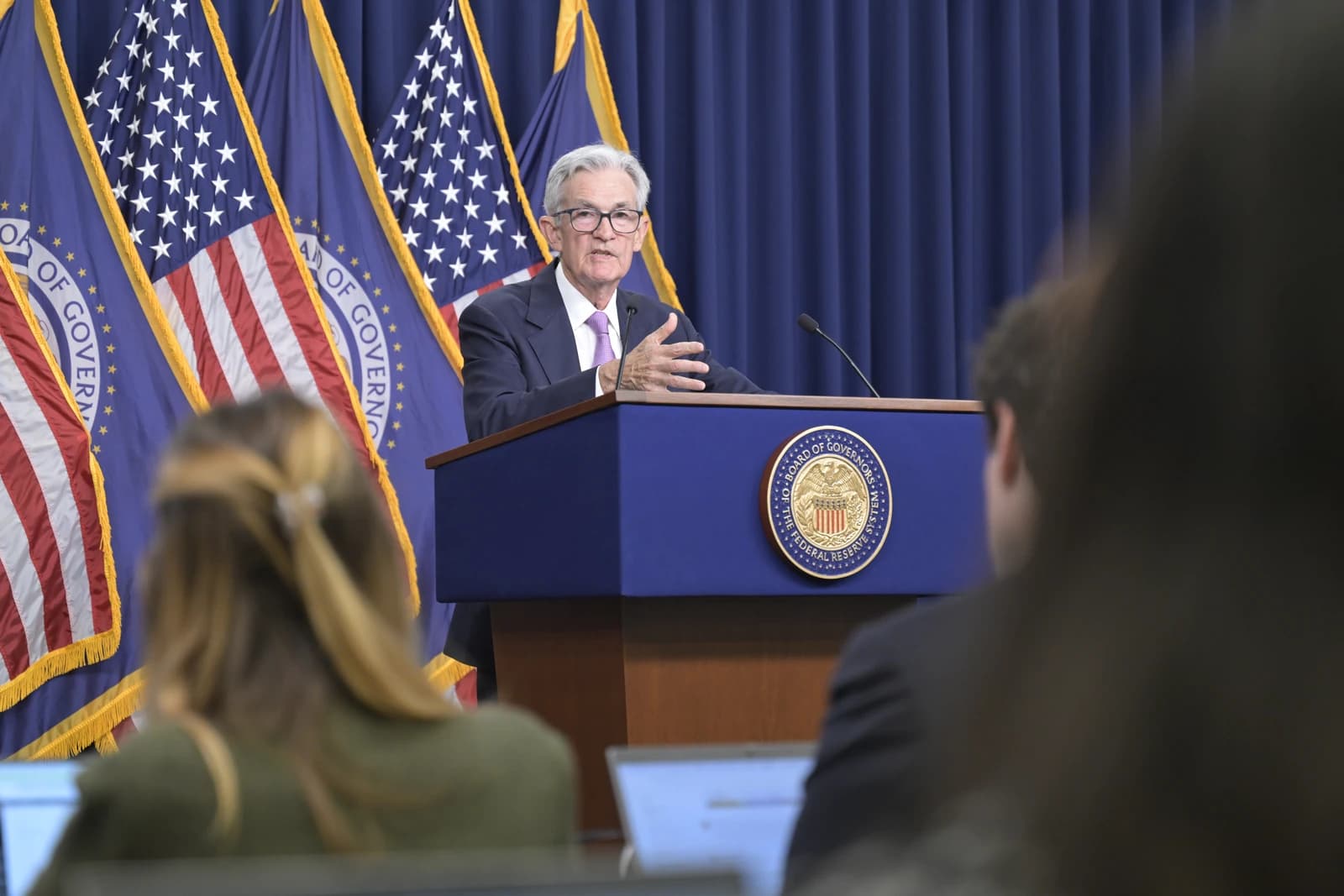
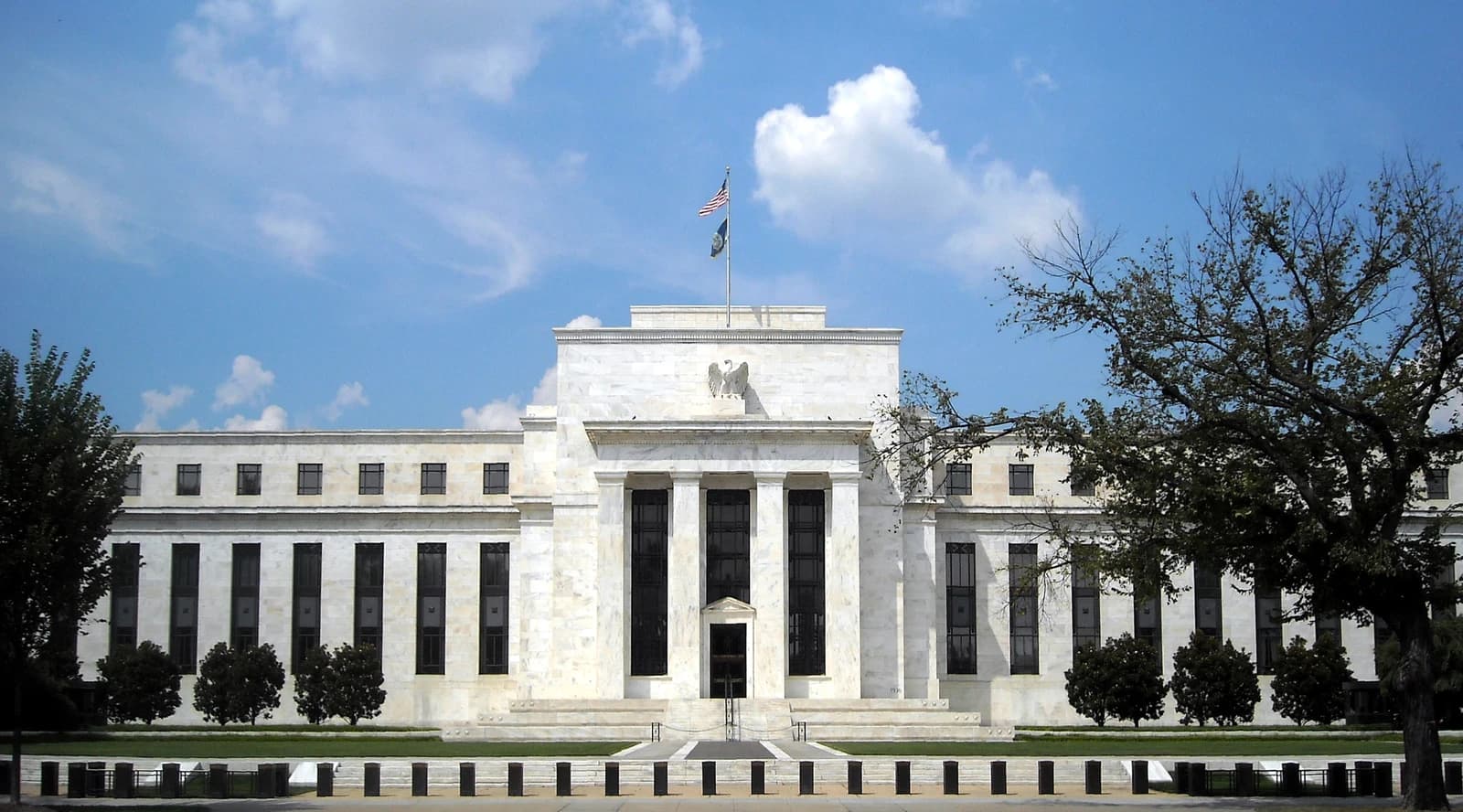
That matters because the Federal Reserve is again talking about doing more than the market expects. Fed Governor Christopher Waller has said policymakers may need to “shock people” with a half-point hike if inflation stays sticky, and minutes from the central bank show most officials still see more tightening ahead. When rates rise quickly, bond prices fall, and that can hurt retirees who chose bonds for stability rather than speculation.
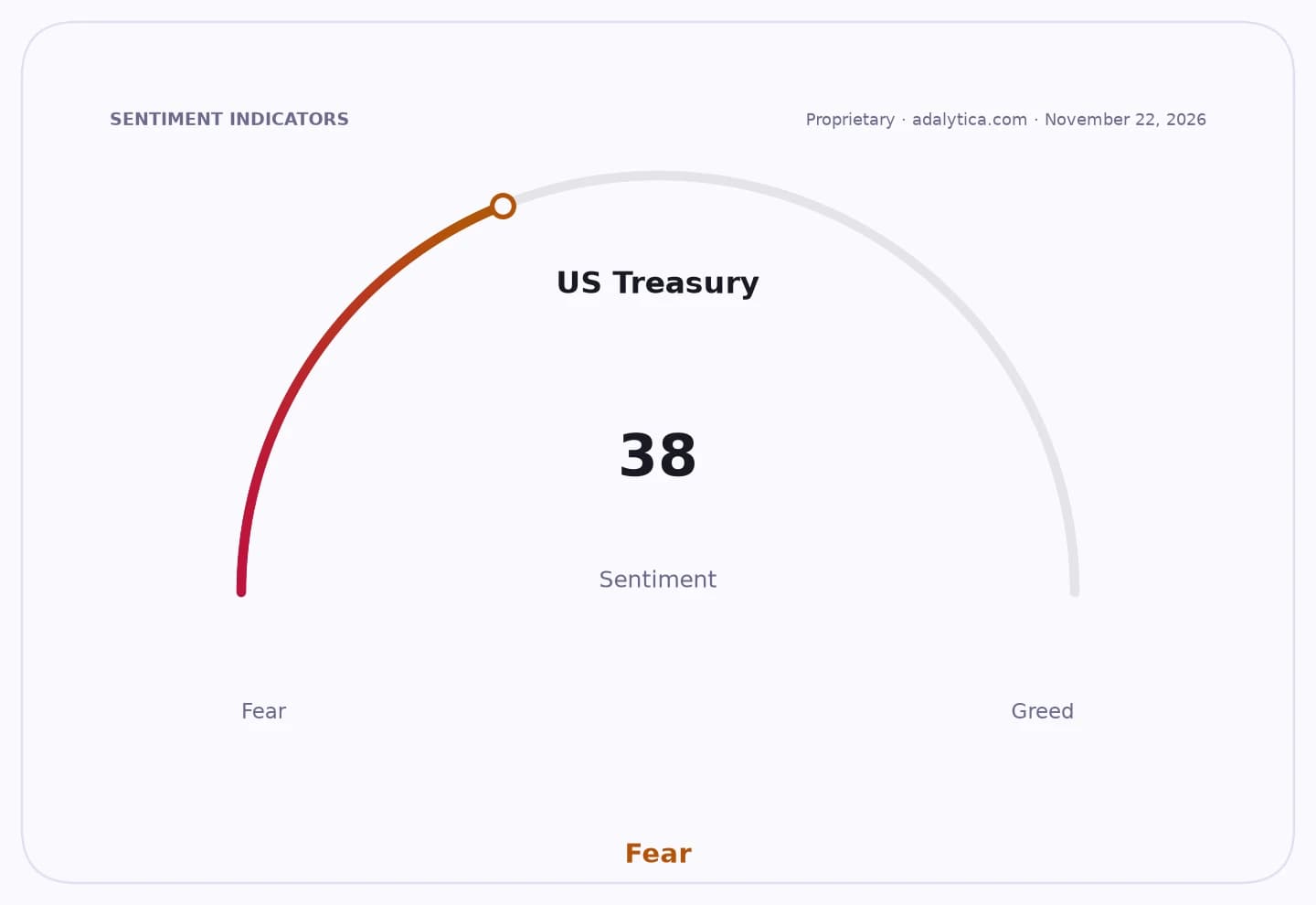
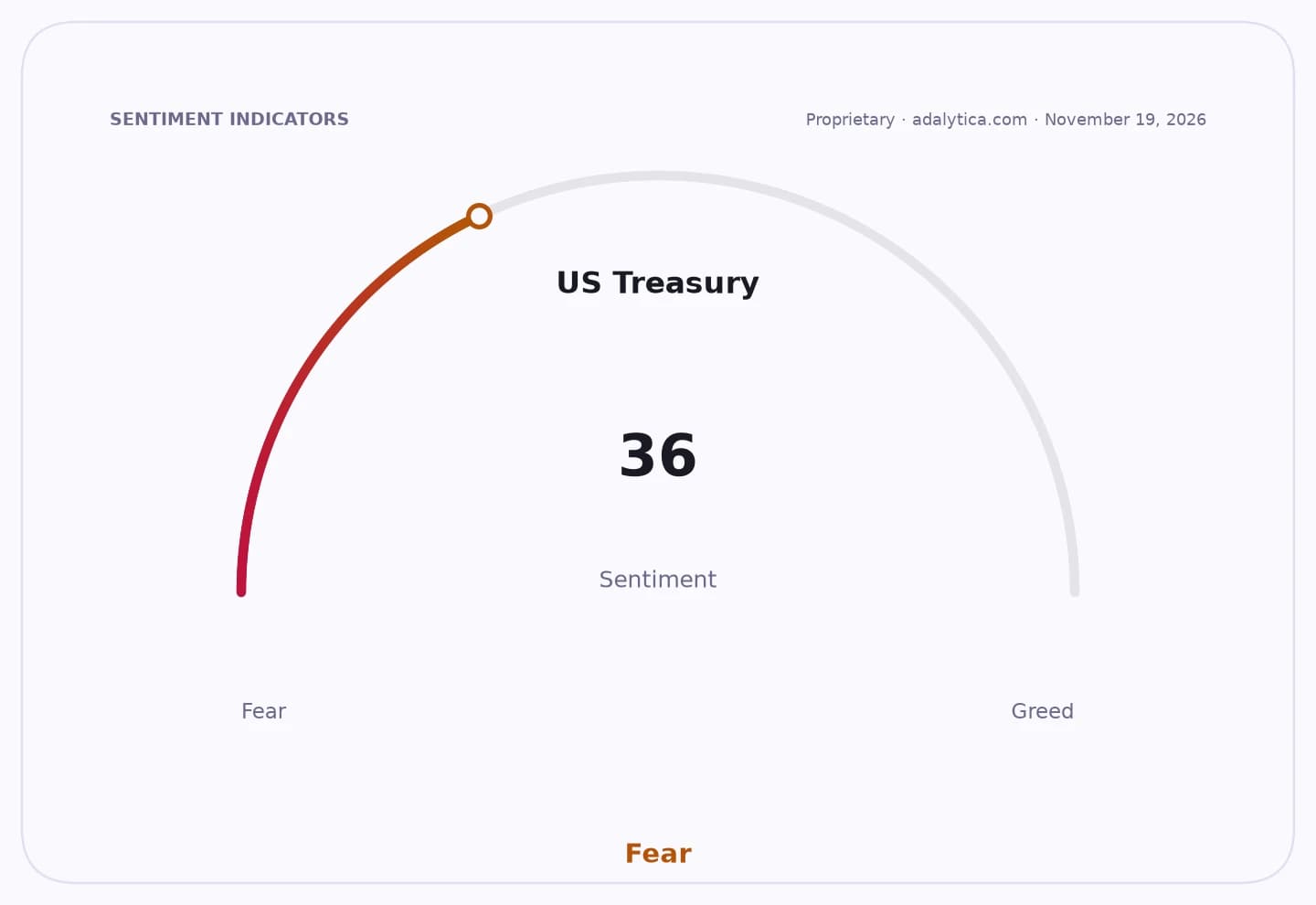
Sentiment Indicators
The math is simple, and investors should know it before they park too much money in a fund based on the word “conservative” in a plan booklet. Duration measures how sensitive a bond fund is to changes in yields. If the fund in question has a duration of 6, a 1-point increase in rates can trim roughly 6% from its price, or about $30,000 on a $500,000 position. Even a half-point move would imply about $15,000 in paper losses.
This is exactly why fixed income should be matched to spending needs, not chosen by label. Money needed in the next few years belongs in shorter-duration funds or stable value options, where price swings are smaller. Money that can sit untouched for longer can eventually recover as higher yields roll through the portfolio. In other words, bond losses from a rate shock are painful in the short run, but for patient investors they can also reset income higher over time.
US Treasury
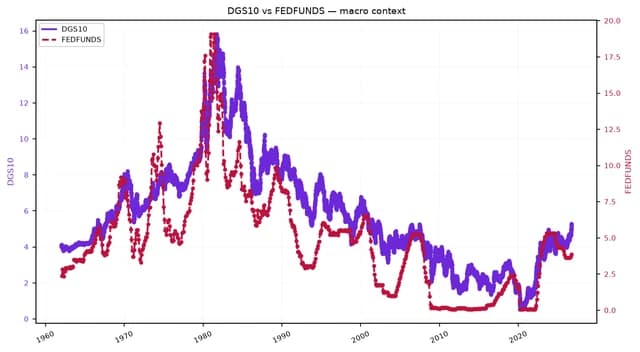
The broader backdrop helps explain why bond investors are on edge. Inflation is still running hot enough to keep the Fed cautious, with core PCE and CPI readings still elevated, while Treasury yields remain high by recent standards. Long-term government bonds have been especially volatile, and that has a direct impact on retirement portfolios that lean on aggregate bond funds or intermediate Treasurys for ballast.
For investors, the lesson is not to avoid bonds, but to understand what kind of bond exposure they own. A fund made up mostly of longer-duration securities can behave very differently from cash-like holdings, especially when the Fed is still debating whether it needs to get more aggressive. Retirees, and anyone close to retirement, should check the duration in their 401(k) lineup before assuming the conservative option is truly low-risk.
For long-term investors, this is a good moment to be deliberate rather than emotional. The right mix of bonds can still play a useful role in a diversified retirement plan, but only if it lines up with your time horizon and withdrawal schedule. If you are within a few years of tapping the account, keep a close eye on interest-rate sensitivity — and if you have decades ahead, remember that volatility in bond funds can be part of the price of higher future income.
| Entity | Gains | Losses |
|---|---|---|
| Short-duration bond funds | ▲Smaller price swings | ▼Lower immediate yield |
| Stable value funds | ▲Capital preservation | ▼Limited upside |
| Long-duration bond funds | ▲Higher future income if held | ▼Bigger losses if rates jump |
| Retirees near withdrawals | ▲Better protection from rate shocks | ▼Less room to recover losses |